
Adolescent Development

This amicus brief by The Gault Center and others argues Nevada’s certification statute violates a child’s right to effective assistance of counsel as it interferes with counsel’s ability to plan and participate in the adversarial fact-finding process and it fails to measure up to essentials of due process and fair treatment. Furthermore, amici argue this…
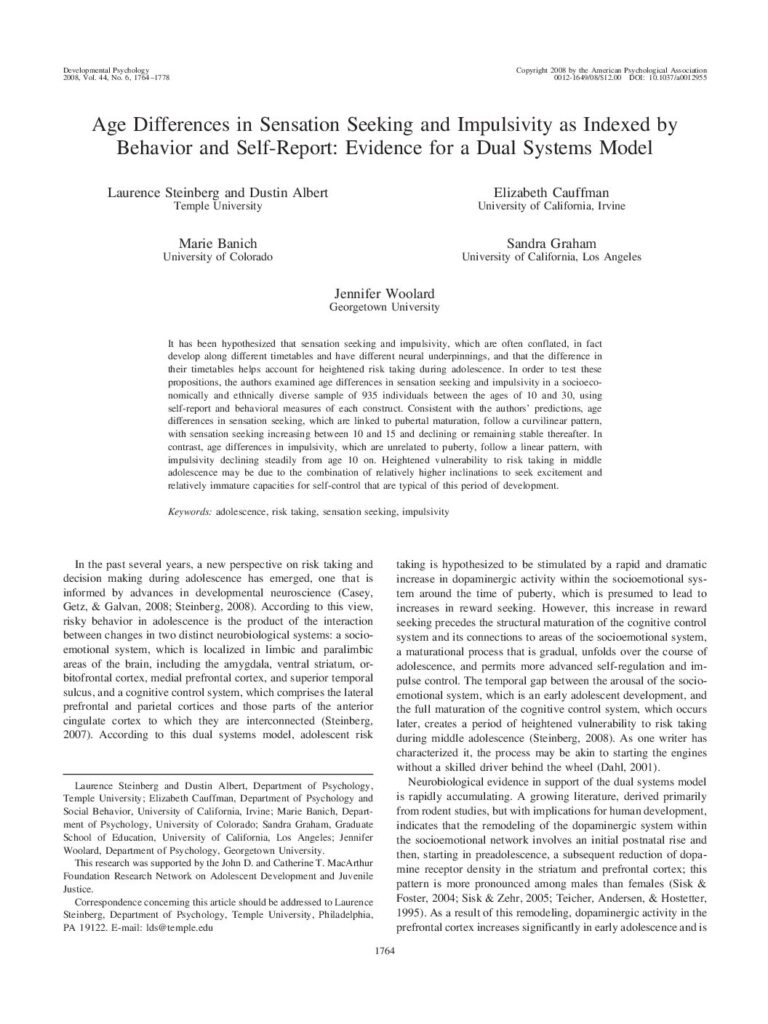
It has been hypothesized that sensation seeking and impulsivity, which are often conflated, in fact develop along different timetables and have different neural underpinnings, and that the difference in their timetables helps account for heightened risk taking during adolescence. In order to test these propositions, the authors examined age differences in sensation seeking and impulsivity…
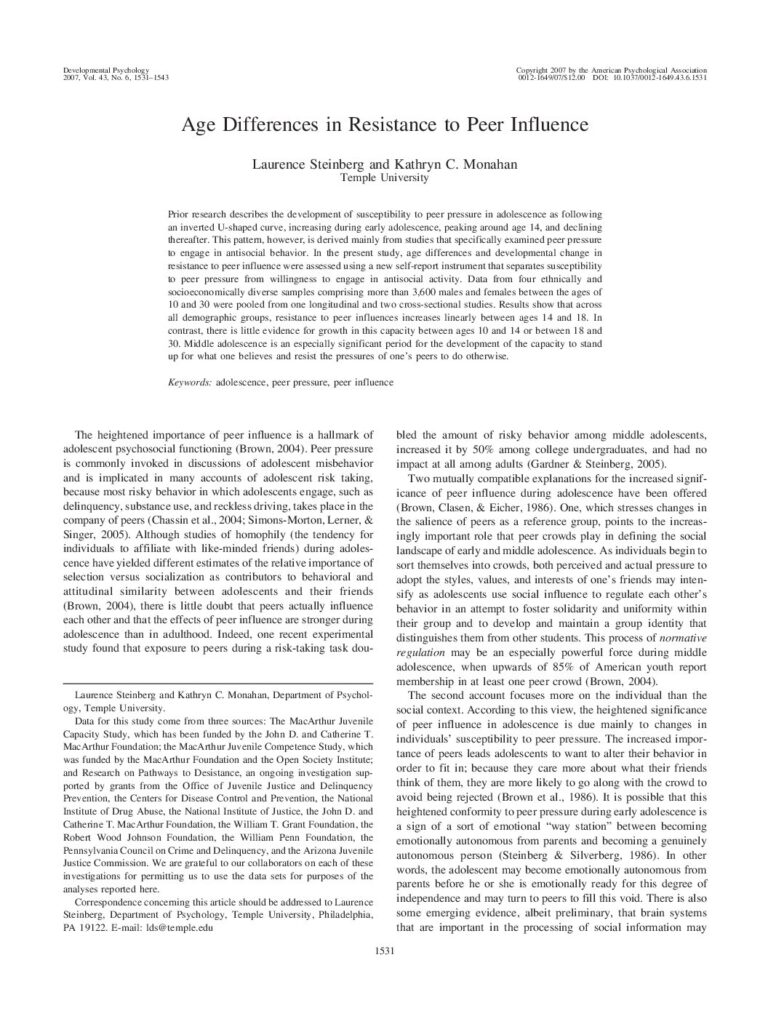
“Prior research describes the development of susceptibility to peer pressure in adolescence as following an inverted U-shaped curve, increasing during early adolescence, peaking around age 14, and declining thereafter. This pattern, however, is derived mainly from studies that specifically examined peer pressure to engage in antisocial behavior. In the present study, age differences and developmental…
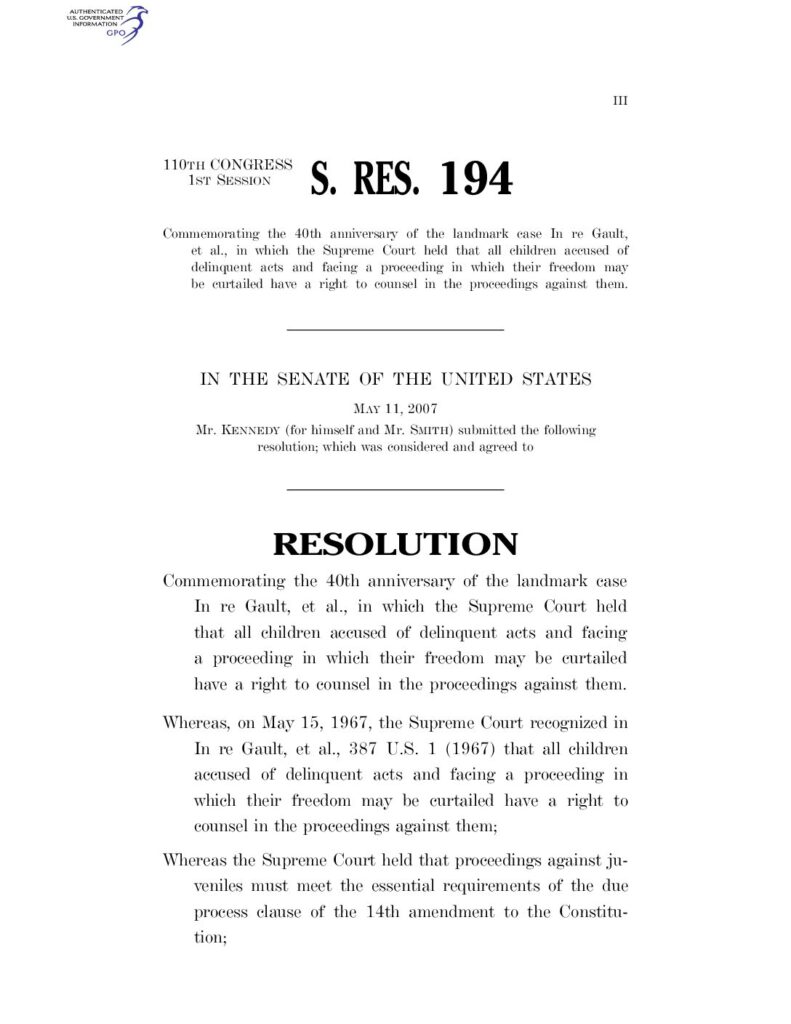
On May 11, 2007, the Senate passed a resolution commemorating the 40th anniversary of the In re Gault decision, which upheld the right to counsel for children in juvenile court. The resolution reiterates the Supreme Court’s holding that juvenile court proceedings must “meet the essential requirements of the due process clause of the 14th Amendment to the…

From the introduction: “This brief tells the story of how the four Models for Change states—Pennsylvania, Illinois, Louisiana, and Washington—are already moving to reform and reshape their own state juvenile justice systems. These states have demonstrated strong leadership in juvenile justice policy, value collaboration and engagement, and because of their efforts, have changed the political…
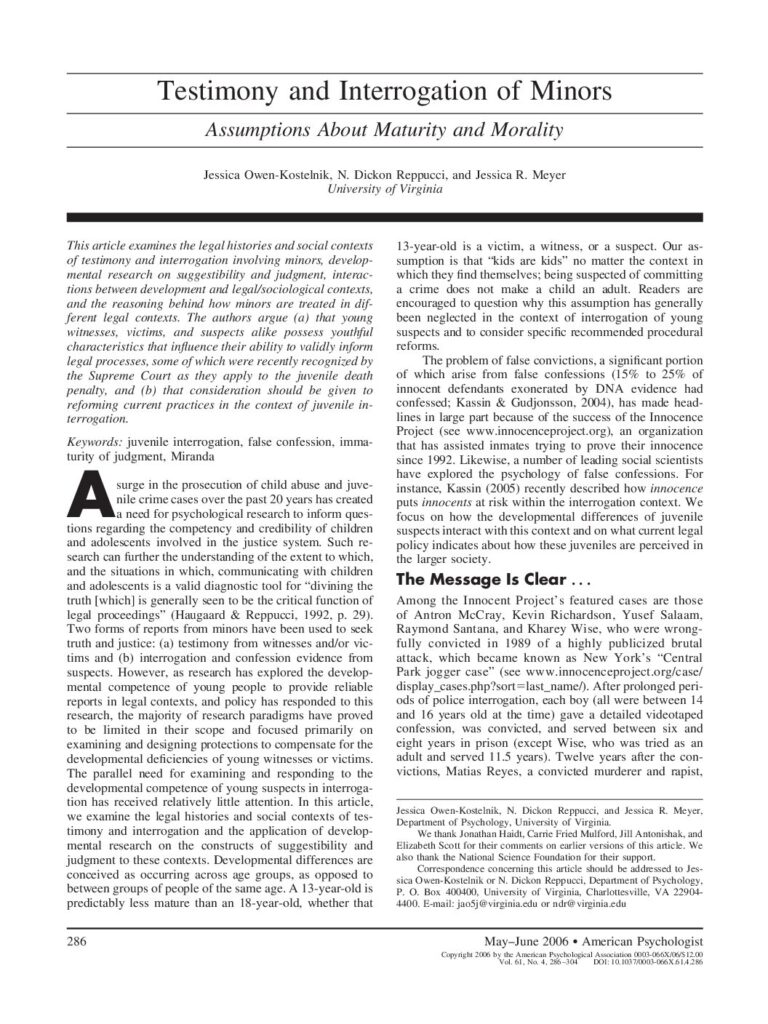
This article examines the legal history and social contexts of testimony and interrogation involving young people, developmental research on suggestibility and judgment, interactions between development and legal/sociological contexts, and the reasoning behind how young people are treated in different legal contexts. The authors argue (a) that young witnesses, victims, and suspects alike possess youthful characteristics…


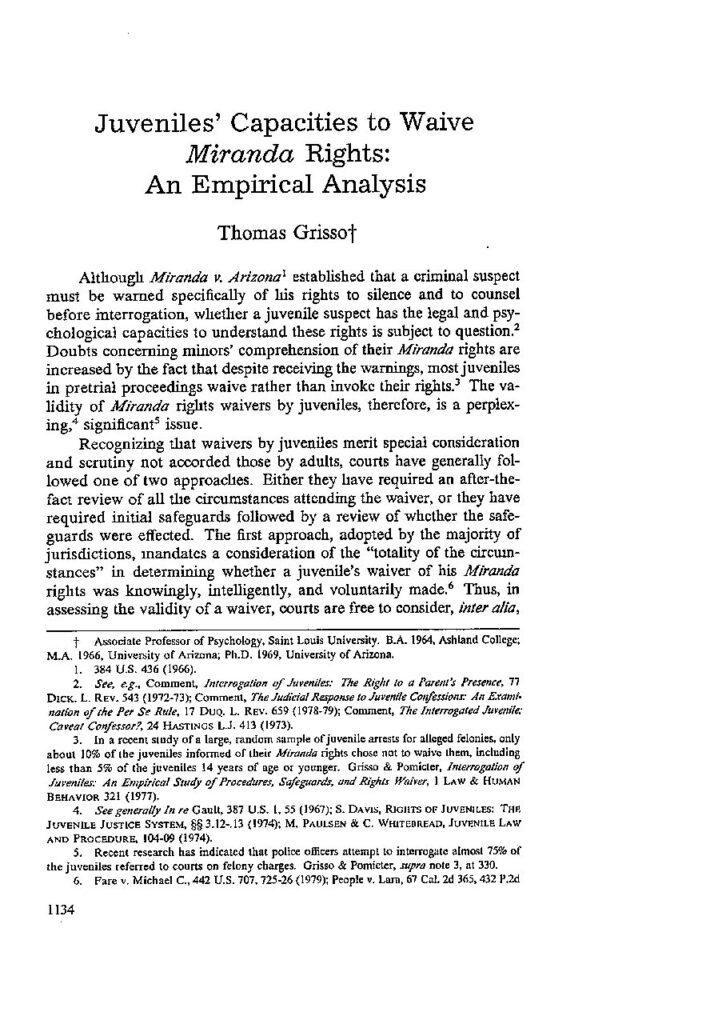
This study examined the relationship of legal capacities to cognitive development, legal learning opportunities, and psychological symptoms. Participants were 152 male and female [adolescents] charged in juvenile court proceedings and held in detention, aged 11–17. The youth completed Grisso’s Instruments for Assessing Understanding and Appreciation of Miranda Rights, the Fitness Interview Test (Revised Edition), the…

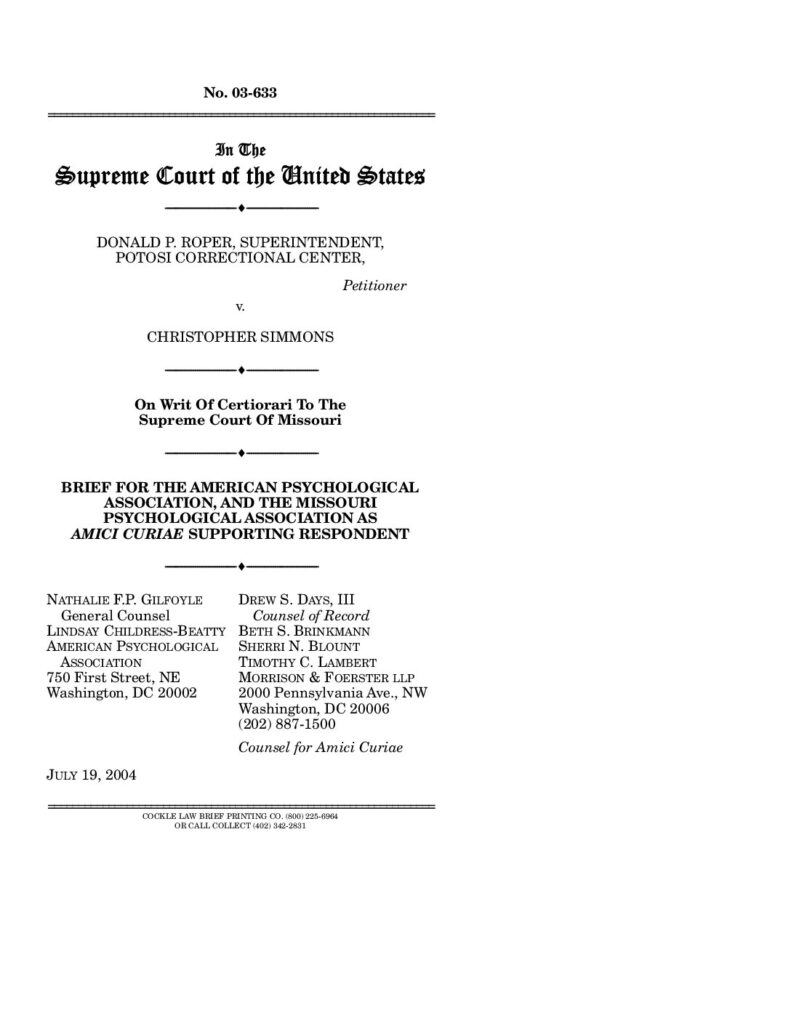

From the introduction: “The authors use a developmental perspective to examine questions about the criminal culpability of juveniles and the juvenile death penalty. Under principles of criminal law, culpability is mitigated when the actor’s decision making capacity is diminished, when the criminal act was coerced, or when the act was out of character. The authors…

The delinquent act itself is often the primary basis for determining intention and competency of children under 18 in adult or juvenile court. But behaviors result from one or more of a diverse range of factors, each of which has different effects on decision-making. The capacity of juveniles to plan or to stop an action…
- « Previous
- 1
- …
- 13
- 14
- 15
