
Adolescent Development

On March 13, 2015, the U.S. Department of Justice filed a Statement of Interest in a lawsuit challenging the deprivation of children’s right to meaningful representation in the Cordele Judicial Circuit of Georgia. In upholding the constitutional necessity of youth defense specialization, the DOJ asserted, “The right to counsel means more than just a lawyer…
The Campaign for the Fair Sentencing of Youth issued Trial Defense Guidelines for representing youth facing a possible life sentence. “The objective of these guidelines is to set forth a national standard of practice to ensure zealous, constitutionally effective representation for all juveniles facing a possible life sentence (“juvenile life”) consistent with the United States…

This expert affidavit from Dr. Gwenyth Campbell Rost, Ph.D., a speech-language pathologist, describes the impacts of shackling and the use of physical restraints on young people with communication and language disabilities who are involved in the juvenile legal system. The affidavit highlights how shackling and restraining youth impedes their ability to communicate and remember information…

This expert affidavit from Dr. Robert Bidwell, a physician who is board certified in pediatric and adolescent medicine and licensed in Hawaii, underscores the harm of indiscriminately shackling young people in the juvenile legal system. Dr. Bidwell highlights the high proportion of young people in the juvenile legal system who have experienced trauma and exhibit…

This expert affidavit from Dr. Marty Beyer, Ph.D., a clinical psychologist licensed in D.C., Virginia and Washington, highlights the negative impacts of shackling on young people’s identity development, including their views of their own self-worth and of fairness in legal settings. Further, the affidavit describes how shackling re-traumatizes youth who may have previously experienced traumatic…
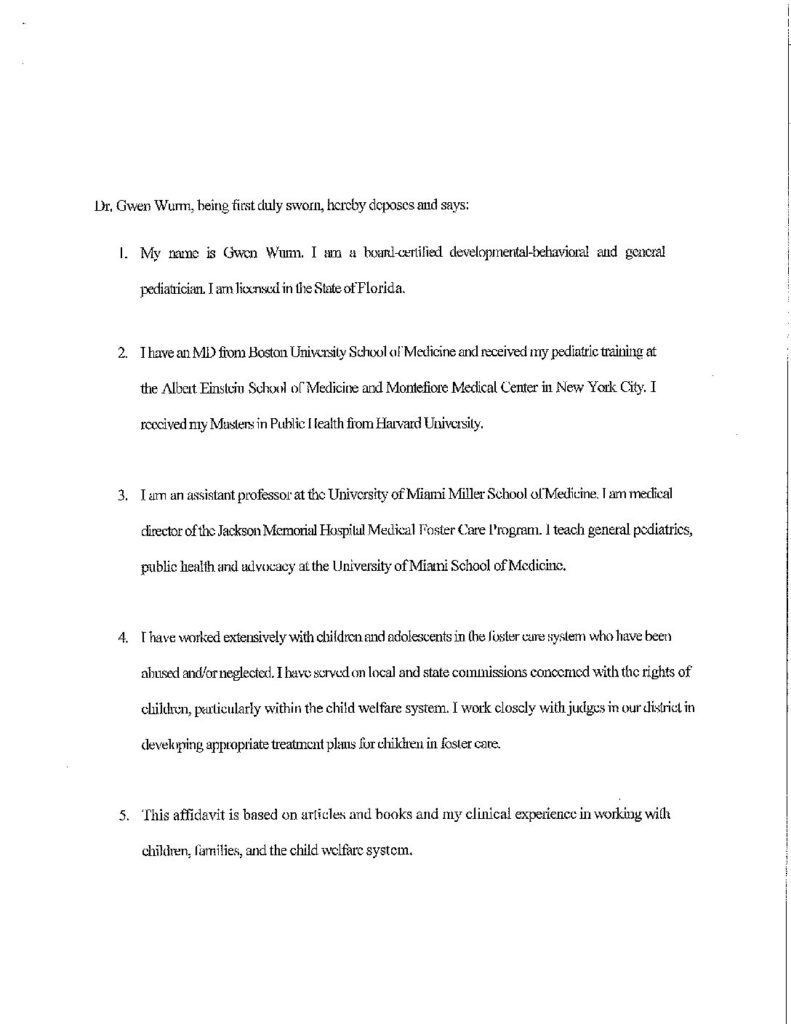
This expert affidavit from Dr. Gwen Wurm, a pediatrician licensed in the state of Florida, describes the impact that indiscriminate shackling has on adolescent, cognitive, and psychosocial development. The affidavit also describes the traumatizing effects of shackling on children who may have experienced abuse, neglect or other mental distress.

This expert affidavit from Dr. Donald Rosenblitt, a child psychiatrist and clinician licensed in North Carolina. Dr. Rosenblitt discusses the impact of shackling young people in juvenile court proceedings and how shackling negatively impacts a young people’s positive development, self-perception, overall health, and views of the legal system.

From the forward: “This paper raises important questions about the criminal justice system’s response to young adults. Recent advances in behavior and neuroscience research confirm that brain development continues well into a person’s 20s, meaning that young adults have more psychosocial similarities to children than to older adults. This developmental distinction should help inform the…

From the introduction: ” Recent Supreme Court cases have recognized the science underlying the common-sense notion that children are not “little adults.” Their brains function in a completely different manner than those of adults. In 2005, the Court abolished the juvenile death penalty and recognized the neuroscience underlying the claim that those under the age…
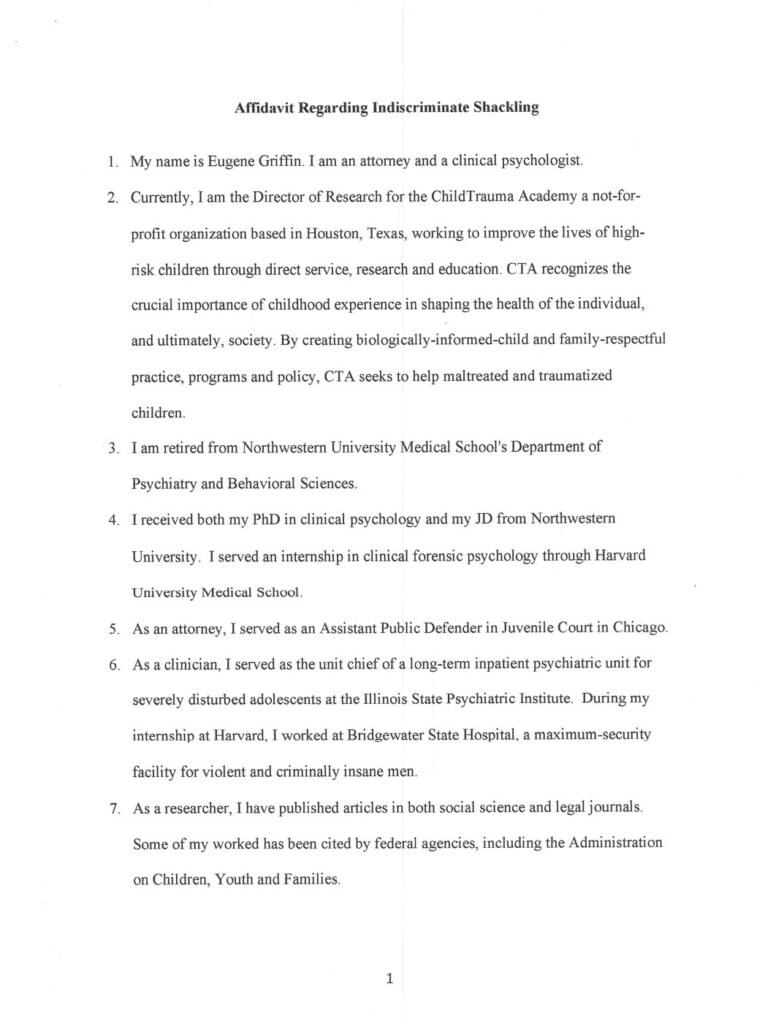
This expert affidavit from Dr. Eugene Griffin, an attorney and clinical psychologist and Director of Research for the ChildTrauma Academy, discusses the punitive and traumatic impact of indiscriminate shackling. Dr. Griffin highlights the impact of indiscriminate shackling on juvenile court proceedings, including making the court less safe, hampering a young person’s ability to effectively communicate…

This expert affidavit from Dr. Julian Ford, a clinical psychologist and professor of psychiatry at the University of Connecticut School of Medicine, discusses the stigmatizing experience of shackling on young people and the impact it can have on their sense of self and willingness to trust adults and participate as members of their community. Furthermore,…

The Supreme Court of South Carolina held that individuals sentenced to juvenile life without parole were entitled to resentencing hearings to present evidence about youthfulness, following the U.S. Supreme Court decision, Miller v. Alabama. The court stated in relevant part: “Miller is clear that it is the failure of a sentencing court to consider the…

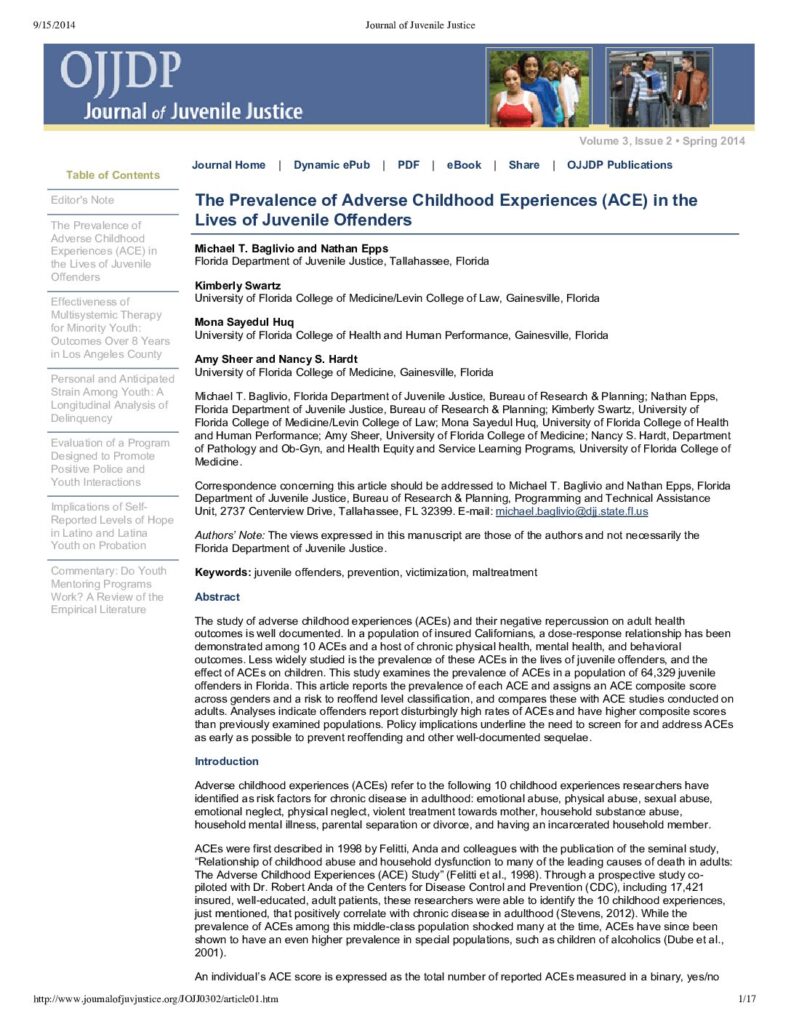
From the abstract: “The study of adverse childhood experiences (ACEs) and their negative repercussion on adult health outcomes is well documented. In a population of insured Californians, a dose-response relationship has been demonstrated among 10 ACEs and a host of chronic physical health, mental health, and behavioral outcomes. Less widely studied is the prevalence of…


The Iowa Supreme Court struck down mandatory minimum sentencing schemes as applied to a young person transferred to adult court, finding mandatory minimum sentences to be in violation of federal and state prohibitions against cruel and unusual punishment and the best interest clause in Iowa’s juvenile code. The court notes “the statutory recognition of the…
From the summary: “It is critical for judicial officers, attorneys, probation officers, child welfare, and other professionals who work with youth to be knowledgeable about the impact of trauma on children’s development and on their emotional, behavioral, and cognitive functioning. Understanding trauma and the potential impacts on children who come before the juvenile and family…

This amicus brief by Juvenile Law Center, The Gault Center, and others argues Ohio’s mandatory bindover statute violates the Due Process protections guaranteed by the 14th Amendment of the U.S. Constitution as the mandatory scheme does not allow for individualized sentencing and recognition of the unique characteristics of youth. Further, amici argue individualized transfer proceedings…

This article, written by Mae C. Quinn and published in the N.Y.U. Review of Law and Social Change, examines the “various ways in which youthful online actions and interactions, like pubescent urban activities from decades before, are being prohibited by emerging laws and orders.” Further the article looks at our country’s “obsession of policing puberty”,…

This amici brief by Juvenile Law Center, Loyola Civitas Childlaw Clinic, and others argues automatic prosecution and mandatory sentencing of young people charged with felony murder is unconstitutional in light of recent Supreme Court case law as Illinois law does not allow for individual sentencing based on maturity and culpability. Furthemore, the brief argues the…
This amicus brief by Juvenile Law Center and others argues California Penal Code 190.5(b) is unconstitutional because it presumes life without parole is the appropriate sentence for certain young people in adult court and it disregards Miller’s requirement of individualized sentencing. Furthermore, amici argue that a young person’s sentence must provide a “meaningful opportunity to…

This amicus brief prepared by Children’s Law Center, Inc., the Office of the Ohio Public Defender, The Gault Center, and others argues that due process and fundamental fairness, pursuant to the 5th Amendment, the 14th Amendment and Ohio law, require the state to provide full discovery to a young person prior to a probable cause…
This amicus brief by Juvenile Law Center argues California’s Penal Code Sec. 190.5(b) is unconstitutional because it presumes life without parole is an appropriate sentence for [youth] and this presumption contravenes Miller’s requirement of individualized sentencing and that this type of sentence be uncommon for young people. Furthermore, amici argue any life without parole sentence…
