
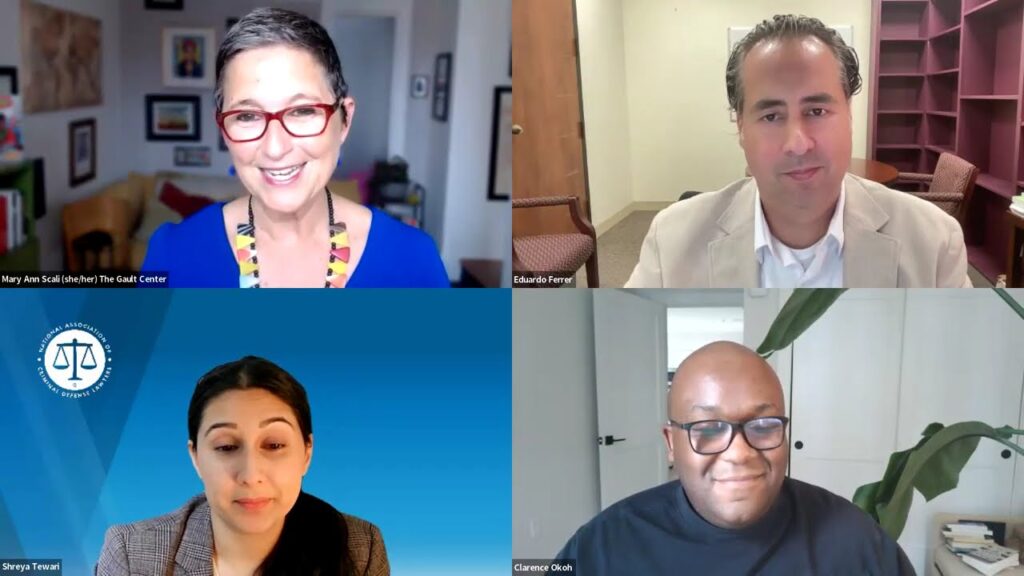
On July 14th, 2026, the Gault Center and the Georgetown Juvenile Justice Clinic & Initiative hosted a webinar on Learning, Litigating, Liberating: Defending Against AI Surveillance of Youth. As AI Surveillance of youth increases in everyday lives from “bullying monitors” to vape detection to facial recognition and so much more, this webinar provides an overview of how and where AI Surveillance is being used and what youth defenders and…
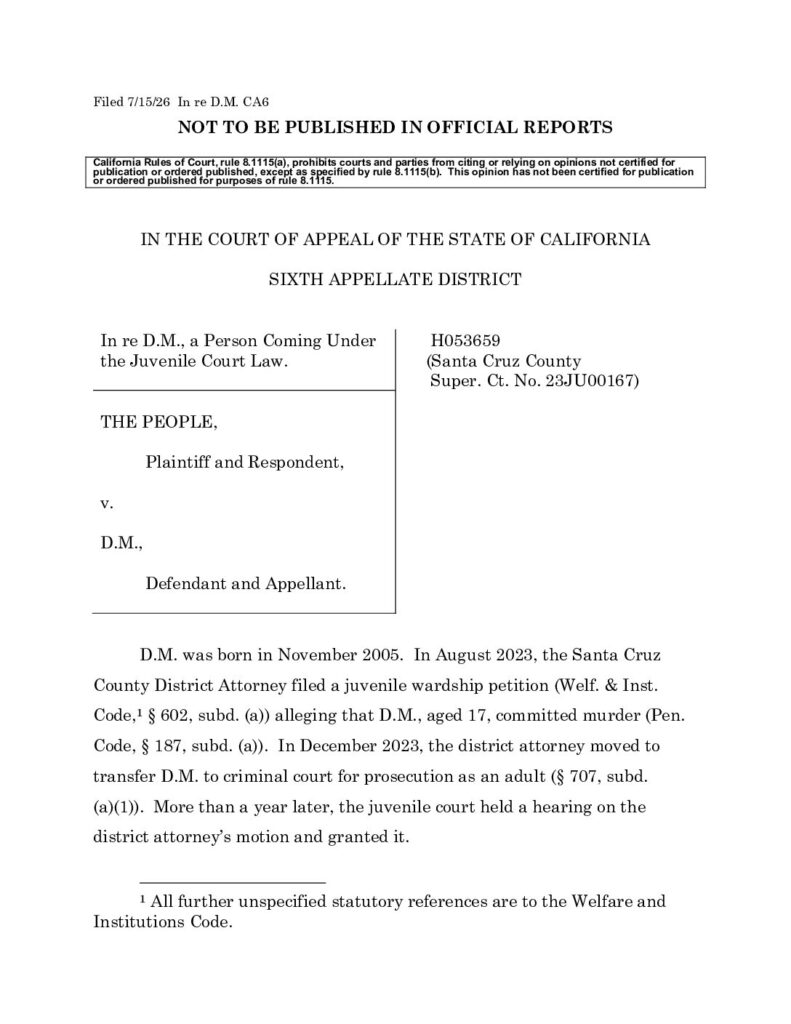
The California 6th District Court of Appeal reversed a transfer order, clarifying that the prosecution bears the burden of proof to establish by clear and convincing evidence that a youth is not amenable to rehabilitation under the jurisdiction of juvenile court in order to transfer a youth to adult court. The court stated in relevant…
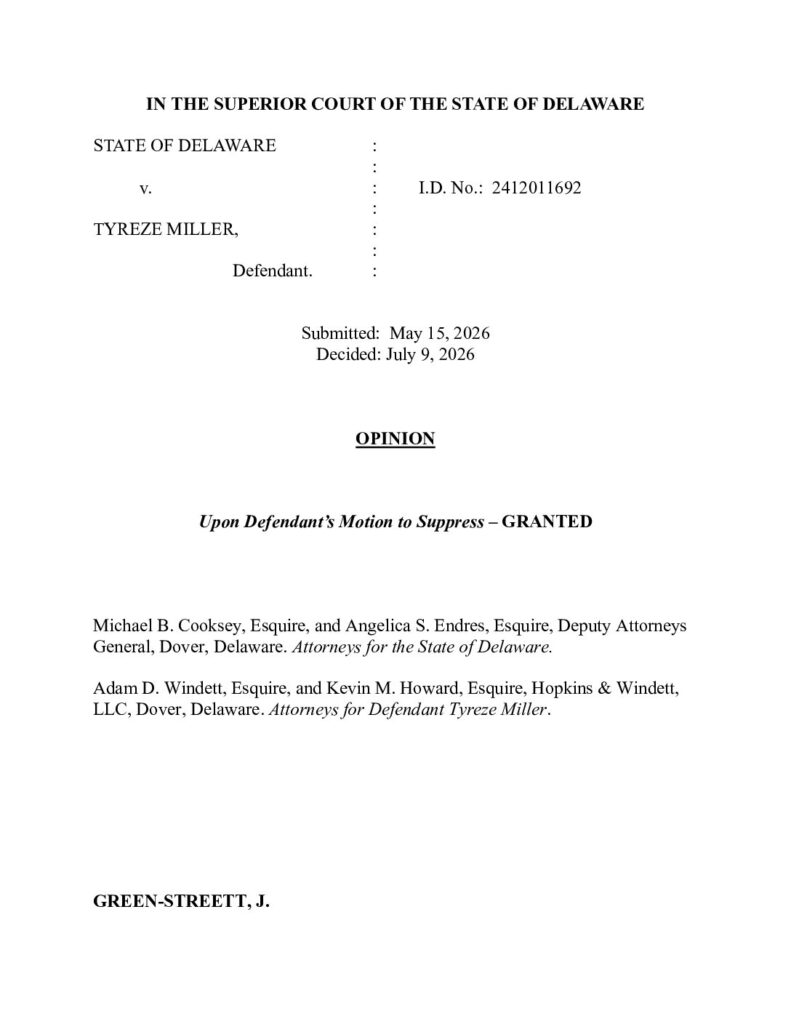
The Delaware Superior Court granted a motion to suppress statements from a police interrogation of a 15-year-old youth with ADHD, finding that the youth did not knowingly, voluntarily, or intelligently waive his Miranda rights. The court reasoned: In summary, over the course of approximately three hours, a fifteen-year-old child was woken up, handcuffed, placed in a holding…
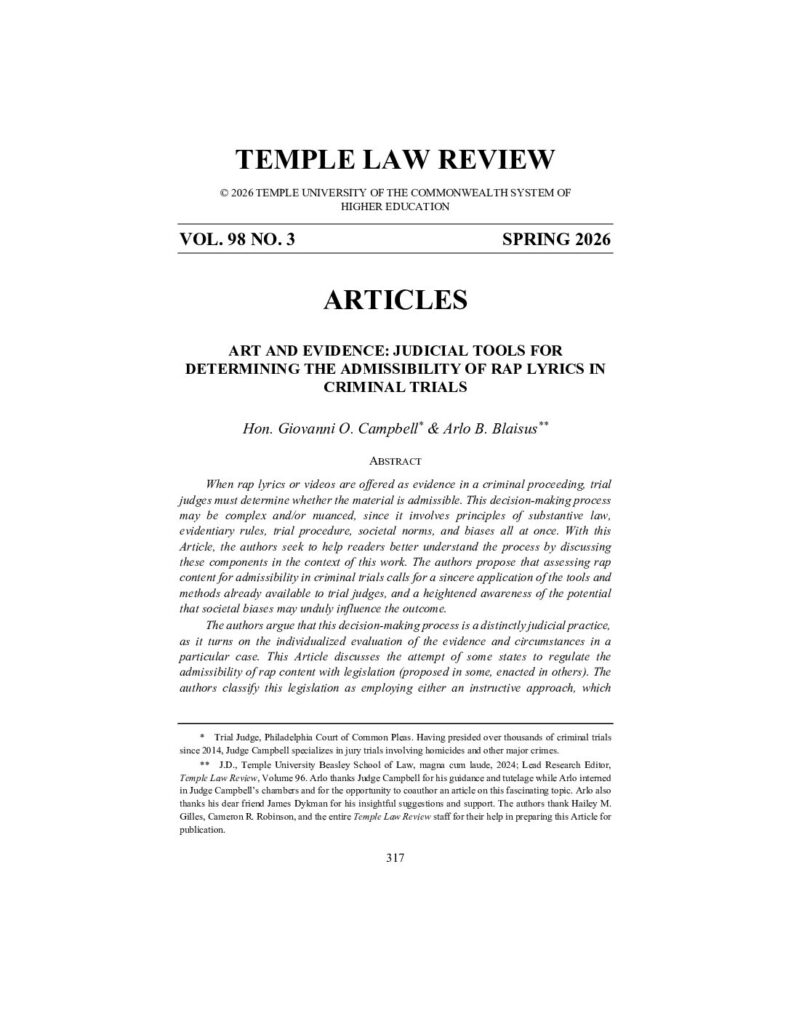
From the abstract: “When rap lyrics or videos are offered as evidence in a criminal proceeding, trial judges must determine whether the material is admissible. This decision-making process may be complex and/or nuanced, since it involves principles of substantive law, evidentiary rules, trial procedure, societal norms, and biases all at once. With this Article, the…

The 1st District Court of Appeals of Michigan vacated a life without parole sentence following a felony murder conviction, finding that trial counsel was ineffective by failing to raise mitigating evidence on adolescent brain development and childhood trauma and abuse. The court stated in relevant part: Appellate counsel obtained a mitigation expert, Mary Cuddehe, to…
The California Court of Appeals, First District, found that the trial court improperly reviewed S.W.’s probation report and related motions, which included evidence of the alleged victim’s identification of S.W. as one of the perpetrators of the robbery, before determining jurisdiction, was error, and reversed the case. The court reasoned in part, “Turning to the…
The Washington Appeals Division 2 reversed a conviction involving allegations of an 11-year-old child charged with attempted rape of a child, finding that the state failed to produce clear and convincing evidence that the child was capable of committing a criminal sexual act. The court stated in relevant part: “A child of at least 8…

In October 2025, the Gault Center convened over three hundred youth defense lawyers and advocates at our annual Youth Defender Leadership Summit. Together, we practiced the cultivation of community in service of building a more just, more liberated, and more human humanity for all children and for us all. This resource captures the shared learnings…


The Gault Center released an update on the state of youth defense in Kansas, which centers the perspectives and experiences of young people impacted by the juvenile legal system, through a collaborative effort with Progeny, a youth-adult partnership in Kansas, TerraLuna Collaborative, a research consulting group, and Mulberry Art Gallery, which focuses on supporting emerging…

This resource offers a brief overview of how children are transferred or bound over to adult court in Ohio and discusses what is at stake in the case of State v. D.T., 2024-Ohio-4482 (Ohio Ct. App. 2024) pending before the Ohio Supreme Court. The Gault Center filed an amicus in this case here. Oral arguments were…
In People v. Clark-Collins, the Supreme Court of Colorado remanded the case ordering the district court to amend its standing order on the presentation and scope of testimony and evidence at a reverse transfer hearing as follows: “While the trial court has significant discretion regarding the presentation of evidence and the application of the rules of evidence, there are limits. In…


This resource is part of the Youth Defender Advocacy Program (YDAP) curriculum, a specialized trial advocacy training program for youth defenders.

On February 28, 2025, the Michigan Court of Appeals ruled that the trial court’s denial of a racial justice expert violated a young person’s due process rights to present a defense. This case involved an altercation between two middle school students involving the use of a racial slur and other racially derogatory comments. Defense counsel…

This memo, filed by youth defenders from the Hamilton County, Ohio public defender office, demands evidentiary competence hearings based on state statutory grounds and constitutional doctrines of fundamental fairness, effective assistance of counsel, and separation of powers. Notably, this memo cites Standard 3.2 of the National Youth Defense System Standards on independence to highlight an…


A webinar from April 10, 2023 with Dr. Martin Irwin, MD, Clinical Professor at the NYU School of Medicine, Department of Child & Adolescent Psychiatry. Multiple studies have concluded that children in the juvenile legal system or foster care, many of whom are victims of abuse and trauma, are prescribed psychiatric medication at a rate…

On March 24, 2021, NJDC and the Mid-Atlantic Juvenile Defender Center hosted a webinar titled FASD & Youth: What Defenders Need to Know. This video includes information about FASD provided by Dr. Larry Burd. Portions of the webinar addressing defense strategies have been edited out of this public version. Description of the webinar: Approximately five…

This checklist can be used to assess the presence of constitutional violations throughout the course of a client’s case. Please refer to the National Youth Defense Systems Standards and their accompanying User Guide for litigation strategies to challenge potential constitutional violations noted in this checklist.

This User Guide provides advocates with a step-by-step outline of how to actualize the vision of the National Youth Defense System Standards to equip and invest in youth defense teams to fight for the liberation of all youth.The User Guide outlines constitutional rights detailed in the System Standards, provides a checklist to assess the presence…

