
Latine Youth
The California 5th District Court of Appeal held that the defense was entitled to discovery related to racial disparities in plea deals to voluntary manslaughter, finding that defense’s statistical evidence showing that Latine individuals in Kern County were more likely to be charged with murder and receive longer sentences than white individuals satisfied the “plausible…
The New Jersey Superior Court Appellate Division held that the State failed to meet its burden of proving voluntariness of a youth’s Miranda waiver and reversed the trial court’s denial of defense’s suppression motion. Based on a totality-of-circumstances analysis, the court considered the following factors in making its decision: the youth’s Spanish-speaking mother was present…
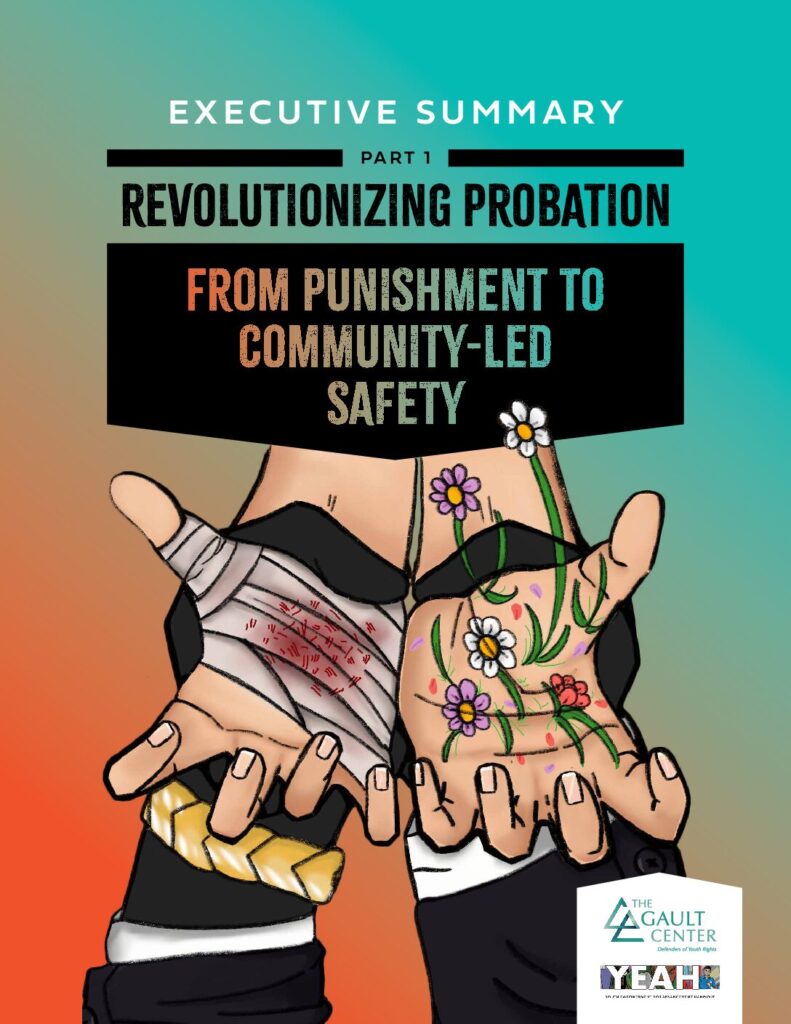
Summarizes what young people are saying about juvenile probation and offers a visual timeline highlighting the historical lineage of probation as a form of racialized social control.
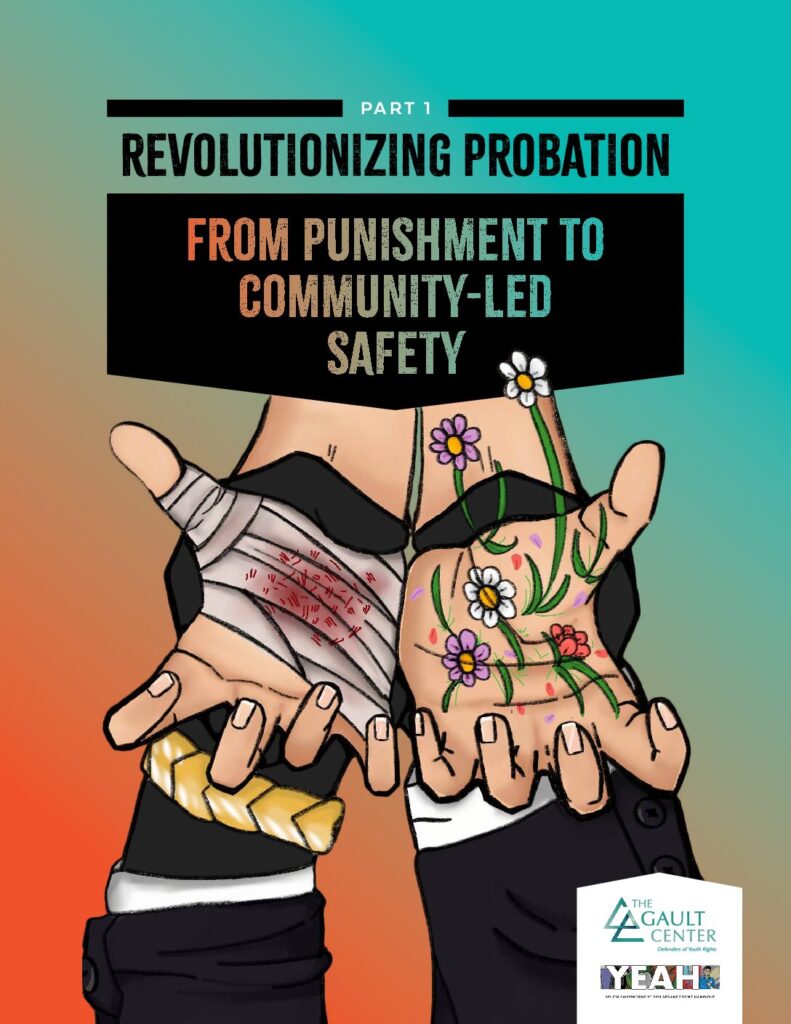
Examines young people’s experiences on juvenile probation and the racialized history of juvenile probation in our country.
“What makes a conviction wrongful? Developments in DNA science have led to a wave of exonerations over the past thirty years, revealing sources of error in the criminal legal process. Innocence organizations proliferated to represent people whose convictions could be overturned by newly discovered evidence. This is vital work for the individuals who are released…

The Supreme Court of Washington found a Miranda violation based on a totality of the circumstances analysis, which the Court noted must include consideration of race and age. The Court stated in relevant part: “The United States Supreme Court has established that in determining whether a suspect is in custody under Miranda, we must “‘examine…
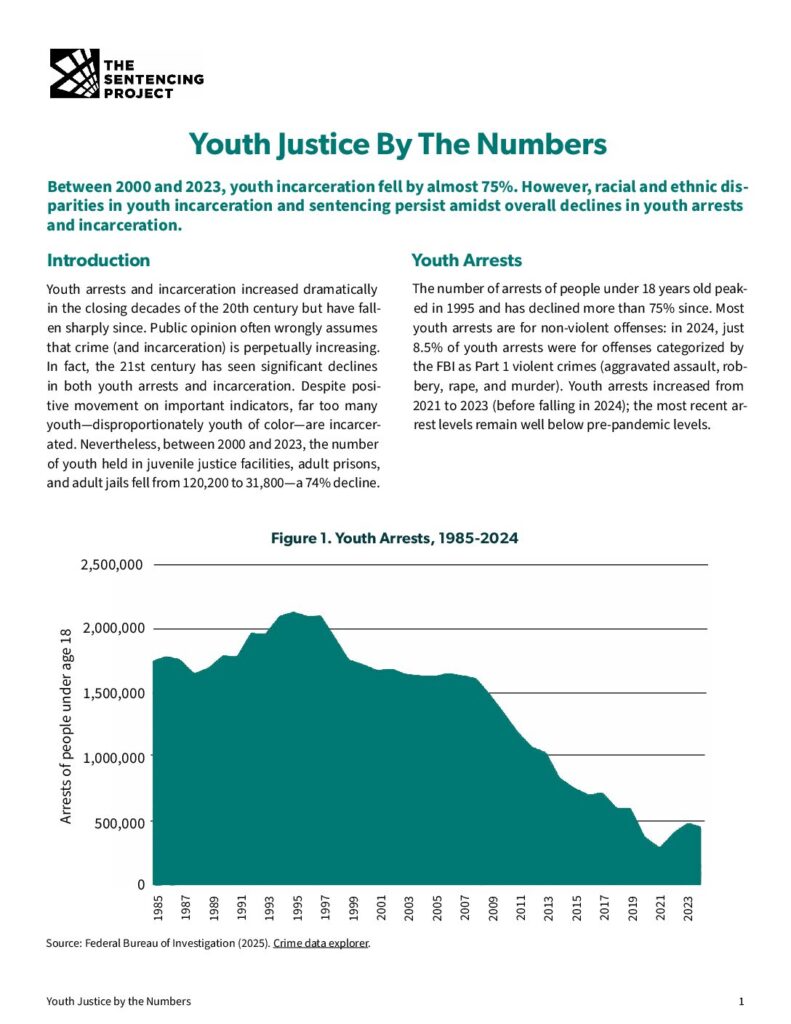
The Sentencing Project released an updated snapshot of the numbers of youth in the juvenile legal system from 2000 to 2023, finding significant declines in youth arrests and incarceration, though racial and ethnic disparities persist. The report calls for the need to continued shrinking the juvenile legal system by increasing informal or diversionary responses to youth arrests. Introduction: “Youth arrests and incarceration increased dramatically in the closing…


From the abstract: “Hundreds of thousands of children are brought under the jurisdiction of delinquency courts every year in the United States. Despite the reality that most children engage in delinquent behavior during their adolescence, poor children, children of color, children with disabilities, and children who identify as LGBTQIA+ comprise a disproportionate number of those who become delinquency system-involved. These disparities exist…

This report, by the U.S. Department of Justice Civil Rights Division outlines key highlights of the Division’s work from 2021 to 2024 across policing, juvenile facilities, schools and beyond.

This research report by the NAACP Legal Defense Fund provides an in-depth overview of the “At-Risk Youth Program” created by the Pasco County Sheriff’s Office in Tampa Bay, Florida. The Pasco County sheriff’s office relied on a “rudimentary, person-based predictive policing system” based on inherently biased criteria to identify young people who were “destined to…


The Court of Appeals of Washington remanded a transfer case to the superior court and offered the following language in support. “Our Supreme Court has made clear that trial courts must be vigilant in addressing the threat of explicit or implicit racial bias that affects a defendant’s right to a fair trial. We hold that…

This report reviews the expanding infrastructure of police surveillance in public schools and highlights the failure of AI technologies and digital surveillance in making schools safer. Further, the report discusses the harms these technologies may cause to Black and Latine youth and youth from other historically vulnerable communities. Calling on youth justice advocates, youth leaders,…

From the Introduction: “Racial inequities are addressed to varying degrees in at least three of the four sections of the Restatement of Children and the Law. This Essay evaluates whether and how well this Restatement advances racial justice and identifies additional opportunities for the ALI to address racial inequities now and in future iterations of the Restatement. The…

School-based arrests have long made up a substantial number of cases in the juvenile legal system. As a result, youth defenders often represent clients who have been seized, searched, or interrogated on school grounds. This guide provides a general overview of the law governing school seizures, searches, and interrogations and practice tips for challenging evidence…

This research report by the ACLU provides an overview of surveillance technology (“EdTech Surveillance”) industry in K-12 schools and critically explores the industry’s claims, the efficacy of the products, and their impacts on students and schools. The report also provides recommendations for best protecting students and promoting better surveillance technology decision-making among elected officials, school…

From the executive summary: “• Police increasingly replace stop-and-frisk practices with databases that crudely profile Black and Latinx youth based on their neighborhoods, peer groups, and clothing. • These databases ruin lives: police typecast minority youths as gang members without evidence, putting them at risk of false arrest and wrongful deportation. • Many police departments…

This amicus brief by the Santa Clara County Independent Defense Counsel Office argues the decision in People v. Hardin should be affirmed because historical legacies of racism disparately expose some adolescents to the legal system and this does not justify lifelong punishment without considering rehabilitation. From Introduction & Summary of Argument: “Youthful offender parole is authorized by age at the…

From the introduction: “A growing body of literature has demonstrated that when schools suspend students, the suspension acts not as a deterrent but as an amplifier of future punishment. Labeling theory has emerged as the predominant explanation for this phenomenon, suggesting that the symbolic label conferred along with a suspension shapes how other people perceive…

