
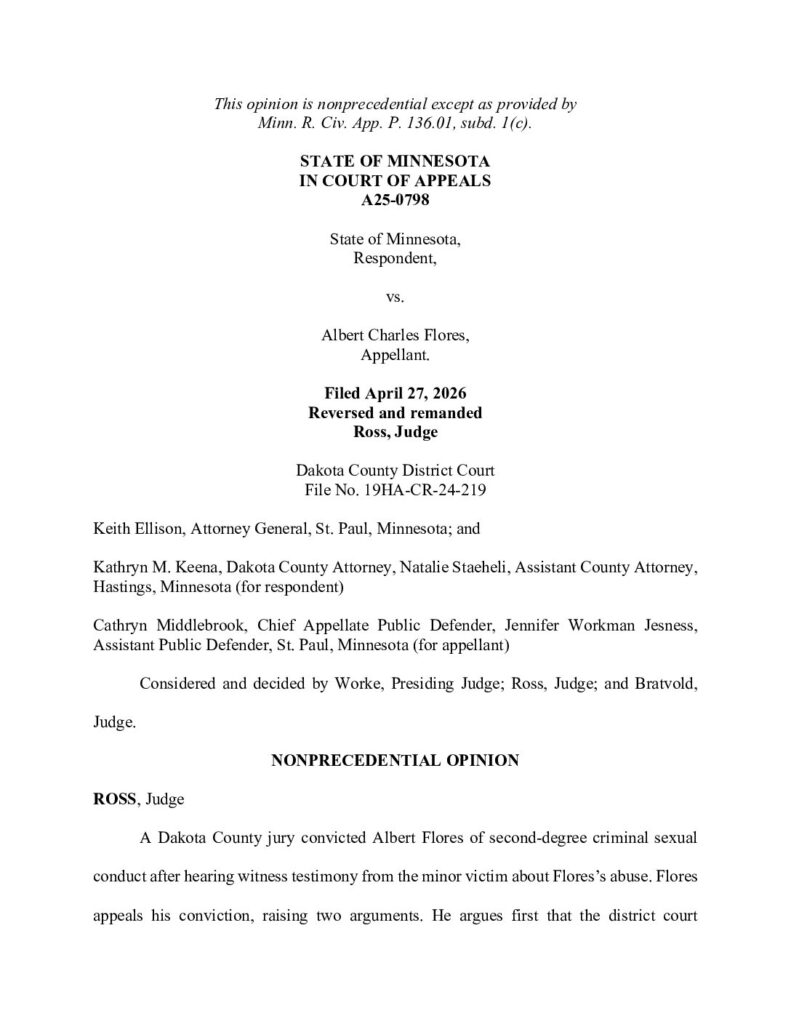
The Minnesota Court of Appeals held that statements made to a child welfare investigator after invoking the right to counsel are inadmissible under Miranda, finding that the investigator was acting as an arm of the state. The court reasoned: The central issue on appeal therefore narrows to whether Flores’s invocation of his Miranda rights bars not…
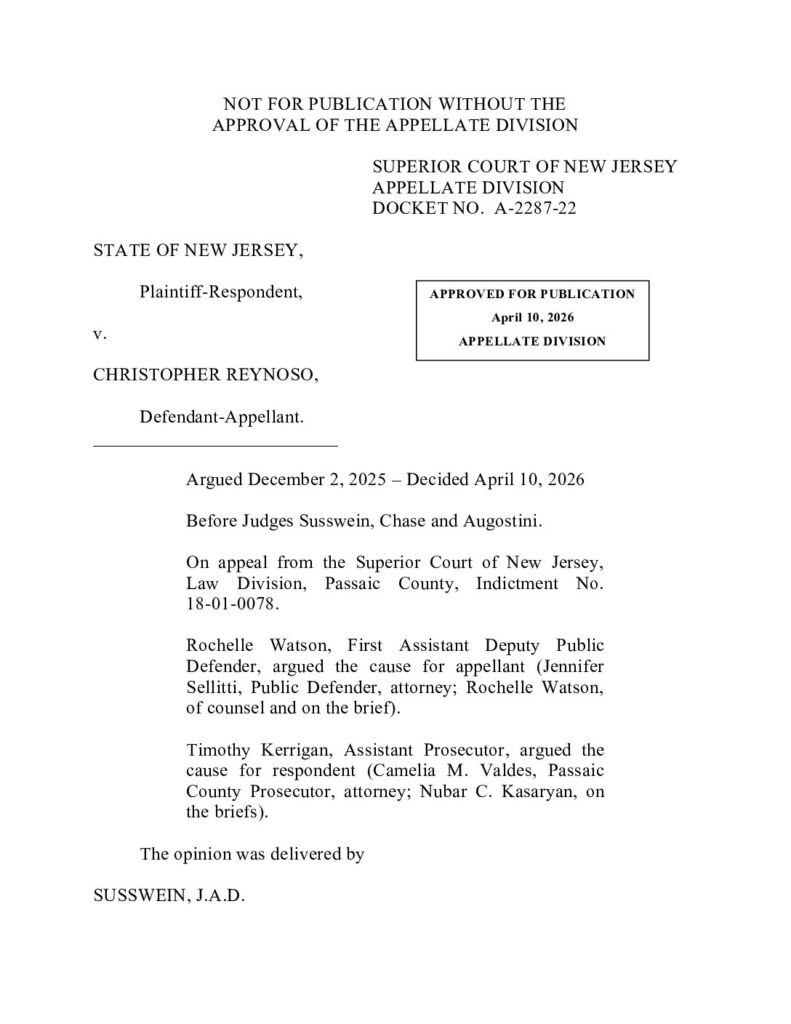
The New Jersey Superior Court Appellate Division held that the State failed to meet its burden of proving voluntariness of a youth’s Miranda waiver and reversed the trial court’s denial of defense’s suppression motion. Based on a totality-of-circumstances analysis, the court considered the following factors in making its decision: the youth’s Spanish-speaking mother was present…
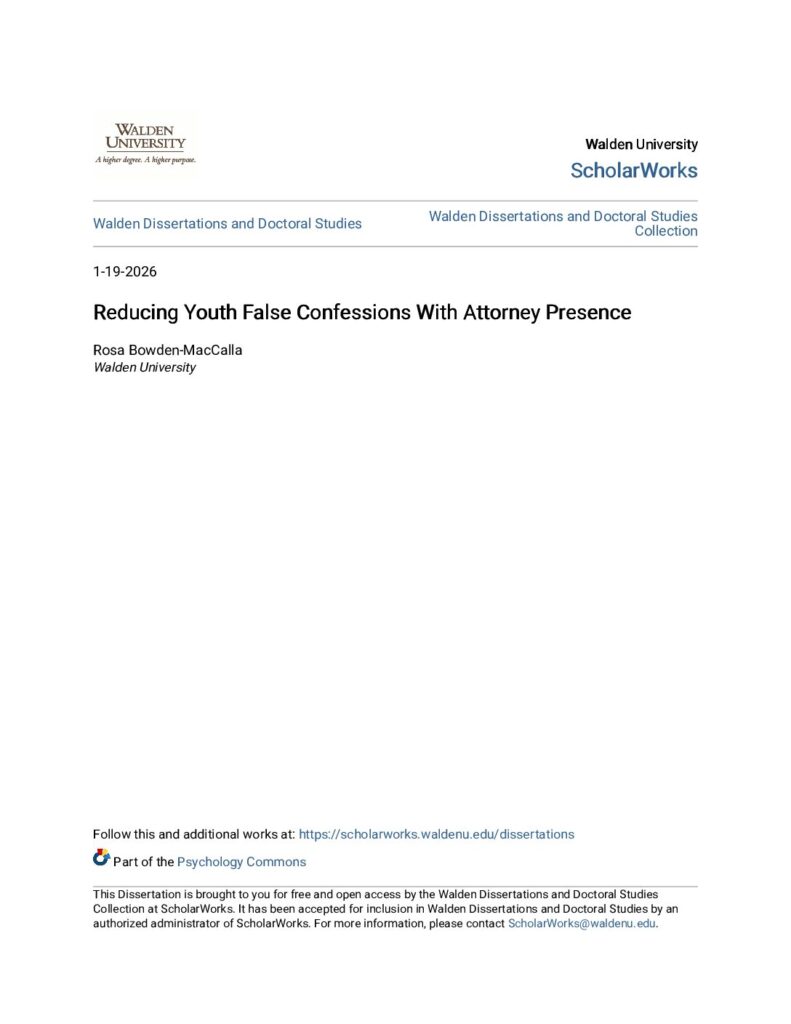
From the Abstract: “Interrogation techniques are influenced by the interrogator’s style and the individual being interviewed. Most law enforcement agencies use adult-centered interrogation methods, leading to suboptimal results when working with youth. The research has focused on youth offenders in the interrogation room and the choices they make, often leading to false confessions when an…

The Supreme Court of Washington found a Miranda violation based on a totality of the circumstances analysis, which the Court noted must include consideration of race and age. The Court stated in relevant part: “The United States Supreme Court has established that in determining whether a suspect is in custody under Miranda, we must “‘examine…

In October 2025, the Gault Center convened over three hundred youth defense lawyers and advocates at our annual Youth Defender Leadership Summit. Together, we practiced the cultivation of community in service of building a more just, more liberated, and more human humanity for all children and for us all. This resource captures the shared learnings…

The Supreme Court of Washington vacated a conviction for second-degree murder, finding that the 16-year-old defendant’s waiver of rights was invalid, considering her age, recent head trauma, and lack of experience with the police. The court stated in relevant part: “Luna challenges several evidentiary rulings and argues that the court should have applied newly enacted…

The Supreme Court of Maine vacated a conviction, finding that custodial statements should have been suppressed because there was no waiver of the privilege against self-incrimination, and offered the following language in support. “McLain did not clearly waive his privilege against self-incrimination and instead answered that it “depend[ed] on the questions” when asked if he…


From the abstract: “This paper explores the inequitable treatment of the Intellectually and Developmentally Disabled and Autistic (IDD/A) population in the criminal justice system. Although progress has been made over the past century with understanding the unique needs of this population, they still face challenges at all stages of the criminal justice system. Behavioral, social…

Abstract: In the wake of Miller v. Alabama and its progeny, there has been a wider acceptance that juvenile’s need more protections in our judicial system. This is a result of a growing body of research stating that young people’s brains do not fully develop until the age of twenty-five. States across the country are…

From the discussion: “The issue in this case is whether the circuit court erred when it denied K.R.W.’s suppression motion. This court reviews a suppression decision under a two-step analysis. State v. Meisenhelder, 2022 WI App 37, ¶7, 404 Wis. 2d 75, 978 N.W.2d 551. Findings of fact will be upheld unless they are clearly…

On August 29, 2024, the Gault Center hosted a National Youth Defense Townhall focused on the role of youth defenders in transforming the juvenile legal system. The Townhall outlined a theory of change rooted in cultivating critical connections to harness our collective power to transform systems of harm and punishment. In attendance were nearly 200…

This checklist can be used to assess the presence of constitutional violations throughout the course of a client’s case. Please refer to the National Youth Defense Systems Standards and their accompanying User Guide for litigation strategies to challenge potential constitutional violations noted in this checklist.

This User Guide provides advocates with a step-by-step outline of how to actualize the vision of the National Youth Defense System Standards to equip and invest in youth defense teams to fight for the liberation of all youth.The User Guide outlines constitutional rights detailed in the System Standards, provides a checklist to assess the presence…


Outlines steps that states must take to comply with the minimum requirements of the U.S. Constitution to protect the rights of youth facing deprivations of liberty.


Sydney Baker et al., 29 Psychol. Pub. Pol’y & L. 320 (2023). This article is a call to action for the research community and advocates to engage youth and families with lived experience in the legal system in research on the impacts of race, development, and identity on youth interrogations. The authors detail the limitations…

