
Racial Justice
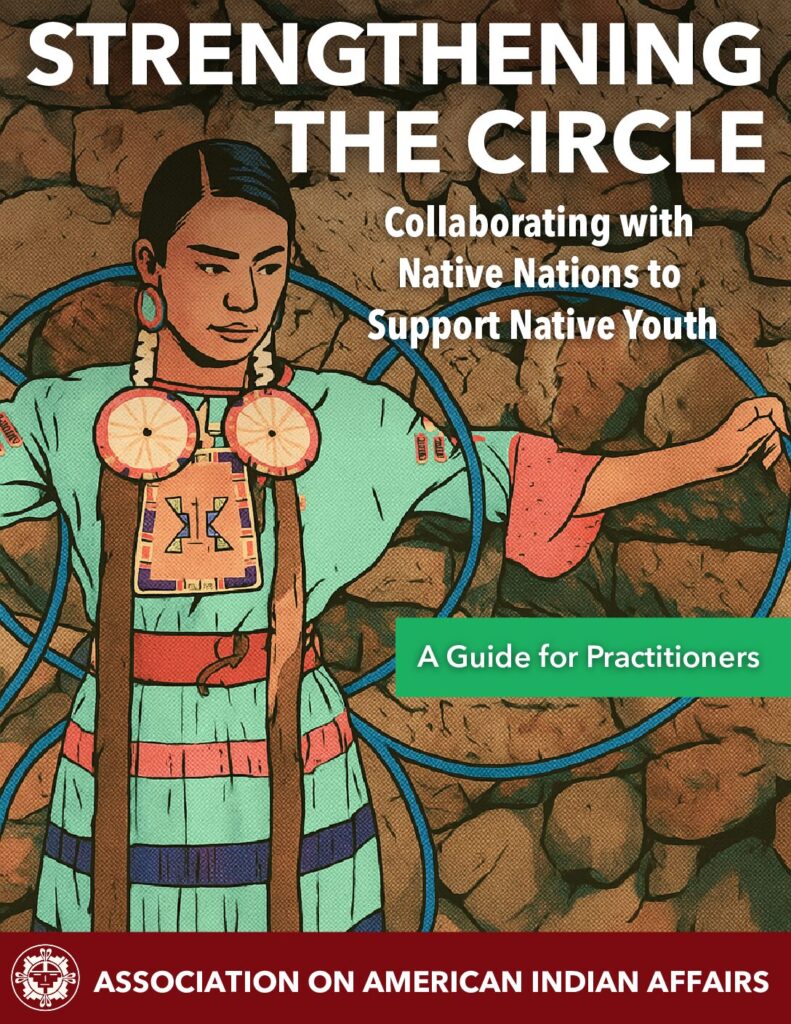
From the Introduction, developed by the Association on American Indian Affairs: “This guide offers practical, real-world tips to help you work more effectively with Native youth involved in the justice system. It explains why working with Native Nations is not only important—but also different from working with other agencies or partners in your county or…
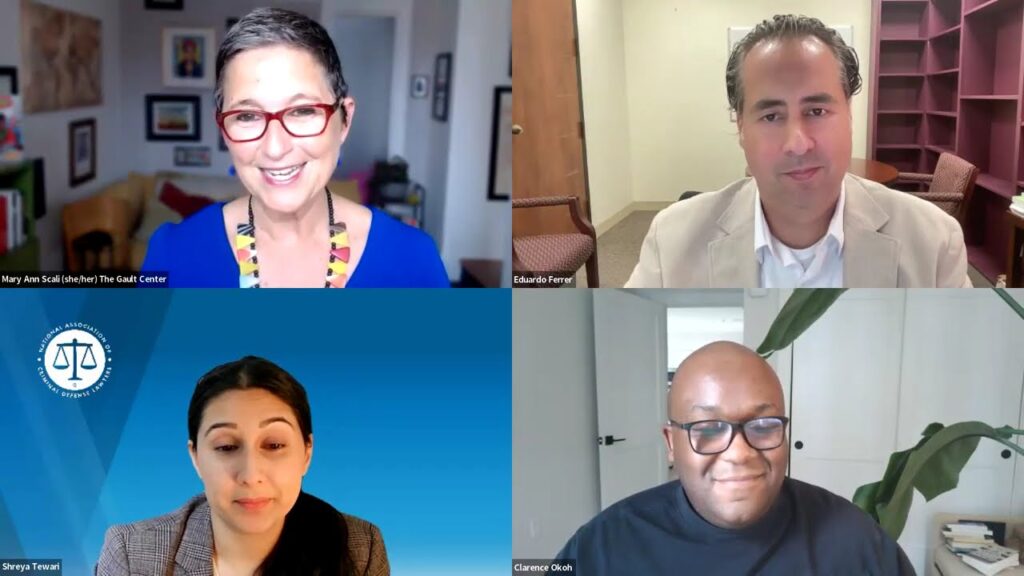
On July 14th, 2026, the Gault Center and the Georgetown Juvenile Justice Clinic & Initiative hosted a webinar on Learning, Litigating, Liberating: Defending Against AI Surveillance of Youth. As AI Surveillance of youth increases in everyday lives from “bullying monitors” to vape detection to facial recognition and so much more, this webinar provides an overview of how and where AI Surveillance is being used and what youth defenders and…
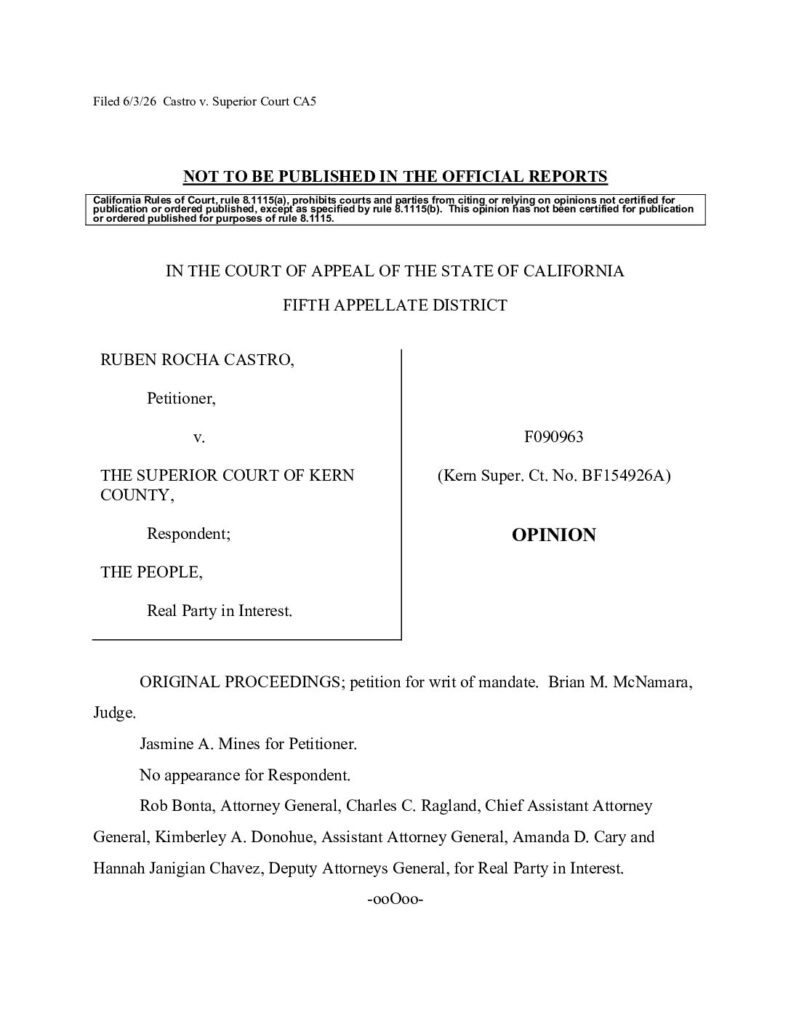
The California 5th District Court of Appeal held that the defense was entitled to discovery related to racial disparities in plea deals to voluntary manslaughter, finding that defense’s statistical evidence showing that Latine individuals in Kern County were more likely to be charged with murder and receive longer sentences than white individuals satisfied the “plausible…

This Essay, written by HyeJi Kim at the Gault Center, details the role of youth defenders in abolition. The Essay offers five entry points for youth defenders to embrace an abolitionist ethos to build toward a horizon of interdependence: This Essay is written both in honor of the youth defense community and for the youth…
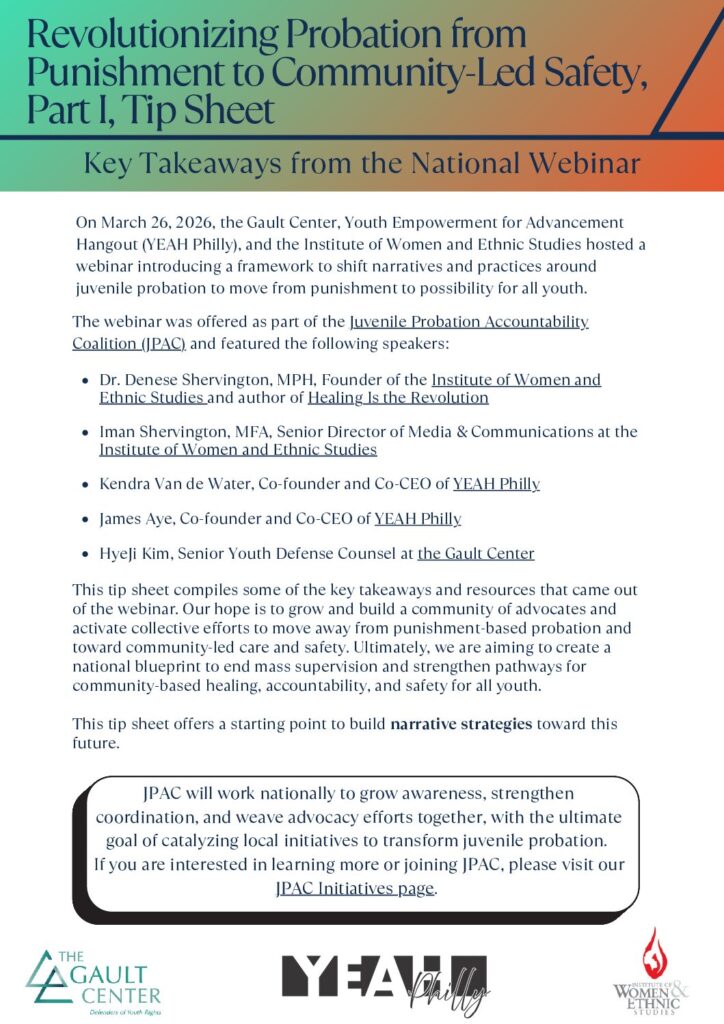
Compiles key takeaways and resources on building narrative strategies to transform juvenile probation, offered during a webinar on Revolutionizing Probation from Punishment to Community-Led Safety, Part I.
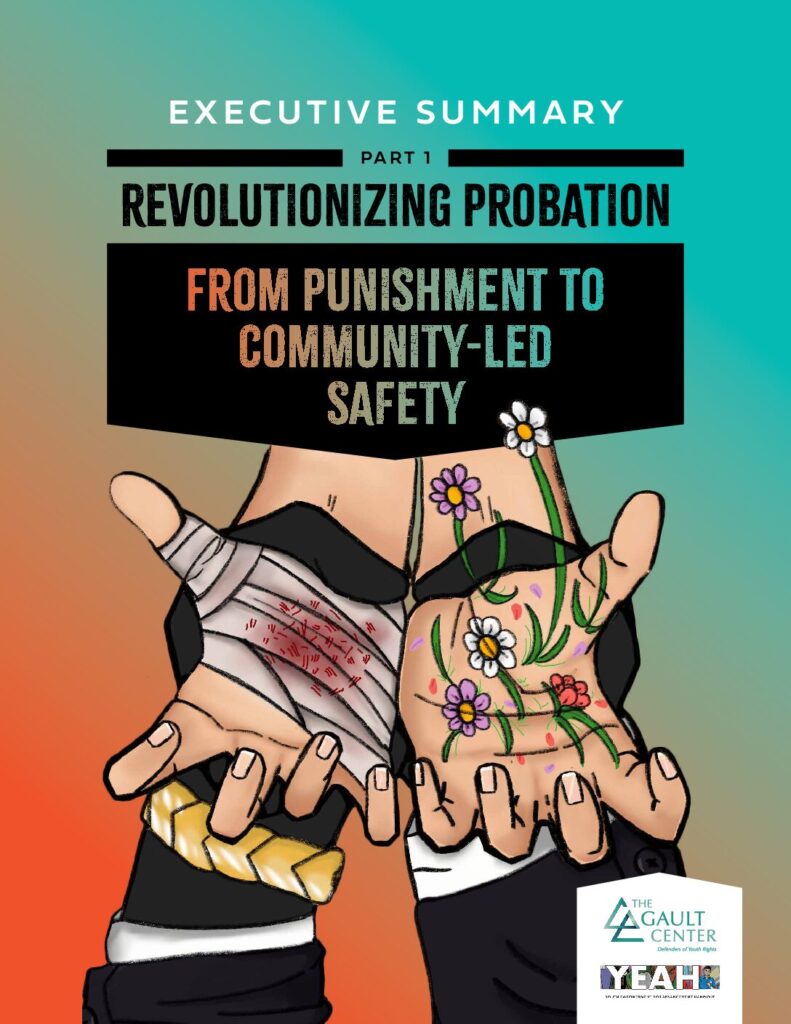
Summarizes what young people are saying about juvenile probation and offers a visual timeline highlighting the historical lineage of probation as a form of racialized social control.
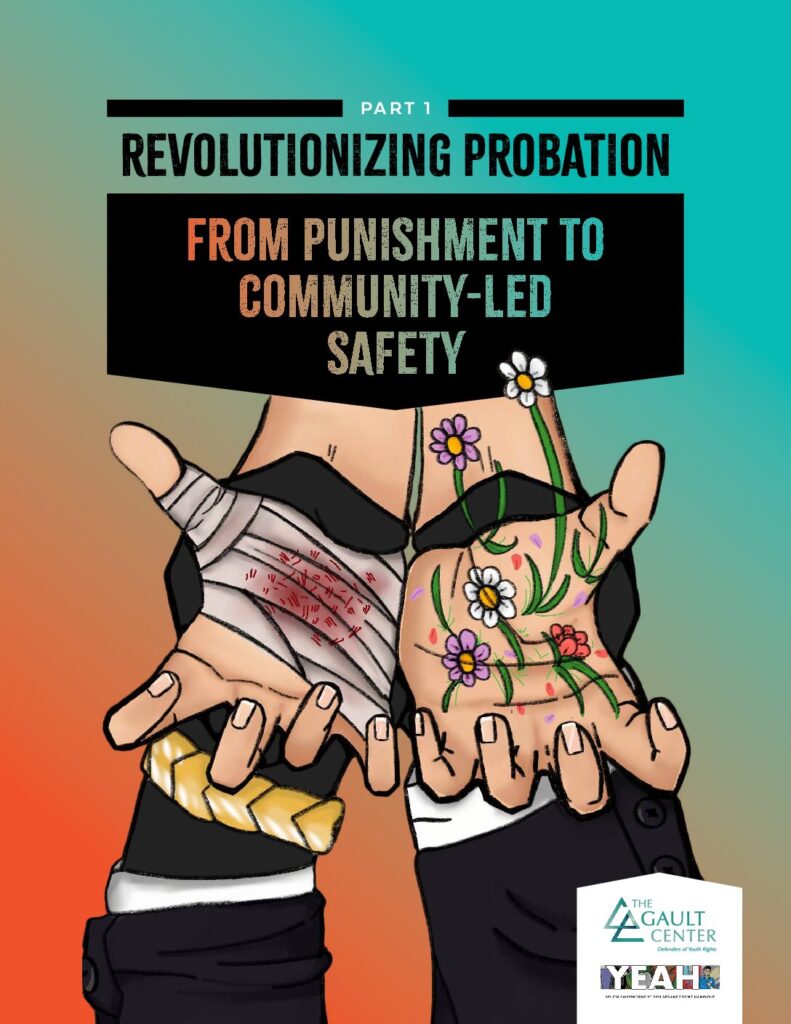
Examines young people’s experiences on juvenile probation and the racialized history of juvenile probation in our country.

“The modern American criminal justice system emerged not simply from Progressive-Era reform, but from the intertwined projects of eugenics, psychiatry, and legal modernism. Drawing upon archival, historical, and doctrinal sources, this Article reveals how early twentieth-century reformers—including judges, criminologists, and social scientists—recast criminal law as a mechanism for identifying and controlling hereditary “defect.” Under the…
This law review article written by Professors Megan T. Stevenson and Robynn J.A. Cox uncovers the eugenic origins of risk assessment tools and highlights how modern-day uses of risk assessments for preventive detention still perpetuate eugenic criminology, albeit with new terminology. This article challenges the ongoing influence of eugenics in identifying who is “high risk”…
This supplemental memorandum is related to the sample motion to dismiss and/or suppress evidence based on selective prosecution, which argues for special discovery and dismissal and/or suppression based on a claim of selective prosecution in a jaywalking case. This supplemental memorandum outlines Ohio’s Equal Protection guarantee in the context of the impact of implicit racial…
This sample motion argues for special discovery and dismissal and/or suppression based on a claim of selective prosecution in a jaywalking case. Highlighting local police data on racial disparities in jaywalking-related stops, this motion argues that police conduct had a discriminatory effect on Black youth in Cincinnati, in violation of their state and federal equal…

The Supreme Court of Washington found a Miranda violation based on a totality of the circumstances analysis, which the Court noted must include consideration of race and age. The Court stated in relevant part: “The United States Supreme Court has established that in determining whether a suspect is in custody under Miranda, we must “‘examine…

The Fifth District Court of Appeal held that gang enhancements may form the basis of a petition for habeas relief and appointment of counsel under the state’s Racial Justice Act. The court stated in relevant part: “The present petition alleges racially disparate treatment, and it identifies the statutory subsections implicated as the basis for the…

The Delaware Family Court granted a youth’s suppression motion, finding that age and race must be considered when determining whether a seizure has occurred under the Fourth Amendment. The court states in relevant part: “Children are not adults. In J.D.B. v. North Carolina, the Supreme Court decided that children should not be treated like adults for the purposes of…

CfJJ delivered written testimony to the Massachusetts’ Joint Committee on Racial Equity, Civil Rights and Inclusion on information-sharing practices between the juvenile and criminal legal systems and federal immigration authorities. Following a review of public records requests around these practices, CfJJ found a pattern of collaboration between police, prosecutors, probation officers, and Immigration and Customs…

In October 2025, the Gault Center convened over three hundred youth defense lawyers and advocates at our annual Youth Defender Leadership Summit. Together, we practiced the cultivation of community in service of building a more just, more liberated, and more human humanity for all children and for us all. This resource captures the shared learnings…

From the abstract: This Article employs the Law Review’s Discourse symposium on my book, Unreasonable: Black Lives, Police Power, and the Fourth Amendment, as a starting point to foreground and elaborate on an idea that I reference in that text: police power abolition. The Article begins by describing the central insight that motivates Unreasonable—namely, that…

This resource from Lambda Legal and the American Bar Association Children’s Rights Litigation Committee gives attorneys an overview on how to approach client interviewing and relationship building in a respectful and trauma-informed way. The page discusses the importance of identity for young people’s well being and on their legal cases. It also reviews basic interview…


From the Discussion: “This study illuminates pathways for future research to explore facility closures. Such research should investigate the impact of specific drivers supporting completed closures of youth facilities, including the combination of stated reasons to appeal to different audiences. Notably, we only found 1 paper in our scoping review that explores the strategies used…
From the abstract: “Hundreds of thousands of children are brought under the jurisdiction of delinquency courts every year in the United States. Despite the reality that most children engage in delinquent behavior during their adolescence, poor children, children of color, children with disabilities, and children who identify as LGBTQIA+ comprise a disproportionate number of those who become delinquency system-involved. These disparities exist…


From the introduction: “Youth justice advocates, including lawyers, organizers, and other youth and adult movement builders, want to replace the current damaging, discriminatory, and ineffective juvenile and criminal legal systems1 with better approaches. We envision approaches that support children, help them f lourish, and contribute to a safe, equitable, and healthy community. How do we…

Professor Kris Henning and Rebba Omer authored a law review article on decriminalizing normal adolescent behaviors, race, and disabilities. This article maps a way forward for all system actors in the juvenile legal system to mitigate and buffer against the harms of juvenile legal system involvement for youth with disabilities. Specifically, this article outlines youth…
