
Rearrest or Recidivism
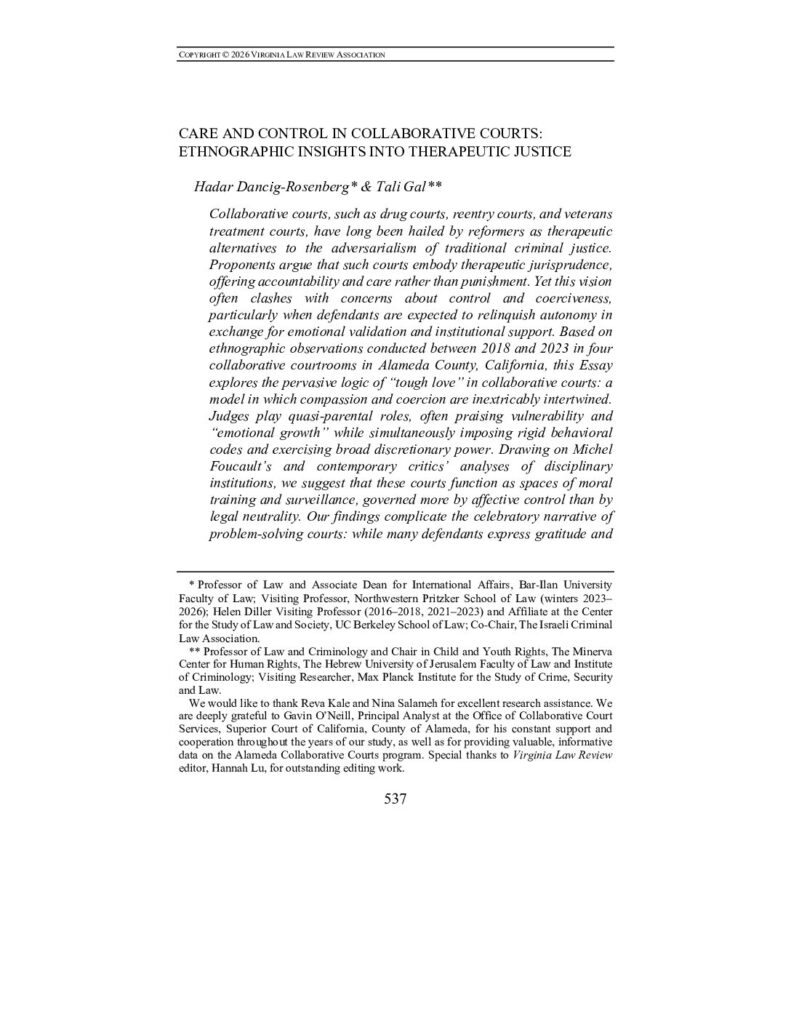
“Collaborative courts, such as drug courts, reentry courts, and veterans treatment courts, have long been hailed by reformers as therapeutic alternatives to the adversarialism of traditional criminal justice. Proponents argue that such courts embody therapeutic jurisprudence, offering accountability and care rather than punishment. Yet this vision often clashes with concerns about control and coerciveness, particularly…
This report from the Sentencing Project provides an overview of restorative justice (‘RJ’) diversion programs including research on the results of these programs, the advantages of RJ diversion programming over court involvement, benefits to victims, and recommendations for implementing RJ programs. From the Executive Summary: “Restorative justice (RJ) diversion programs address adolescent lawbreaking outside the court system using a process designed to address victims’ needs and repair the harm caused by youth misconduct.…
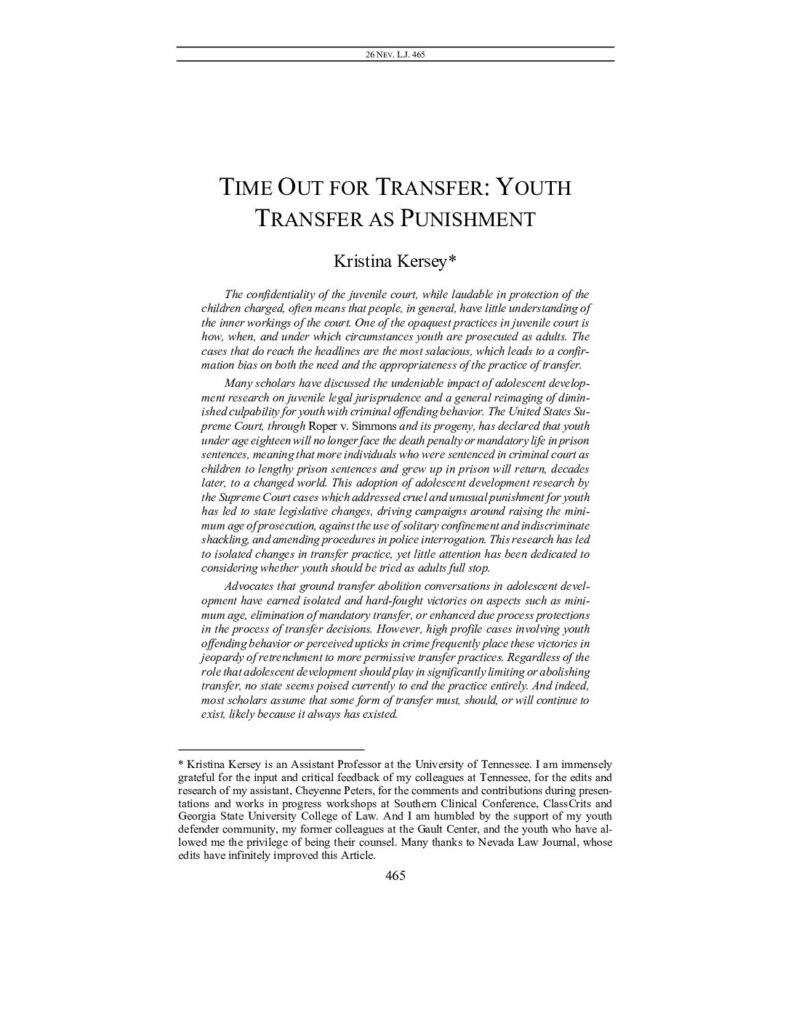
This law review article written by Professor Kristina Kersey explores transfer as a form of punishment and calls for jurisdictions to enact a moratorium on transfer, drawing lessons from the movement to end the death penalty. Noting similarities between transfer and the death penalty, this article analogizes the two and argues that transfer mechanisms operate…
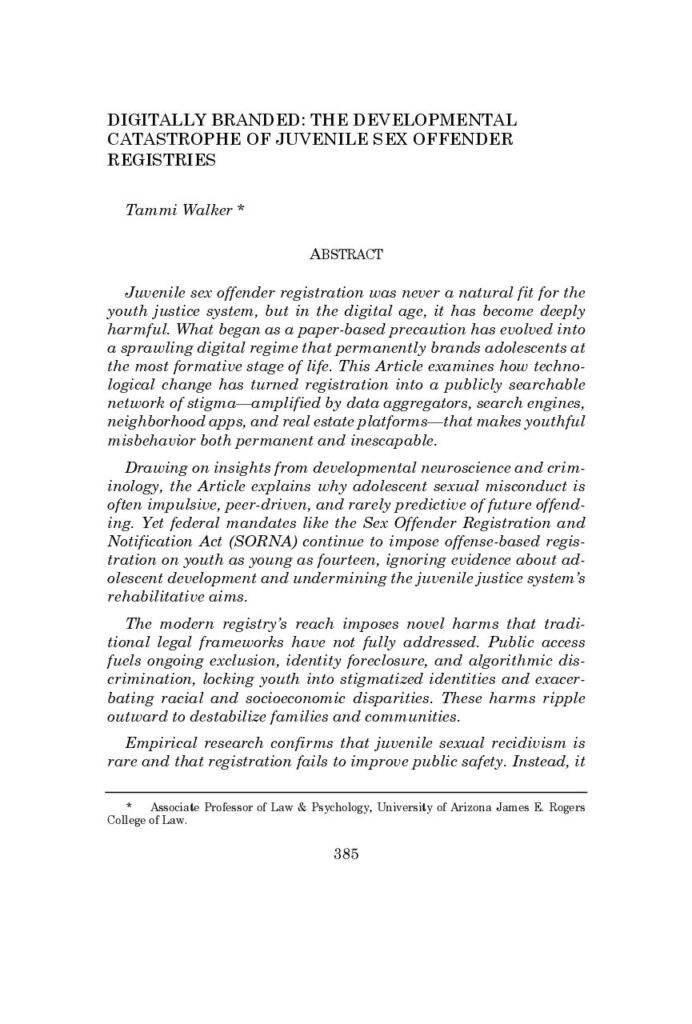
“Juvenile sex offender registration was never a natural fit for the youth justice system, but in the digital age, it has become deeply harmful. What began as a paper-based precaution has evolved into a sprawling digital regime that permanently brands adolescents at the most formative stage of life. This Article examines how technological change has…

The National Institute for Criminal Justice Reform released a report spotlighting promising examples of credible messenger and intensive life-coaching programs to reach youth charged with serious offenses. “This brief argues that the next phase of youth justice reform must focus on intentionally and effectively serving HR2 youth. Doing so will require moving beyond strict replication…
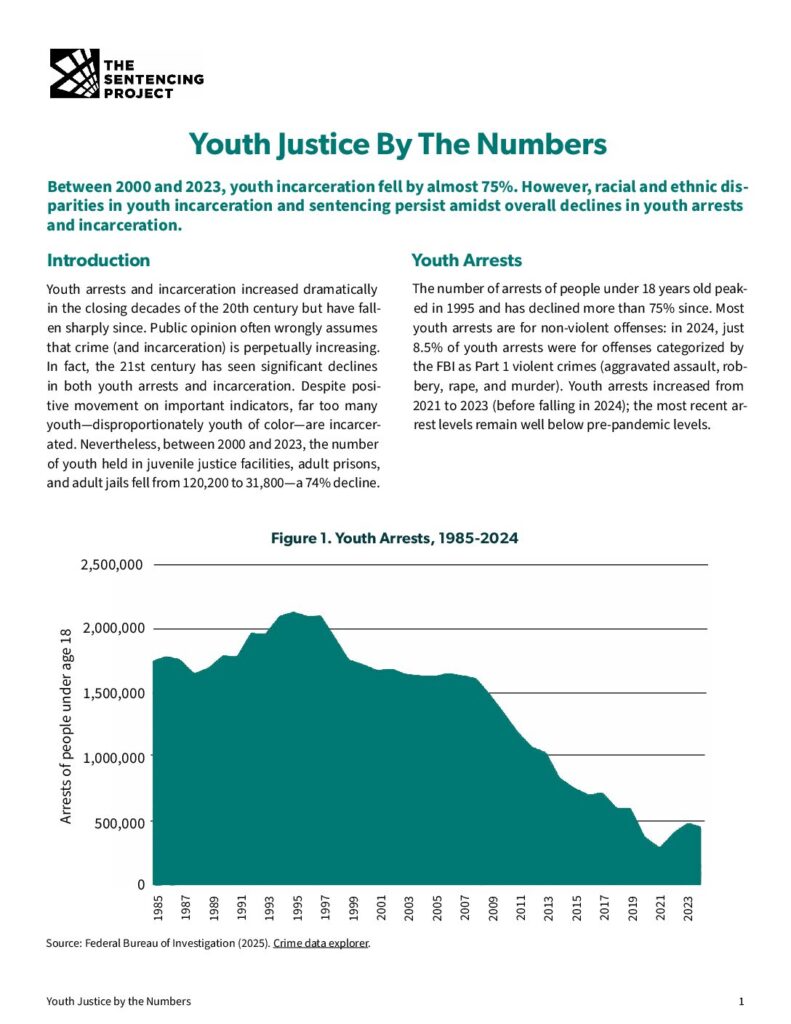
The Sentencing Project released an updated snapshot of the numbers of youth in the juvenile legal system from 2000 to 2023, finding significant declines in youth arrests and incarceration, though racial and ethnic disparities persist. The report calls for the need to continued shrinking the juvenile legal system by increasing informal or diversionary responses to youth arrests. Introduction: “Youth arrests and incarceration increased dramatically in the closing…
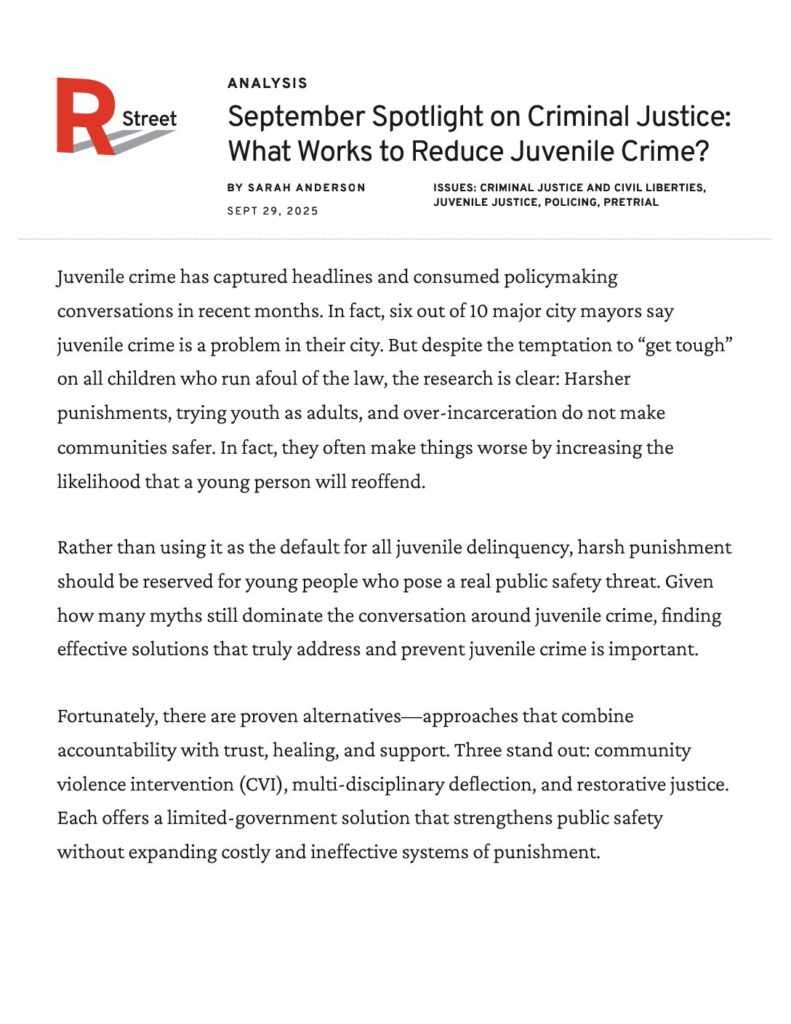
From the R Street Institute: “Juvenile crime has captured headlines and consumed policymaking conversations in recent months. In fact, say six out of 10 major city mayors say juvenile crime is a problem in their city. But despite the temptation to “get tough” on all children who run afoul of the law, the research is clear: Harsher punishments, trying youth…
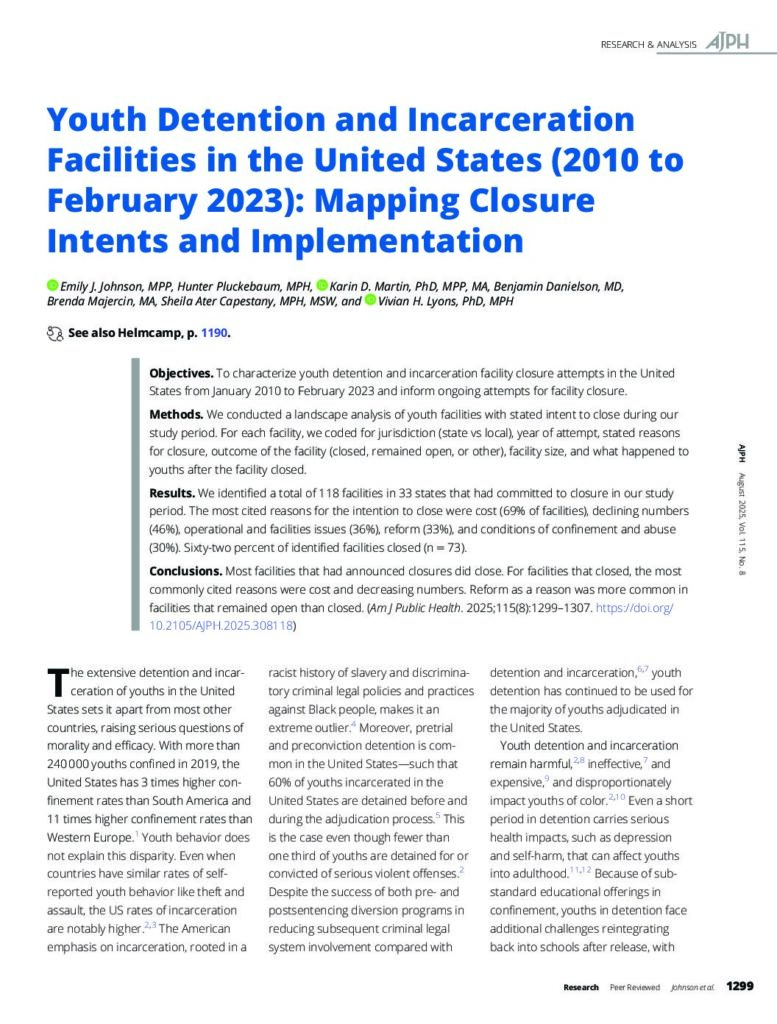
From the Discussion: “This study illuminates pathways for future research to explore facility closures. Such research should investigate the impact of specific drivers supporting completed closures of youth facilities, including the combination of stated reasons to appeal to different audiences. Notably, we only found 1 paper in our scoping review that explores the strategies used…

This report from National Institute for Criminal Justice Reform offers six principles of a positive youth justice system (‘PYJS’) including: 1) Minimize contact with the juvenile justice system, 2) partner with youth and families to develop and share ownership of case plans, 3) community-based organizations should take the lead, 4) build on youth assets and…
This amicus brief from the Center for Law, Brain, and Behavior highlights the adolescent capacity for significant growth and social maturation as well as criminological evidence on the unlikelihood of reoffending and responsiveness to evidence-based treatment among youth accused of sex offenses. The brief ultimately calls for the court to find that a de facto life without parole sentence is grossly disproportionate based on developmental science and research. From the Summary of Argument: “Evan McCarrick Jerald is…

This paper is part of the Series on Learning from Civil Rights Lawsuits from the Civil Rights Litigation Clearinghouse and focuses on parole review procedures for individuals serving long sentences for crimes committed under age 18, discusses constitutional dimensions of parole review for this group, and proposes model policies supporting a meaningful opportunities for release. From the Executive Summary: “In recent years, people serving…
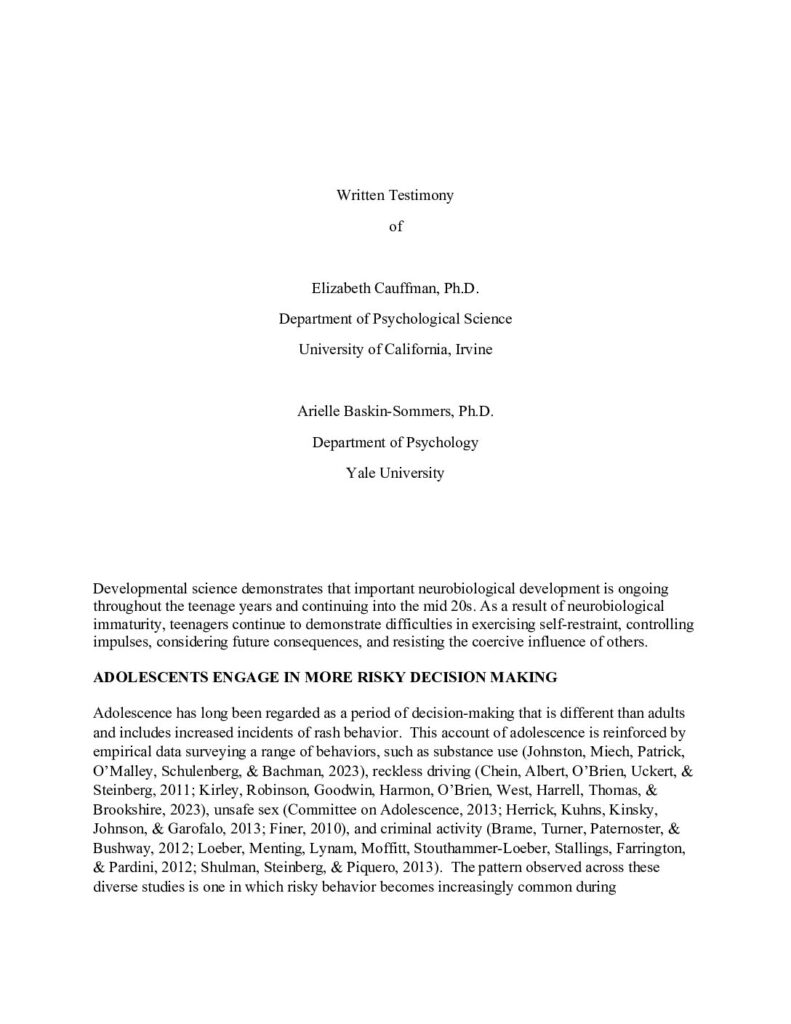
This written testimony from Elizabeth Cauffman, Ph.D. and Arielle Baskin-Sommers, Ph.D. discusses what developmental science says about the impact of brain development on adolescent risk taking, decision making, and susceptibility to social and peer influence as it relates to a young person’s culpability. The testimony also provides information on diversion and its impact on lower recidivism and improved public safety. Below is an excerpt from…
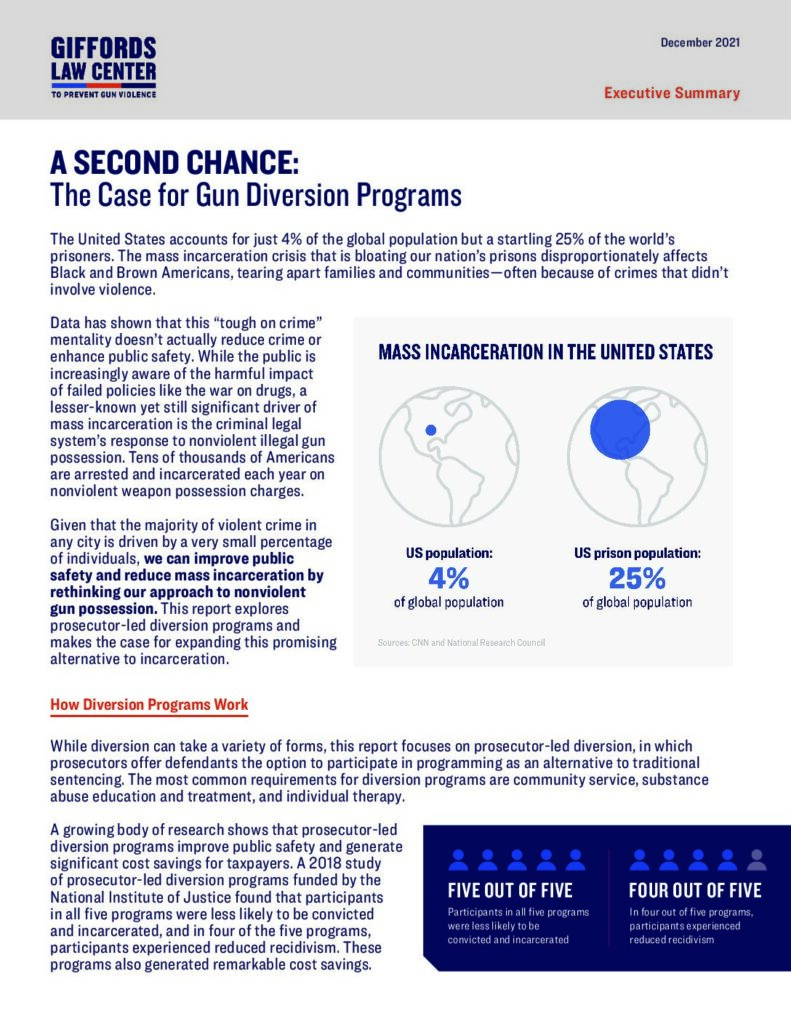
This executive summary of from the Giffords Law Center provides an overview of diversion programs for nonviolent gun possession focusing on the Pathways to New Beginnings program in Minneapolis. Additionally, the resource includes recidivism rates for people who participated in the program and offers recommendations to prosecutors and state legislators on these types of diversion…
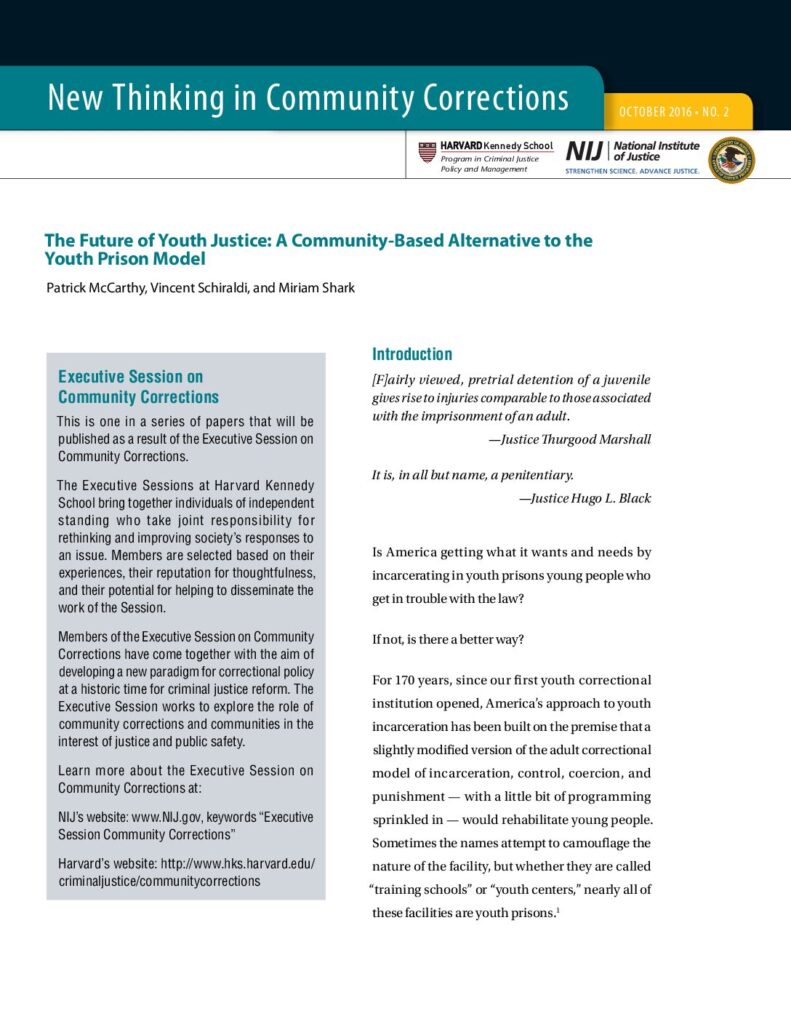
This paper from the Executive Session on Community Corrections at the Harvard Kennedy School examines the history of youth incarceration and discusses how the inherently flawed model of youth prisons demands systemic reforms, including closure of youth prisons, to actualize safer communities, and positive youth outcomes. From the introduction: “For 170 years, since our first youth correctional institution opened, America’s approach…
This report from the Centers for Disease Control and Prevention provides a review of the effectiveness of laws and policies that facilitate the transfer of youth to adult court and ultimately, recommends against transfer to prevent or reduce violence. From the Summary: “The independent, nonfederal Task Force on Community Preventive Services (Task Force), which directs…
