
Transfer or Bindover or Certification

This issue brief by the Juvenile Justice Initiative provides an overview of transfer laws in Illinois. Additionally, the brief reviews demographic data on young people who are being tried as adults and identifies the ways that transfer fails children and public safety in the state of Illinois. The brief ends by calling for a return…

This article featured on the Frameworks Institute website offers research-based communication strategies for combating the manufactured controversy of a “crime emergency” caused by adolescents in Washington D.C. The article provides a topline nonpartisan message for responding to the relentless, toxic messaging around adolescent crime and outlines five framing recommendations for discussing the harmful policies being…
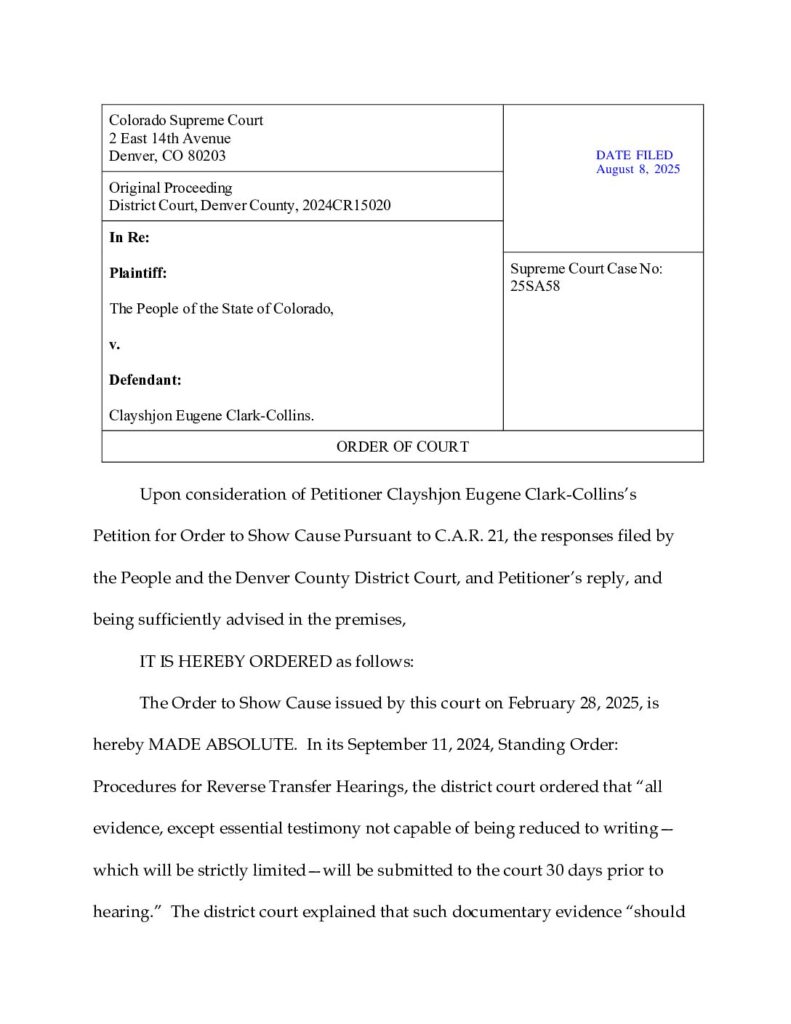
In People v. Clark-Collins, the Supreme Court of Colorado remanded the case ordering the district court to amend its standing order on the presentation and scope of testimony and evidence at a reverse transfer hearing as follows: “While the trial court has significant discretion regarding the presentation of evidence and the application of the rules of evidence, there are limits. In…

This report from the National Center for Youth Law examines the emerging policies across the United States that are likely to reverse the downward trend of youth incarceration rates.

The Sentencing Project released a report on adolescent gun possession cases, highlighting the harms of punishment and calling for comprehensive community-based initiatives to reduce gun violence. This report offers research on the reasons why youth carry guns, ranging from peer influence to past experiences of trauma and walks through how juvenile court systems typically respond…

The Gault Center submitted an amicus brief in the Supreme Court of Ohio on a case involving a young person’s right to appeal a competence and transfer determination in juvenile court after entering a guilty plea in adult court. Outlining procedural justice arguments and the constitutional right to a competency and transfer hearing, the brief…

This technical assistance bulletin was created by the National Council of Juvenile and Family Court Judges (NCJFCJ) focuses on the practices of judicial transfer, blended sentence and reconsideration hearings and underscores the impact of adolescent development and other factors that courts should consider when making transfer or certification decisions. From the bulletin: “As is evident…

This resource is part of the Youth Defender Advocacy Program (YDAP) curriculum, a specialized trial advocacy training program for youth defenders.


Human Rights Watch conducted a study on New Jersey’s waiver mechanisms, finding that the state is effectively operating a prosecutorial waiver system that is disproportionately harming Black and Latine youth, sidelining judicial oversight, and prioritizing punishment over treatment. This report offers recommendations for a wide range of system professionals to ultimately end the prosecution of…

This report challenges the notion that Georgia’s youth legal system is built to rehabilitate and suggests measures that protect the health and humanity of all the state’s children. First, this report will explore the myth of the “superpredator” and its impact on perceived Black youth criminality. Second, it will detail the state’s school-to-prison pipeline and…

This report details the results of the first-ever state-wide Adverse Childhood Experiences (ACEs) survey administered to people currently incarcerated for crimes they committed as children (under eighteen). The trauma measured from ACEs surveys include physical, sexual, and emotional abuse; physical and emotional neglect; separation from parents; mental illness or substance abuse in the home; parent…

This report from National Institute for Criminal Justice Reform offers six principles of a positive youth justice system (‘PYJS’) including: 1) Minimize contact with the juvenile justice system, 2) partner with youth and families to develop and share ownership of case plans, 3) community-based organizations should take the lead, 4) build on youth assets and…

The Office of Juvenile Justice and Delinquency Prevention and the National Institute of Justice released a fact sheet highlighting key delinquency caseload trends from 2021. There were 437,300 delinquency cases in the United States, down by 39% from 2020, contributing to an overall decline in delinquency cases since its peak in 1997. In 2021, 44%…
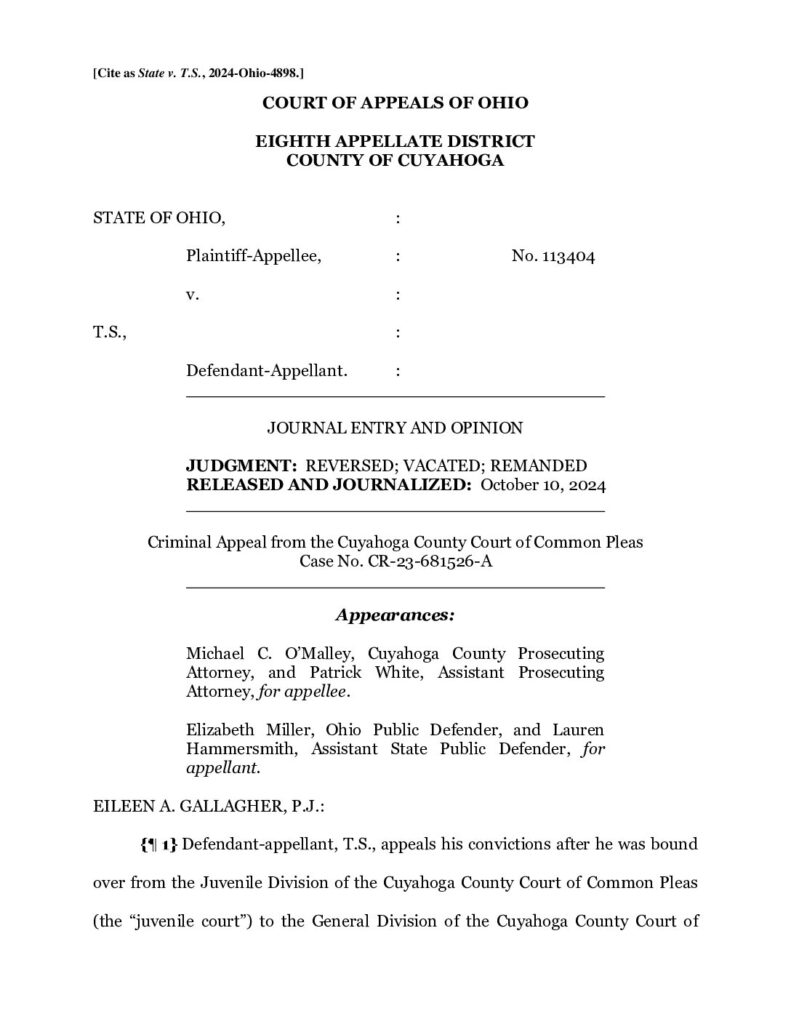
In State v. T.S., the Ohio Court of Appeals ruled the juvenile court abused its discretion when it transferred T.S.’s case to adult court pursuant to R.C. 2152.12(B) (Ohio’s discretionary transfer law). The court found the evidence presented in the transfer hearing, did not support a finding that T.S. was not amenable to rehabilitation within the juvenile system. The court offers the following language in support of its decision:: “Few,…

This one-page infographic from the Office of Juvenile Justice and Delinquency Prevention illustrates trends in delinquency cases in 2022.

The New Jersey Supreme Court held the Family Part did not abuse its discretion when it decided to hear the State’s request for waiver motion before E.S.’s suppression motion. The court declined to adopt a bright line rule for the order in which a Family Part should hear waiver and suppression motions but instead provided…
