
Transfer or Bindover or Certification
This guidebook from National Conference of State Legislatures provides information on current youth justice policy at the federal and state level exploring a range of youth justice policy areas rom age of juvenile court jurisdiction and transfer into adult court to diversion and probation. From the introduction: “Today, a sound body of youth justice law…

This report from Human Rights for Kids details survey results from 2,200 individuals who were incarcerated as adults for crimes they committed as children. The findings from the report demonstrate the fact that “children tried as adults are often victims long before they became [system-involved],” discusses the intersection between childhood trauma and the legal system,…
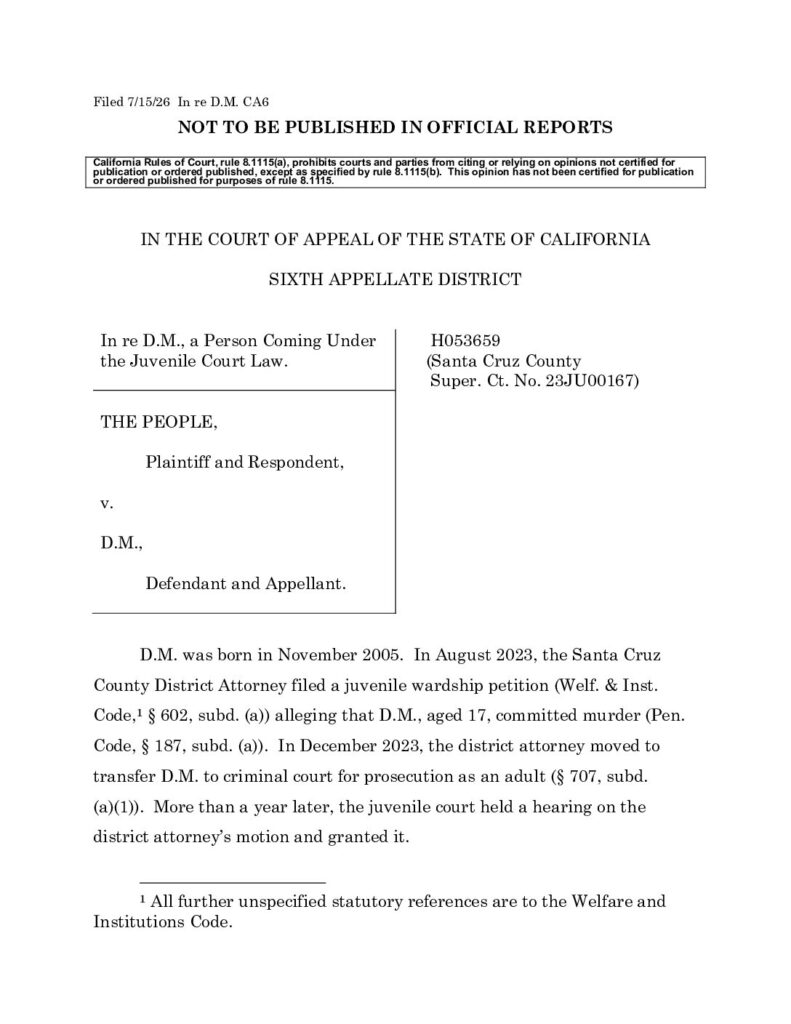
The California 6th District Court of Appeal reversed a transfer order, clarifying that the prosecution bears the burden of proof to establish by clear and convincing evidence that a youth is not amenable to rehabilitation under the jurisdiction of juvenile court in order to transfer a youth to adult court. The court stated in relevant…

A concurring statement in a Pennsylvania Supreme Court case highlights the need for expedited appeals related to transfer determinations. From the concurring statement by Justice Wecht: This problem reveals a challenging conflict of interests. There is nothing improper in the Commonwealth’s exercise of its right to appeal an adverse decertification order, and it should not…
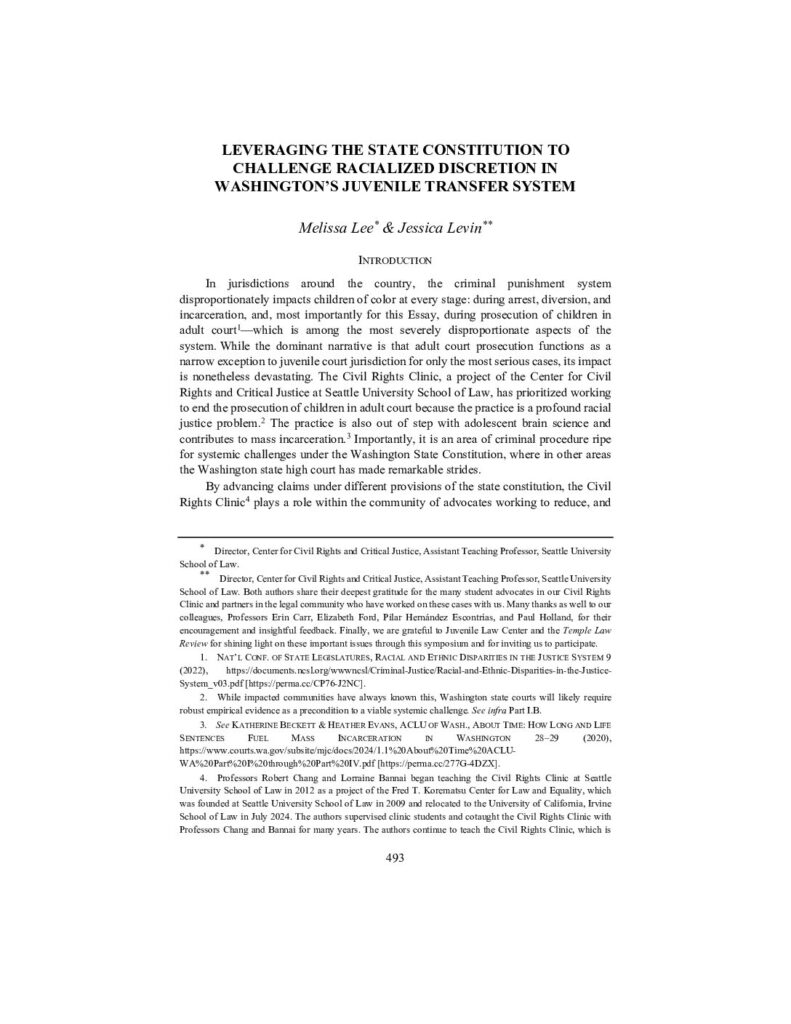
Leveraging the State Constitution to Challenge Racialized Discretion in Washington’s Juvenile System
From the Abstract: In jurisdictions around the country, the criminal punishment system disproportionately impacts children of color at every stage: during arrest, diversion, and incarceration, and, most importantly for this Essay, during prosecution of children in adult court—which is among the most severely disproportionate aspects of the system. While the dominant narrative is that adult…

From the Sentencing Project: “Despite their many flaws, juvenile courts are better for youth who break the law than are adult courts. Contrary to critics’ beliefs, juvenile courts regularly address serious and violent crimes. Juvenile courts do not offer a “slap on the wrist;” they often issue harsh punishments. The frequent alternative, sending youth to…
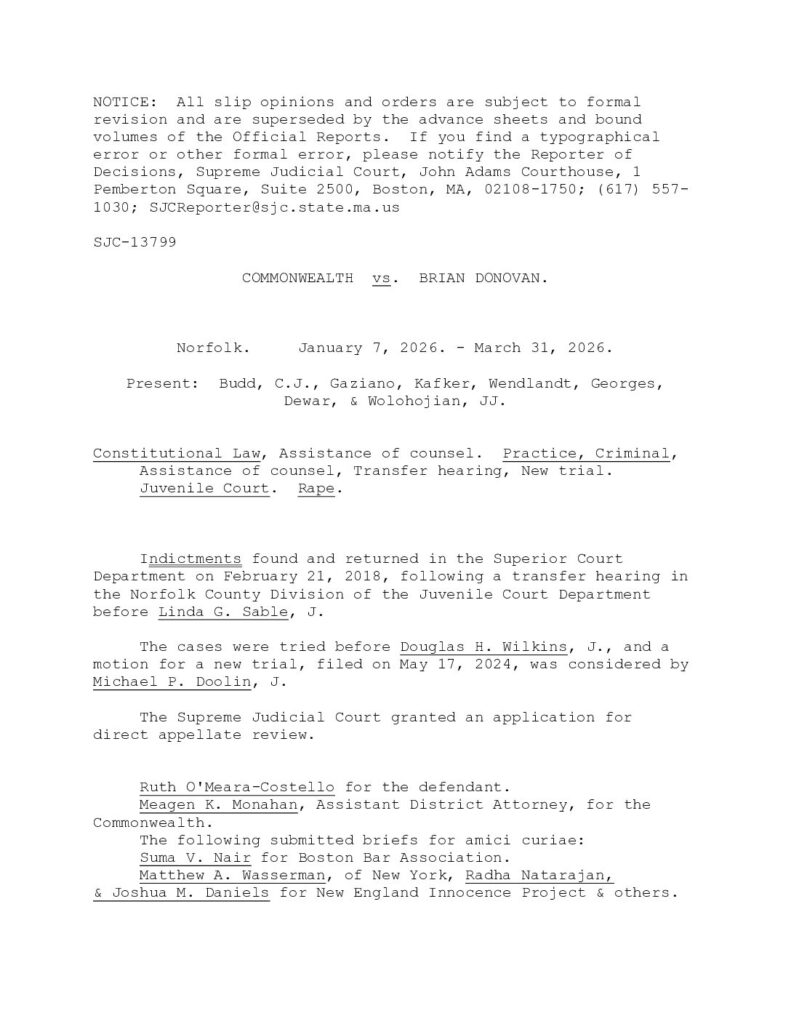
The Supreme Court of Massachusetts held that a transfer hearing is a “critical stage of the criminal process” that requires effective assistance of counsel under the 6th Amendment of the U.S. Constitution. The Court held that defense counsel’s failure to present evidence on youthfulness, developmental maturity, and rehabilitation prevented the judge from considering factors critical…
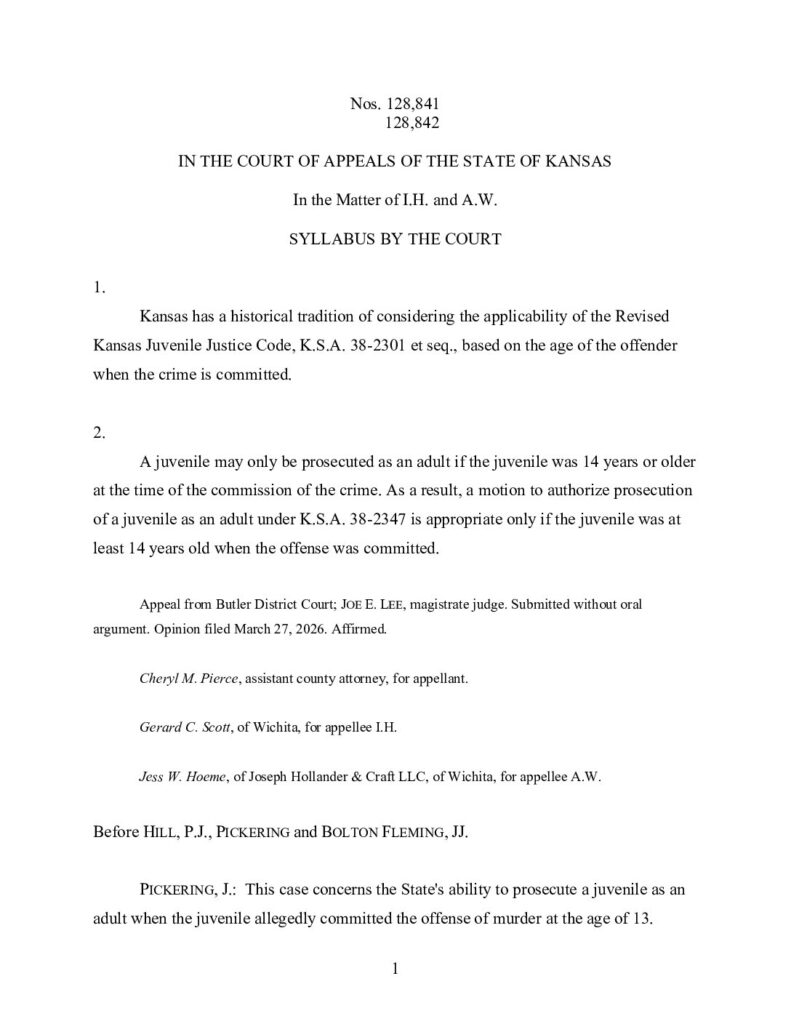
The Kansas Court of Appeals held that a youth may not be prosecuted as an adult if they were under the age of 13 at the time of the offense based on the court’s statutory interpretation of K.S.A. 38-2347. The court stated in relevant part: “From this review, we do not find that the Legislature…
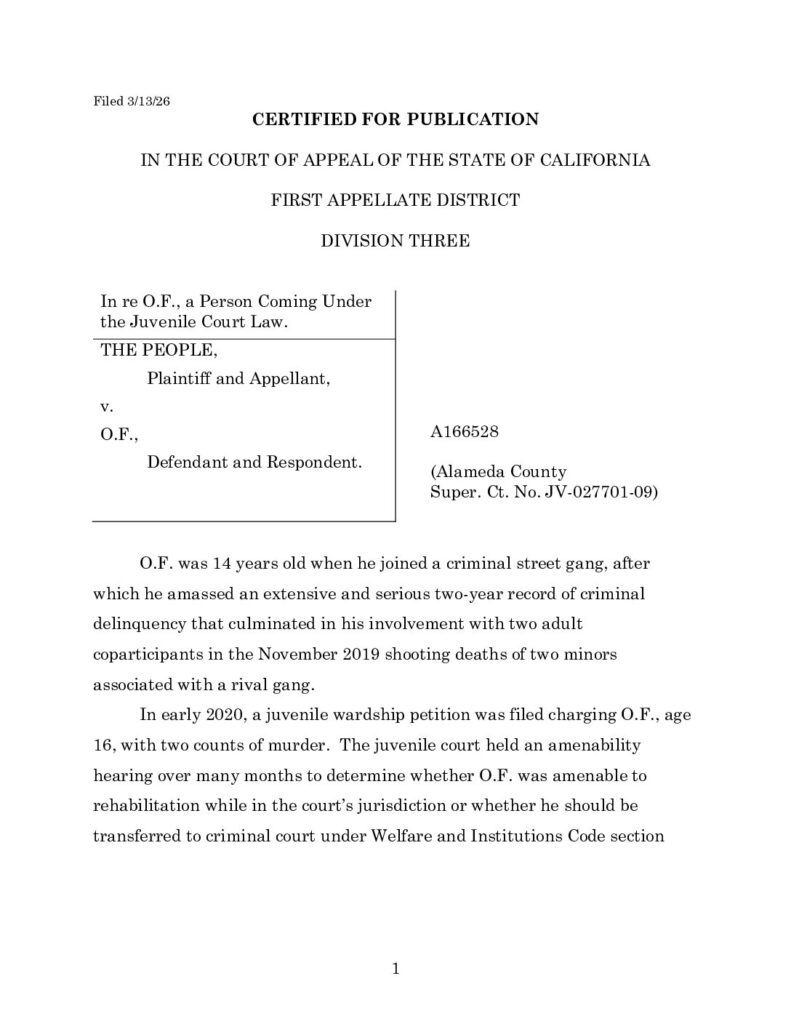
The California Court of Appeals First District reversed and remanded a trial court’s order transferring O.F. to adult court, finding that the trial court must make specific findings on a young person’s amenability to rehabilitation and must meet the heightened burden of proof. The court reasoned in part, “The recent amendments to section 707 have…
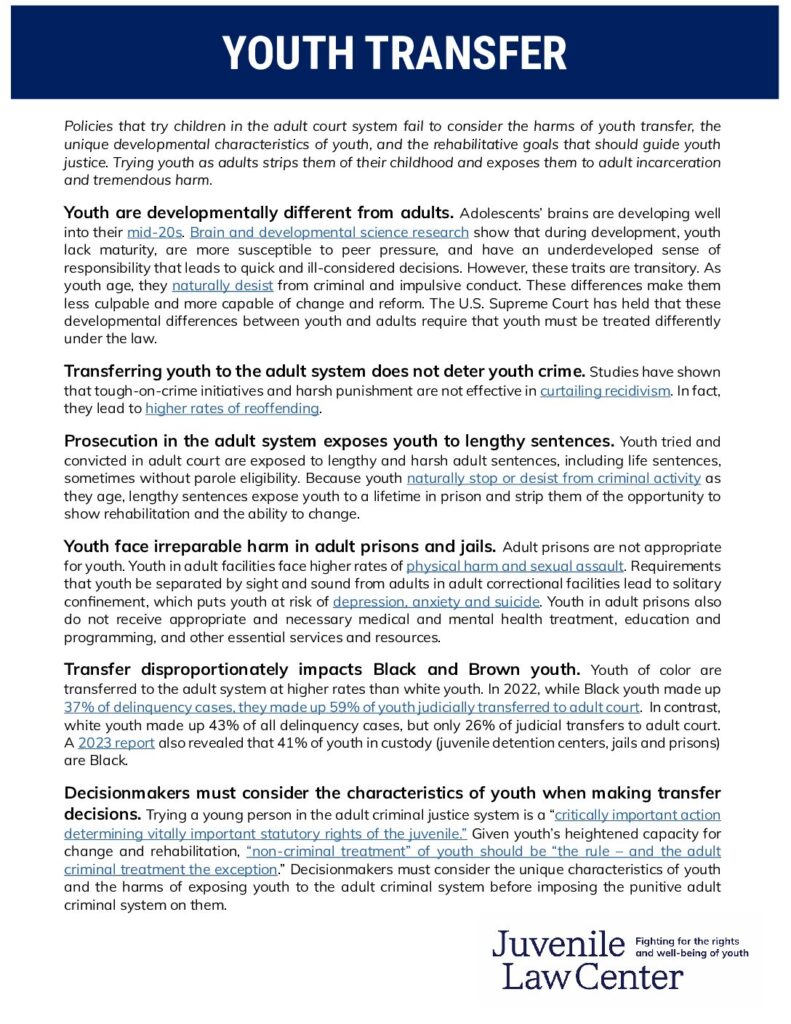
This one-pager from the Juvenile Law Center can be used as an educational tool for judges, policy makers, community members and other decision makers when talking about transfer to adult court. From the one-pager: “Policies that try children in the adult court system fail to consider the harms of youth transfer, the unique developmental characteristics…
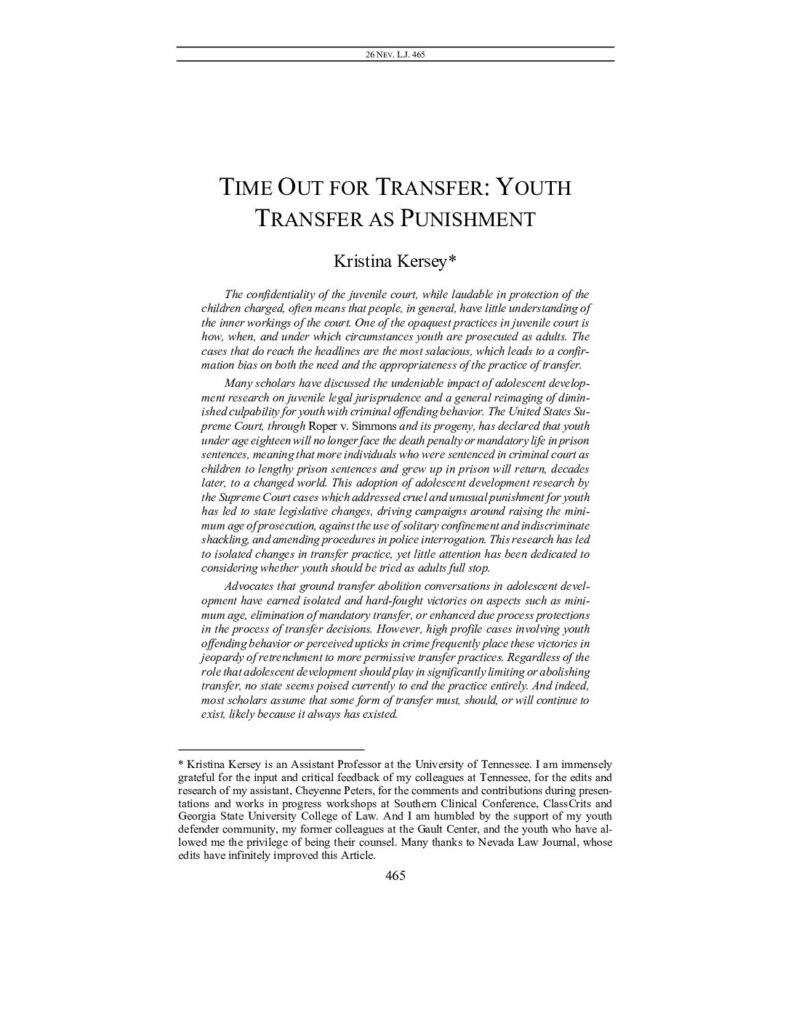
This law review article written by Professor Kristina Kersey explores transfer as a form of punishment and calls for jurisdictions to enact a moratorium on transfer, drawing lessons from the movement to end the death penalty. Noting similarities between transfer and the death penalty, this article analogizes the two and argues that transfer mechanisms operate…
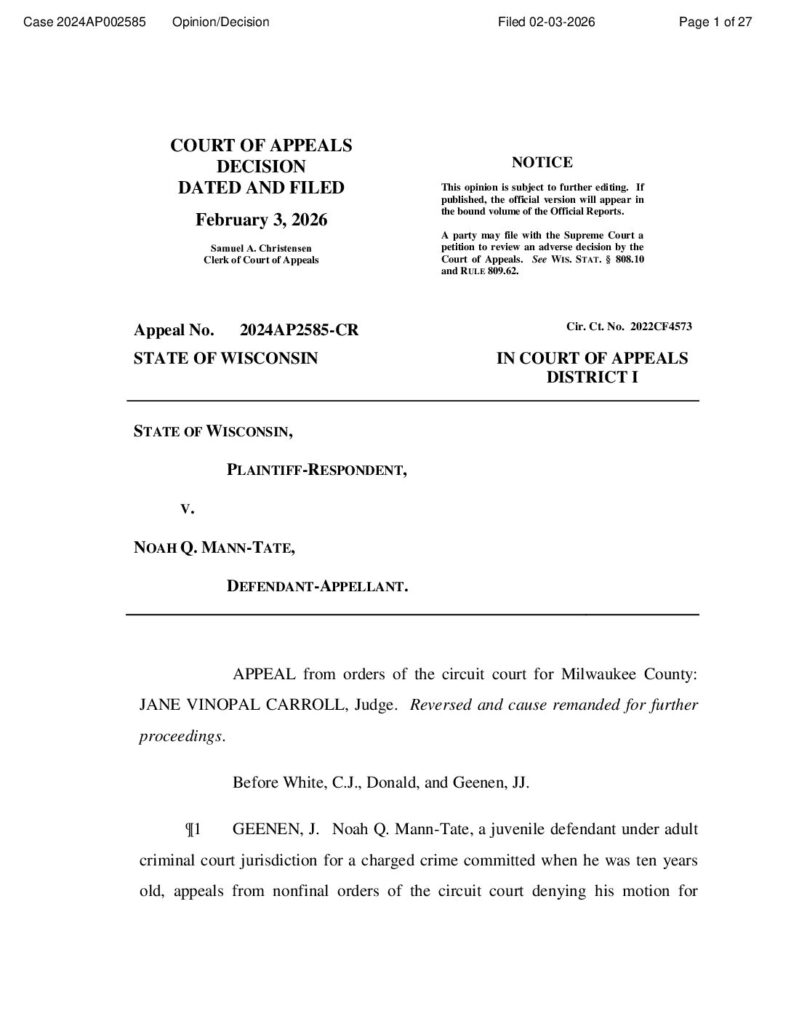
The Court of Appeals of Wisconsin held that the state’s reverse waiver statute was unconstitutional “to the extent it does not require circuit courts to consider the unique attributes of youth identified by the United States Supreme Court.” In Wisconsin, a youth’s case that is directly filed in adult criminal court may be sent to…
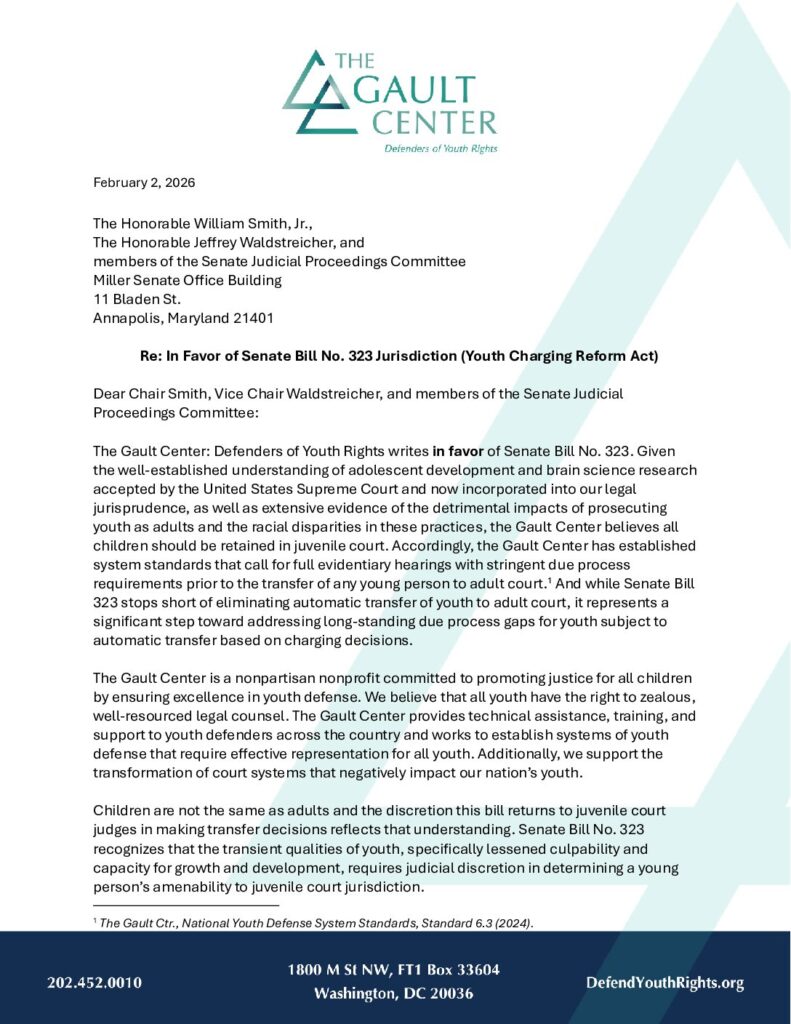
This letter written and submitted to the Maryland Senate Judicial Proceedings Committee on behalf of the Gault Center, outlines its reasons for supporting Maryland Bill No. 323 (named the Youth Charging Reform Act), which would limit the types of cases eligible for automatic transfer to adult court. From the letter: “The Gault Center: Defenders of…
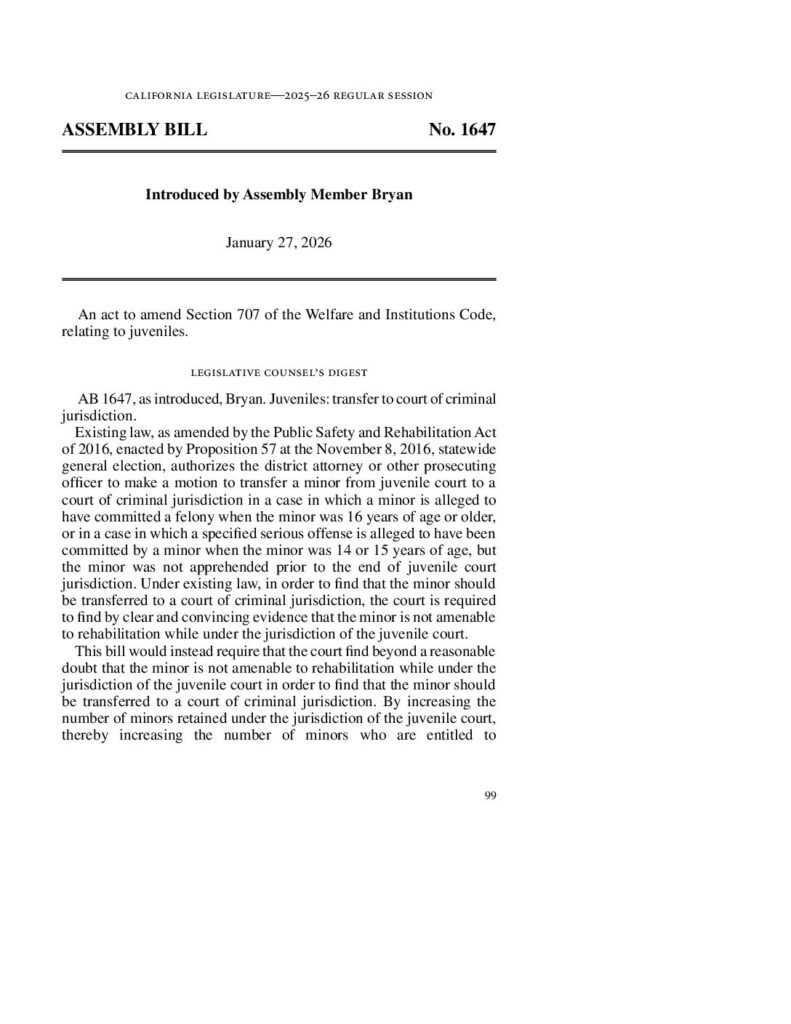
This proposed legislation from California amends the transfer law (CA WIC § 707(a)) to require a judicial finding of proof beyond a reasonable doubt, instead of the lesser standard of clear and convincing evidence, that a minor is not amendable to rehabilitation while in juvenile court.
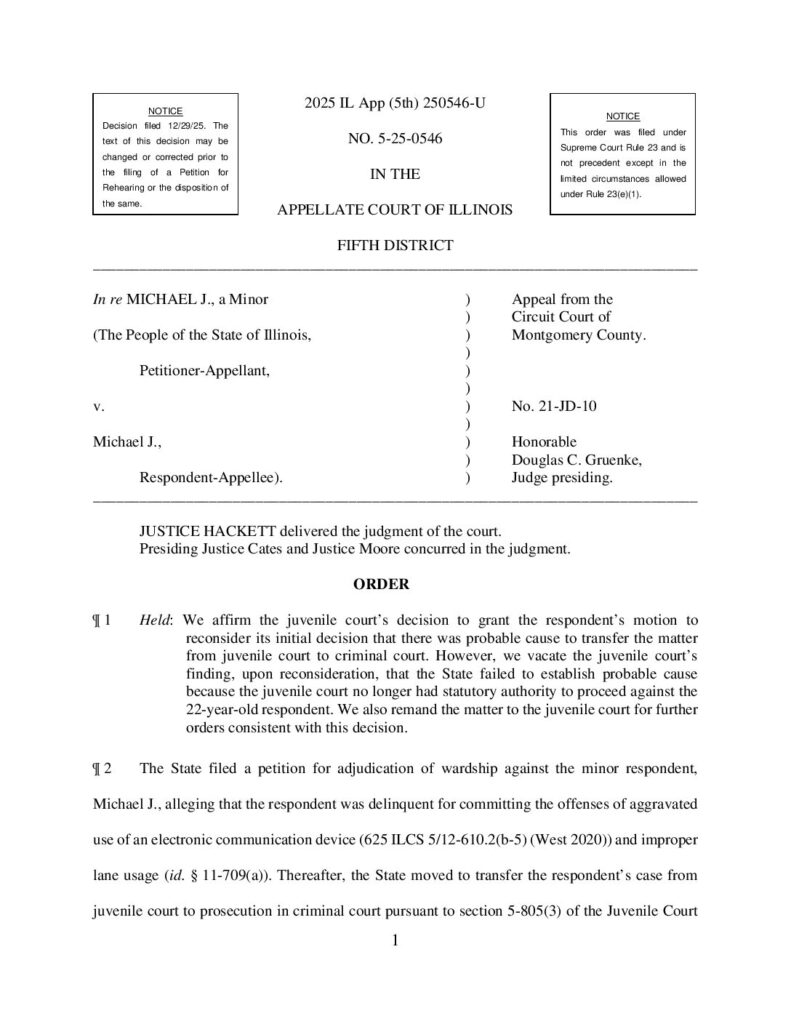
The Illinois 5th District Court of Appeals found that the juvenile court lacked statutory authority to proceed on a transfer determination once a young person turned 22 years old. This case involved an initial transfer determination followed by a reconsideration request by the defense based on lack of probable cause to justify the initial transfer…

This report, written by the Sentencing Project, highlights the harmful practice of direct file, or “auto-charging” youth in adult court. This national analysis looks at the practice of direct file and the pervasive harms that it has on the wellbeing and future thriving of young people and makes recommendations for states to limit pathways for…
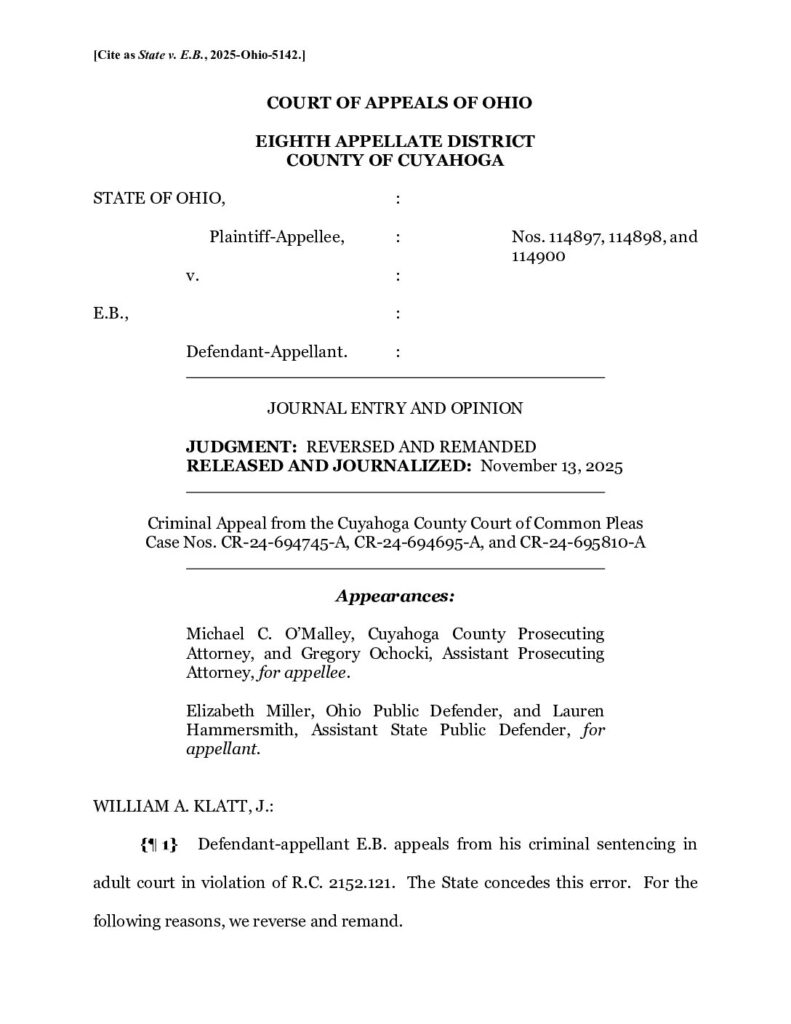
The Court of Appeals of Ohio, Eighth District, found that the trial court erred in failing to stay E.B.’s sentencing and failed to order the case be returned to juvenile court, where E.B. was transferred to adult court but ultimately pled guilty to offenses that would not have required mandatory transfer. Additionally, the Court of…

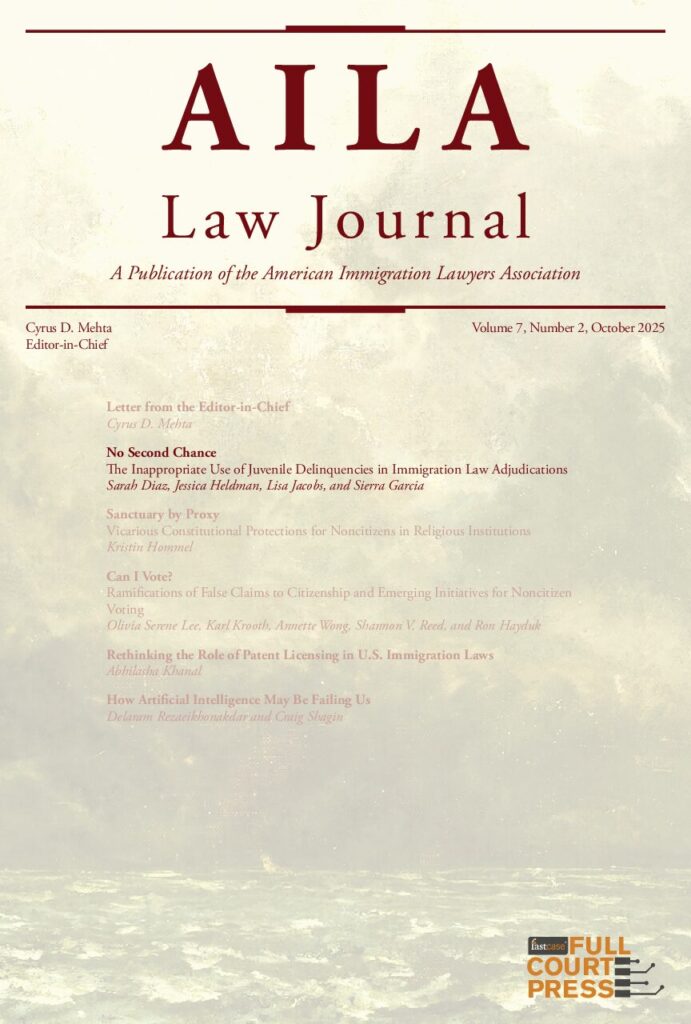
Abstract: “Records generated by youth legal systems—or “juvenile justice systems”—are increasingly being used against young people in immigration proceedings. This practice undermines the core purpose of these youth-focused systems and can have devastating, life-altering consequences, including the denial of immigration benefits or deportation. Juvenile justice systems in the United States are founded on the recognition…

This memo from Fenton Communications Agency provides youth advocates with messaging strategies to respond to the D.C. Crimes Act and the Juvenile Sentencing Reform Act pending in Congress. The memo includes succinct responses to questions posed about public safety, youth crime, and transfer laws. The memo also provides suggested talking points on tone and relevant…

This report highlights D.C. transfer laws and discusses the current U.S. Attorney’s argument that the District of Columbia should amend its law to transfer more young people to to adult court. The report compares D.C.’s transfer law to transfer laws across the country and highlights decades of research that has concluded transfer laws do not…

Former Secretary of the Maryland Department of Juvenile Services, Vinny Schiraldi, wrote this op-ed, discussing President Trump’s deployment of National Guard troops in Washington D.C. and the District’s intentions to repeal lower the age for trying children as adults to 12 in the Youth Rehabilitation Act. The op-ed details Vinny’s reflections and observations during his…

This resource offers a brief overview of how children are transferred or bound over to adult court in Ohio and discusses what is at stake in the case of State v. D.T., 2024-Ohio-4482 (Ohio Ct. App. 2024) pending before the Ohio Supreme Court. The Gault Center filed an amicus in this case here. Oral arguments were…
