
Waiver of Rights

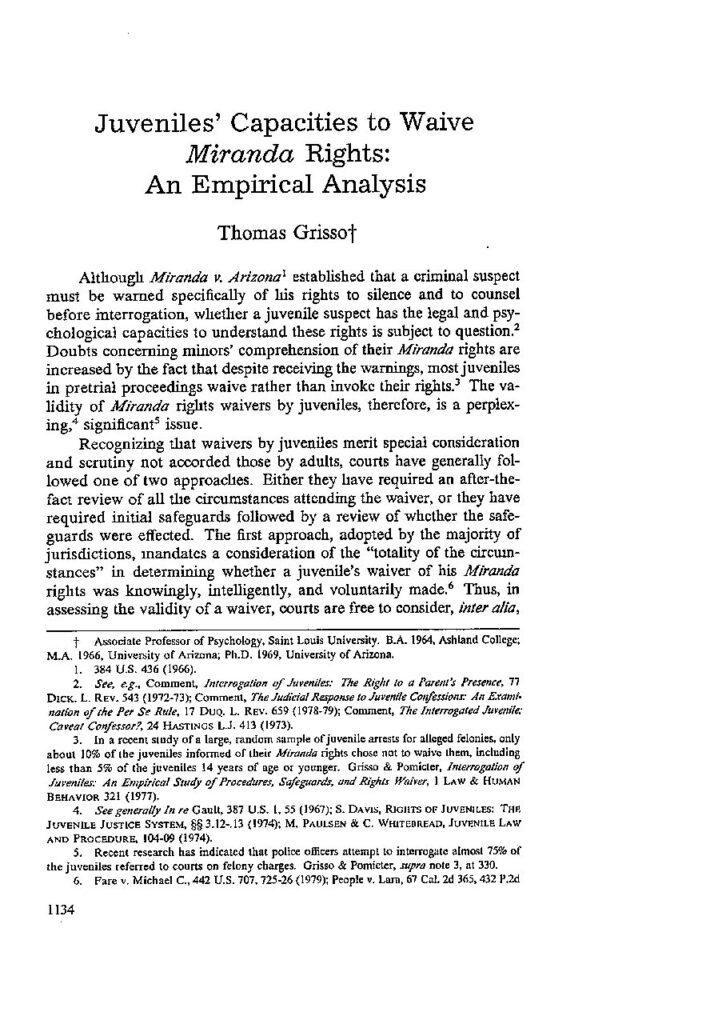
“In this article, we address the question left unanswered by the Court in J.D.B.: In light of the substantial research establishing that children’s understanding and appreciation of the Miranda warnings are quite limited, must the traditional test for assessing the validity of an individual’s waiver of their Miranda rights be re-calibrated to take into account…

This affidavit written by Legal Ethicist Abbe Smith outlines the ethical quandaries posed by Florida’s direct file transfer laws and calls into question the legality of such laws based on adolescent development research. The affidavit states in relevant part: “The prosecutorial practice of direct file plea-bargaining without defender/child knowledge of the case’s strengths and weaknesses…
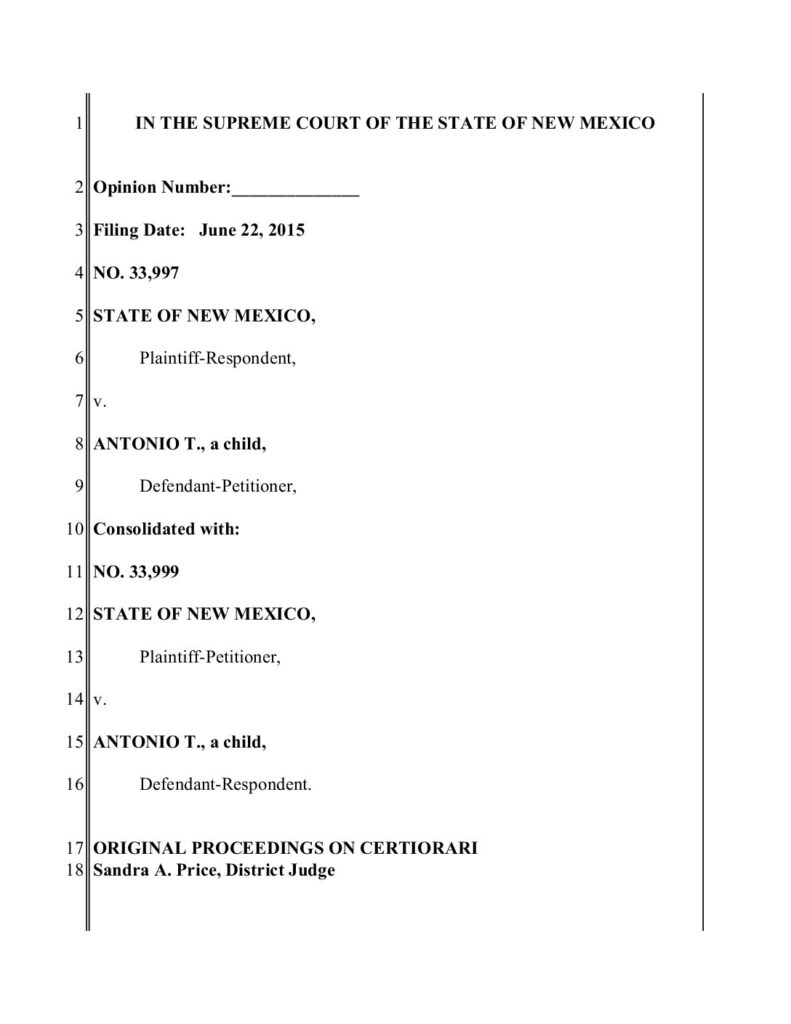
In New Mexico v. Antonio T., the Supreme Court of New Mexico ruled any statements elicited by a school official in the presence of a law enforcement officer may not be used against the child in a delinquency proceeding unless the child made a knowing, intelligent, and voluntary waiver of his statutory right to remain…


Report to Colorado General Assembly on the State of the Youth Defense System in Colorado pursuant to House Join Resolution 13-1019, whose purpose was to “examine and make recommendations on current laws, procedures and practices for the appointment of counsel, advisement of rights and waivers of counsel for children in juvenile delinquency court.” This report…

A sample motion from Ohio requesting suppression of statements made by a 17-year old with disabilities including a specific learning disability and expressive language disorder. The motion argues the child’s statement should be suppressed given the inherent coerciveness of police interrogations of children, the inadequate and untimely reading of the Miranda rights by the police…

On August 14, 2013, the U.S. Department of Justice filed a Statement of Interest in a federal lawsuit challenging deprivations of the right to counsel on misdemeanor cases in two cities in Washington. In calling for an independent monitor, the DOJ asserted, “First, a public defender must have the authority to decline appointments over the…


This amicus brief by Center on Wrongful Convictions of Youth, The Gault Center, and others argue a 15-year-old child from South Dakota did not knowingly and intelligently waive her Miranda rights when the police failed to allow her to consult with her mother before interrogation, minimized the importance of the Miranda warnings, and did not…

This amicus brief by the Center on Wrongful Convictions of Youth, Vanderbilt Professor of Law and Medicine Terry A. Maroney, The Gault Center, and others. Amici argue a 16-year-old youth’s waiver of his Miranda rights was involuntary and his confession must be suppressed pursuant to the 5th and 14th Amendments, where he was threatened during…

Expert Affidavit of Susan L. Burrell on Standards of Competence in the Legal Representation of Youth
Expert Affidavit of Susan L. Burrell for a young person’s case in Colorado claiming ineffective assistance of counsel. The claims included a failure to fulfill basic duties to the client, failure to investigate, failure to retain expert witnesses, and a failure to assure that a plea was voluntary, knowing and intelligent.
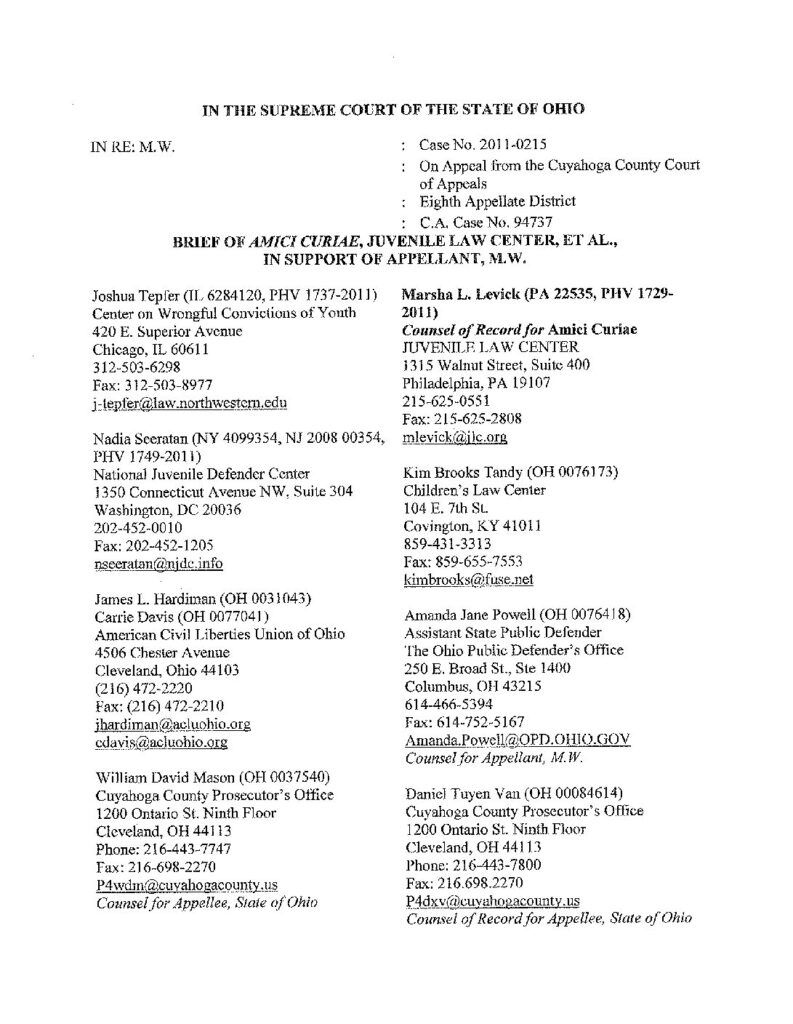
This amicus brief by Juvenile Law Center, Children’s Law Center, Inc., The Gault Center, and others argues Ohio should adopt a bright line rule requiring meaningful access to counsel for all young people at the interrogation stage of a delinquency proceeding. Amici argue counsel at interrogation is essential given the developmental and neuroscientific differences between…

This amicus brief by The Gault Center and others argues Nevada’s certification statute violates a child’s right to effective assistance of counsel as it interferes with counsel’s ability to plan and participate in the adversarial fact-finding process and it fails to measure up to essentials of due process and fair treatment. Furthermore, amici argue this…

This research paper from the Journal of Interpretation looks at the intersection of a subset of deaf people, who are classified as semilingual (meaning they are functionally illiterate (reading level grade 2.9 or below) and lack proficient English or sign language skills.), and their involvement in the legal system. The research paper examines eleven frequently…

This study examined the relationship of legal capacities to cognitive development, legal learning opportunities, and psychological symptoms. Participants were 152 male and female [adolescents] charged in juvenile court proceedings and held in detention, aged 11–17. The youth completed Grisso’s Instruments for Assessing Understanding and Appreciation of Miranda Rights, the Fitness Interview Test (Revised Edition), the…
- « Previous
- 1
- 2
