
Black Youth

This brief from the Massachusetts Office of the Child Advocate is one in a three-part series that looks at disparities in Massachusetts’ juvenile legal system related to geography, race/ethnicity, and gender and sexual orientation. This brief “analyzes Massachusetts juvenile justice system data from fiscal year 2025 (July 1, 2024 – June 30, 2025) with each…
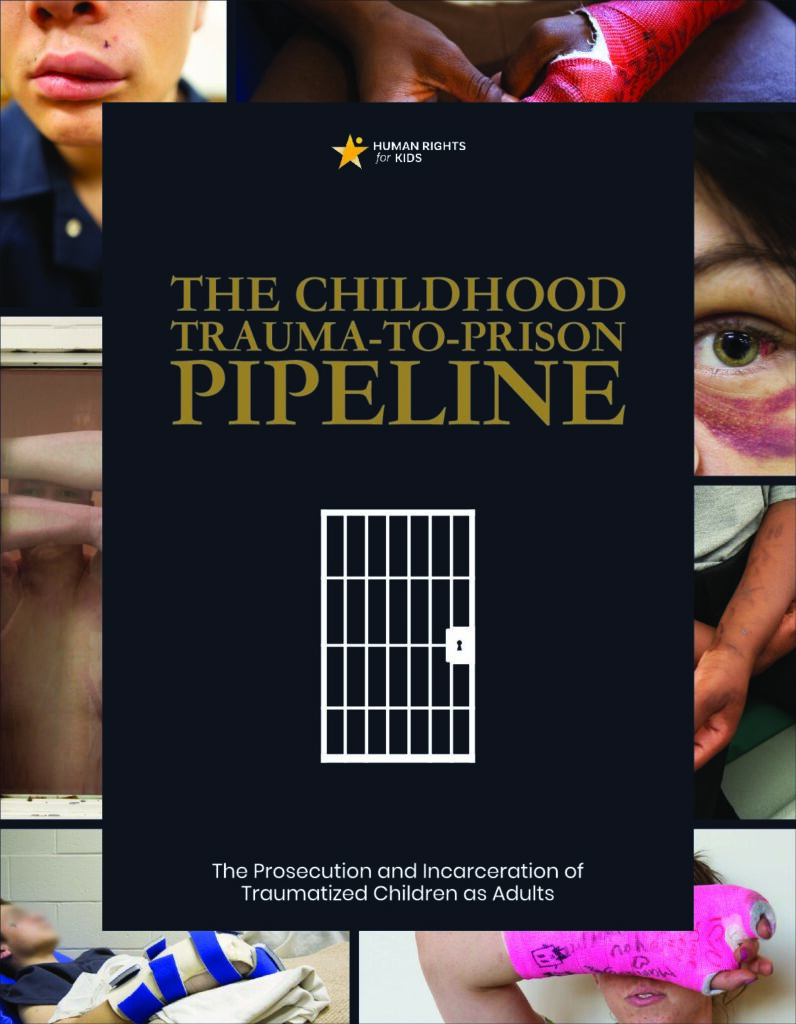
This report from Human Rights for Kids details survey results from 2,200 individuals who were incarcerated as adults for crimes they committed as children. The findings from the report demonstrate the fact that “children tried as adults are often victims long before they became [system-involved],” discusses the intersection between childhood trauma and the legal system,…
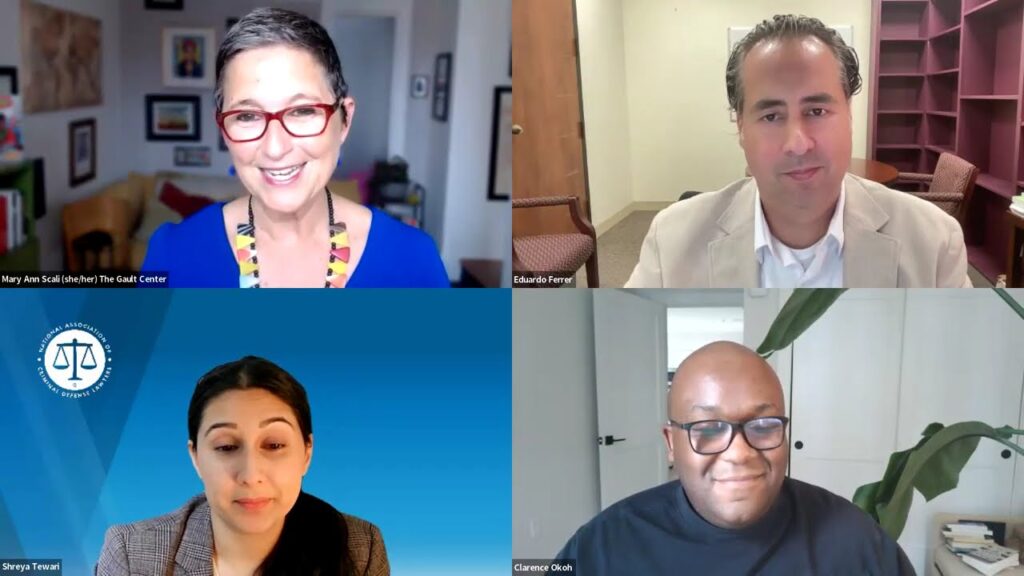
On July 14th, 2026, the Gault Center and the Georgetown Juvenile Justice Clinic & Initiative hosted a webinar on Learning, Litigating, Liberating: Defending Against AI Surveillance of Youth. As AI Surveillance of youth increases in everyday lives from “bullying monitors” to vape detection to facial recognition and so much more, this webinar provides an overview of how and where AI Surveillance is being used and what youth defenders and…
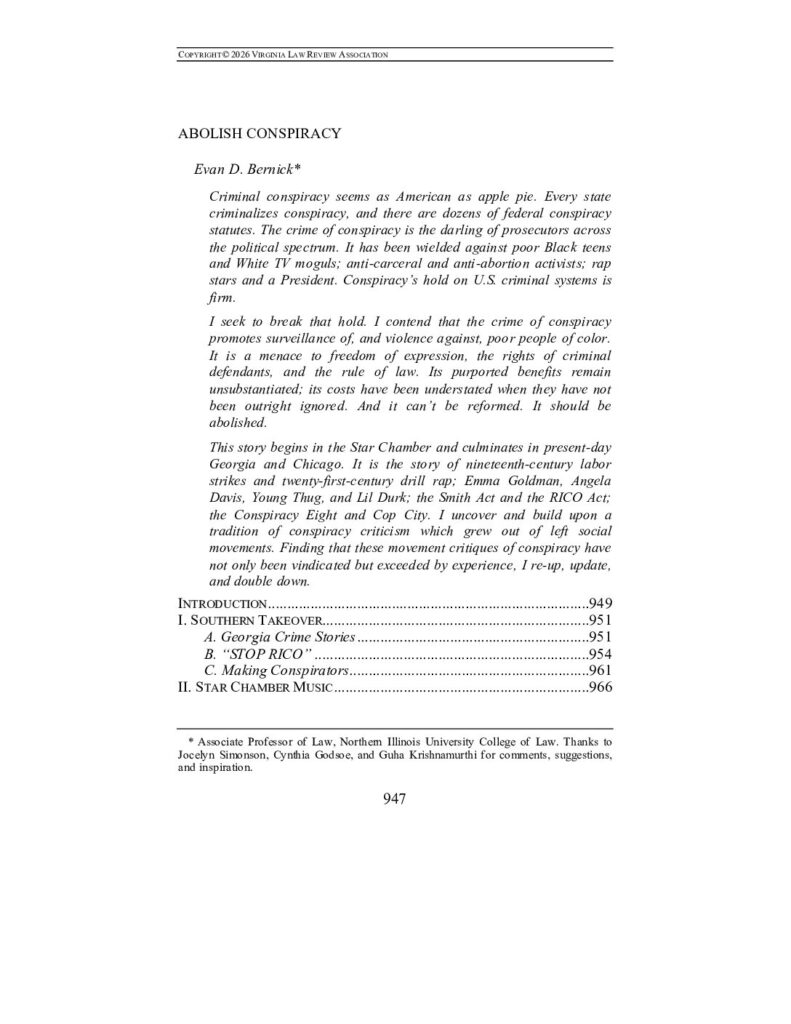
From the Abstract: Criminal conspiracy seems as American as apple pie. Every state criminalizes conspiracy, and there are dozens of federal conspiracy statutes. The crime of conspiracy is the darling of prosecutors across the political spectrum. It has been wielded against poor Black teens and White TV moguls; anti-carceral and anti-abortion activists; rap stars and…
This report from the Sentencing Project provides an overview of restorative justice (‘RJ’) diversion programs including research on the results of these programs, the advantages of RJ diversion programming over court involvement, benefits to victims, and recommendations for implementing RJ programs. From the Executive Summary: “Restorative justice (RJ) diversion programs address adolescent lawbreaking outside the court system using a process designed to address victims’ needs and repair the harm caused by youth misconduct.…
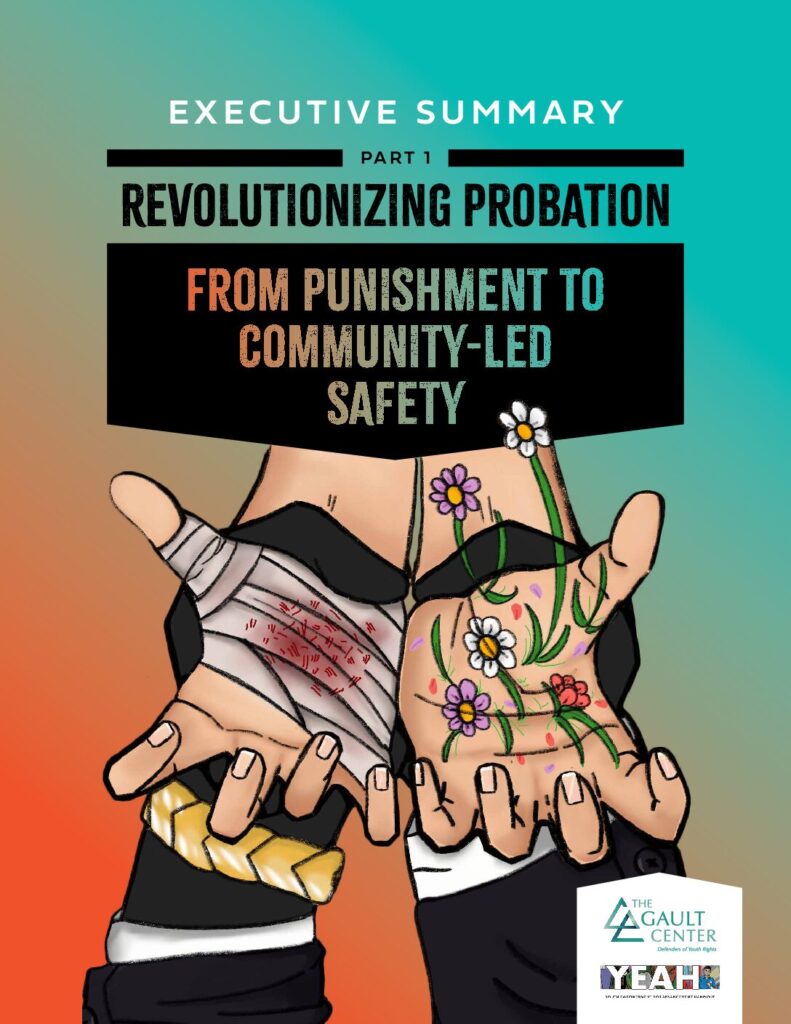
Summarizes what young people are saying about juvenile probation and offers a visual timeline highlighting the historical lineage of probation as a form of racialized social control.
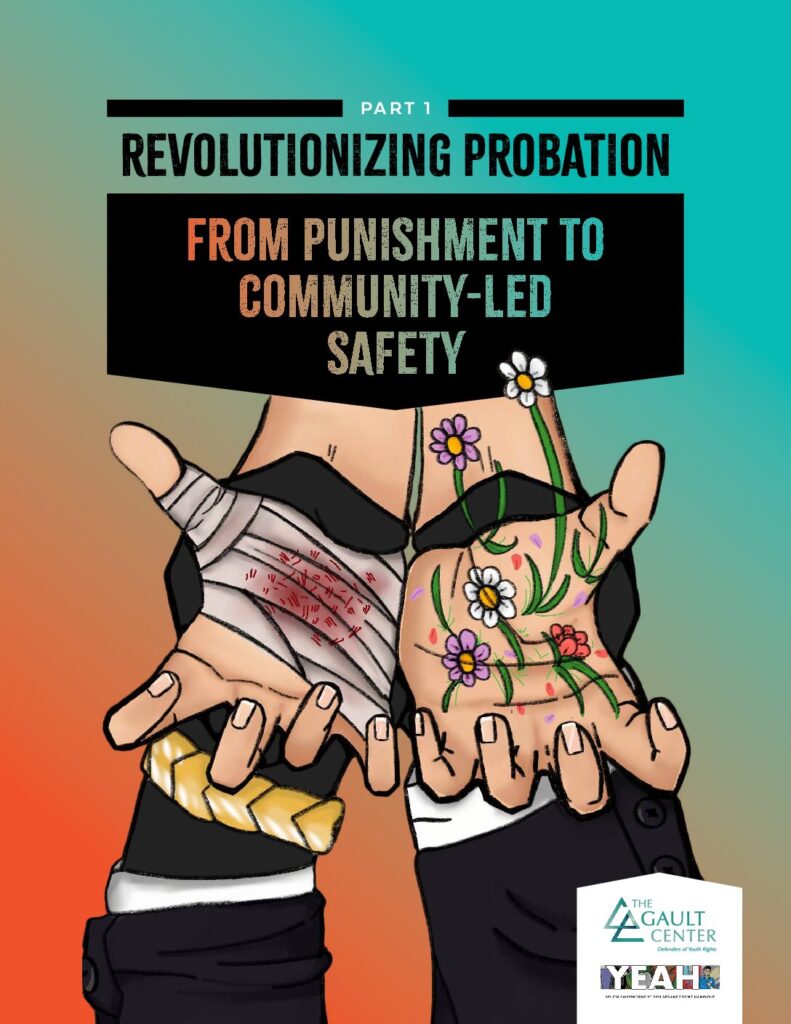
Examines young people’s experiences on juvenile probation and the racialized history of juvenile probation in our country.

“The modern American criminal justice system emerged not simply from Progressive-Era reform, but from the intertwined projects of eugenics, psychiatry, and legal modernism. Drawing upon archival, historical, and doctrinal sources, this Article reveals how early twentieth-century reformers—including judges, criminologists, and social scientists—recast criminal law as a mechanism for identifying and controlling hereditary “defect.” Under the…
“What makes a conviction wrongful? Developments in DNA science have led to a wave of exonerations over the past thirty years, revealing sources of error in the criminal legal process. Innocence organizations proliferated to represent people whose convictions could be overturned by newly discovered evidence. This is vital work for the individuals who are released…

From the Introduction of the report by the Samuelson Law, Technology & Public Policy Clinic at UC Berkeley School of Law: “The paper proceeds as follows: • Part I describes current community supervision technologies, including location tracking, alcohol monitoring, and drug testing, and the reliability concerns with each. • Part II describes and compares the…
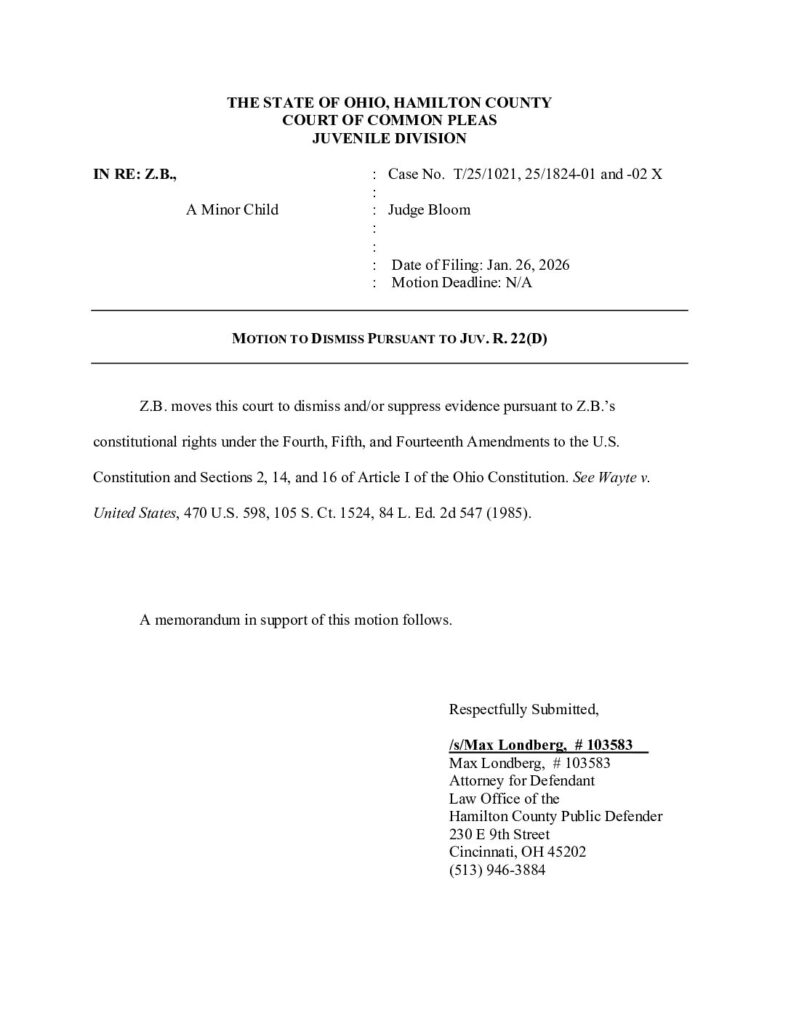
This sample motion argues for special discovery and dismissal and/or suppression based on a claim of selective prosecution in a jaywalking case. Highlighting local police data on racial disparities in jaywalking-related stops, this motion argues that police conduct had a discriminatory effect on Black youth in Cincinnati, in violation of their state and federal equal…
This supplemental memorandum is related to the sample motion to dismiss and/or suppress evidence based on selective prosecution, which argues for special discovery and dismissal and/or suppression based on a claim of selective prosecution in a jaywalking case. This supplemental memorandum outlines Ohio’s Equal Protection guarantee in the context of the impact of implicit racial…
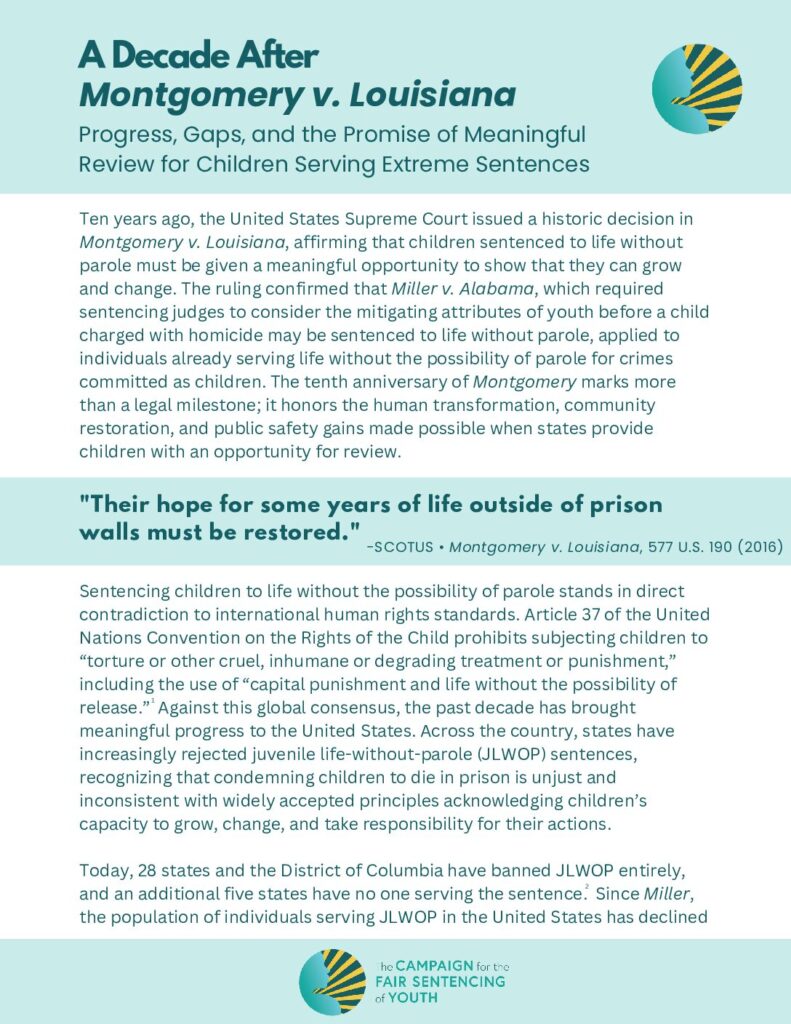
This report from the Campaign for the Fair Sentencing of Youth provides a national overview of the progress states have made post-Montgomery in changing sentencing laws for young people in adult court facing life without parole and other lengthy sentences, and opportunities for continued legislative, legal and policy change. From the resource: Ten years ago, the…
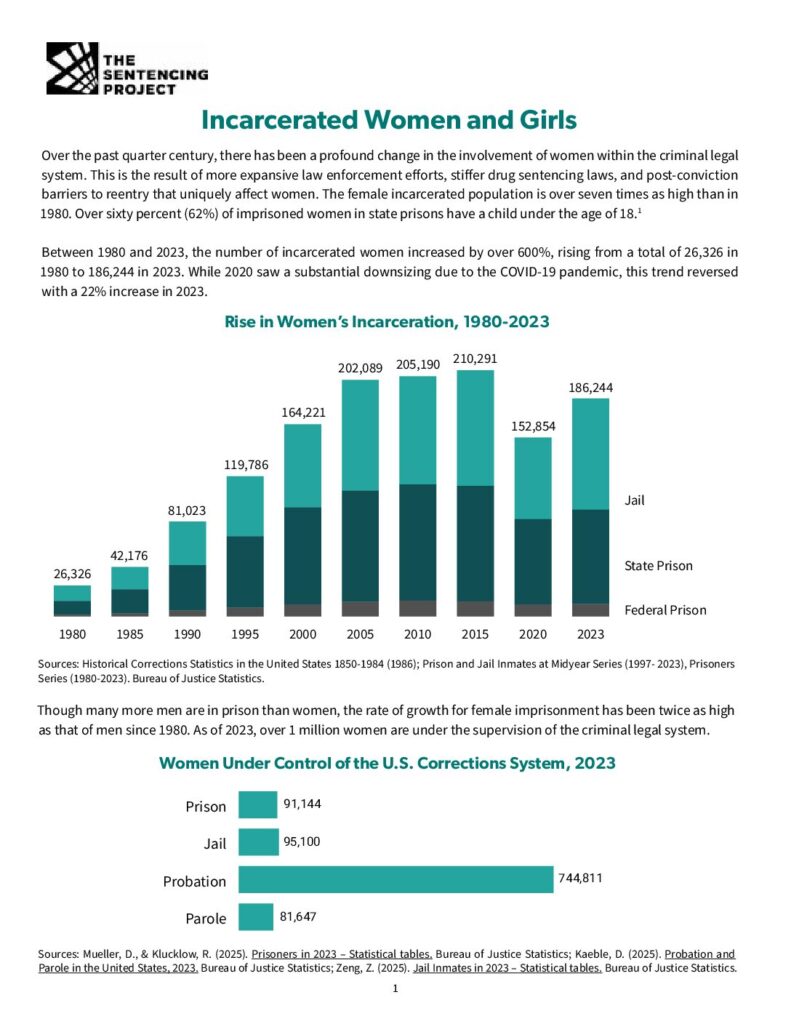
This report, by The Sentencing Project, examines the changes in involvement of women and girls in the criminal and juvenile legal system over the past quarter century. The report includes data examining the rise of women and girls’ incarceration in jails, state and federal prisons, residential placement centers, as well as women under the control of the U.S. Corrections systems through probation or parole., This…

“Suspensions, expulsions, and school-based arrests: These exclusionary and overly punitive disciplinary responses disproportionately impact Black students and have become normalized throughout the nation. In reality, school pushout, or the disciplinary sanction of removing students from the classroom, contravenes the very purpose of public education to prepare children to engage as full citizens in our democratic…
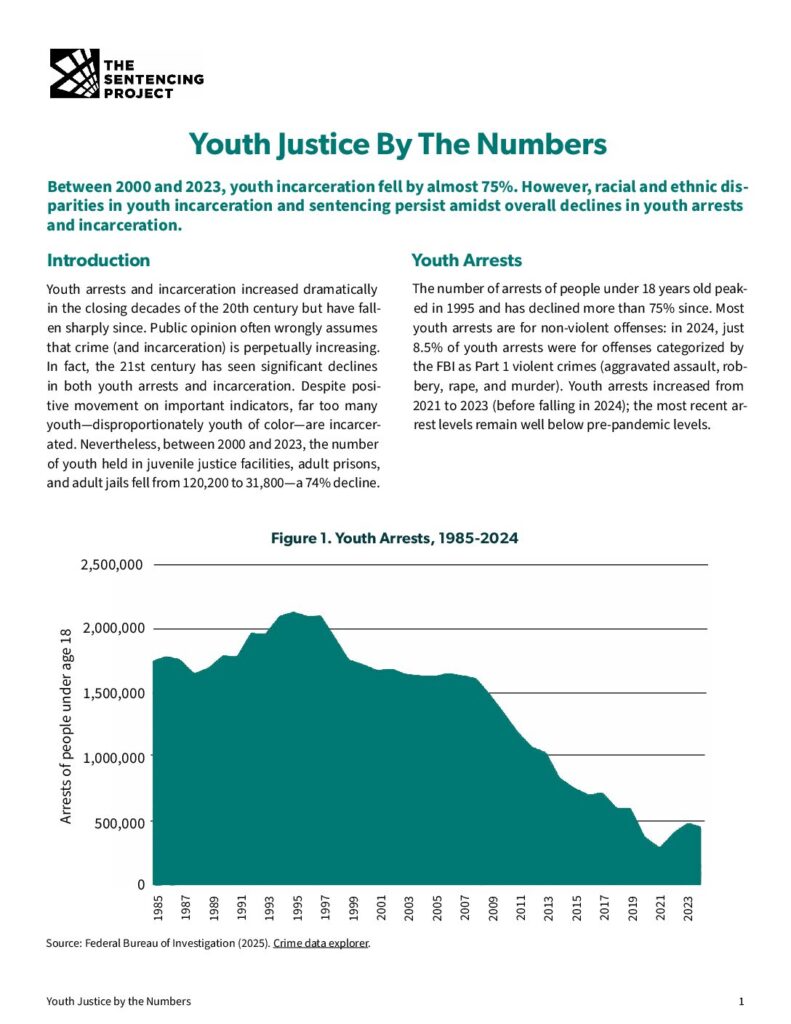
The Sentencing Project released an updated snapshot of the numbers of youth in the juvenile legal system from 2000 to 2023, finding significant declines in youth arrests and incarceration, though racial and ethnic disparities persist. The report calls for the need to continued shrinking the juvenile legal system by increasing informal or diversionary responses to youth arrests. Introduction: “Youth arrests and incarceration increased dramatically in the closing…

From the abstract: This Article employs the Law Review’s Discourse symposium on my book, Unreasonable: Black Lives, Police Power, and the Fourth Amendment, as a starting point to foreground and elaborate on an idea that I reference in that text: police power abolition. The Article begins by describing the central insight that motivates Unreasonable—namely, that…

This report highlights D.C. transfer laws and discusses the current U.S. Attorney’s argument that the District of Columbia should amend its law to transfer more young people to to adult court. The report compares D.C.’s transfer law to transfer laws across the country and highlights decades of research that has concluded transfer laws do not…


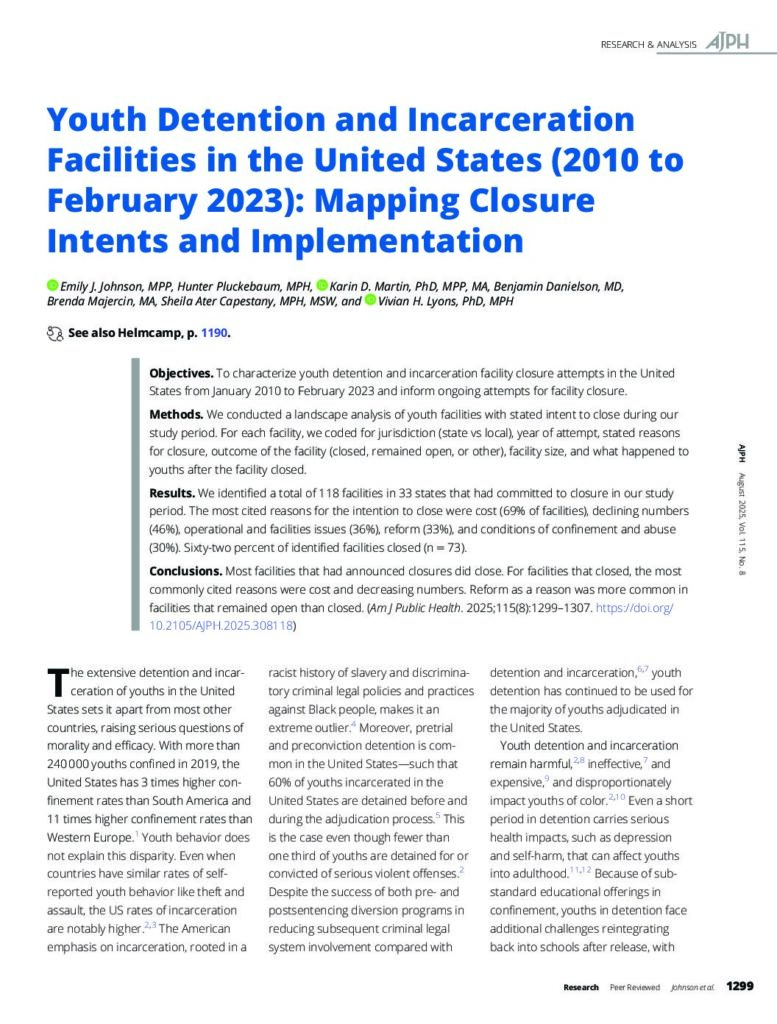
From the Discussion: “This study illuminates pathways for future research to explore facility closures. Such research should investigate the impact of specific drivers supporting completed closures of youth facilities, including the combination of stated reasons to appeal to different audiences. Notably, we only found 1 paper in our scoping review that explores the strategies used…
From the abstract: “Hundreds of thousands of children are brought under the jurisdiction of delinquency courts every year in the United States. Despite the reality that most children engage in delinquent behavior during their adolescence, poor children, children of color, children with disabilities, and children who identify as LGBTQIA+ comprise a disproportionate number of those who become delinquency system-involved. These disparities exist…

“This paper describes a community-based participatory research (CBPR) approach to evaluation used by an academic-practitioner partnership to refine the logic model for a violent crime reduction program and develop associated performance measures. Through qualitative and quantitative data collection, including semi-structured interviews, engagement with program stakeholders (e.g., program leaders and staff, peer researchers, community residents), community…

This report, by the U.S. Department of Justice Civil Rights Division outlines key highlights of the Division’s work from 2021 to 2024 across policing, juvenile facilities, schools and beyond.

This research report by the NAACP Legal Defense Fund provides an in-depth overview of the “At-Risk Youth Program” created by the Pasco County Sheriff’s Office in Tampa Bay, Florida. The Pasco County sheriff’s office relied on a “rudimentary, person-based predictive policing system” based on inherently biased criteria to identify young people who were “destined to…
