
Black Youth
This essay from Duke Center for Firearms Law uses comparative trend analysis to contrast rising possession arrests against falling overall arrest rates. Additionally, the article includes both the data and the causal logic to challenge assumptions that simple firearm possession alone demonstrates dangerousness or predicts future violence. It encourages courts to distinguish rather than conflate…

From the introduction: “One of our goals in producing this report is to inform school administrators, board members, and parent and student stakeholders, giving details about which groups of students are disproportionately arrested and about the gaps that exist in data reporting. We also want to provide guidance on how to address these issues. We…

On December 21, 2021, the DOJ released its investigation of the Connecticut Manson Youth Institution, finding that the conditions violate young people’s rights under the Eighth and Fourteenth Amendments and the Individuals with Disabilities Education Act. In its Investigation, the DOJ stated “specifically, we find that Manson’s isolation practices and inadequate mental health services seriously…
This report from The Sentencing Project reviews the reviews the “history, harms, pathways and trends that treat children as if they were adults.” From the report: At the turn of the 21st century, it was estimated that 250,000 children every year were charged as adults in the United States. By 2019, that number had dropped…

This brief by the Black Attorneys of Legal Aid, Bronx Defenders, and Brooklyn Defenders was filed in support of petitioners in the Bruen case. The brief points to the racialized history of denying Black and Latine people lawful licenses to carry guns and outlines racial disparities in gun possession cases. Amici submit this brief “because we…

From the conclusion: “Washington, DC has severe racial disparities in its justice-involved population. That should alarm local leadership and its residents. These disparities are rooted in policing practices that target communities of color, a lack of investment and opportunity in historically disadvantaged neighborhoods, and an overly punitive sentencing, parole, and corrections system. The current system…
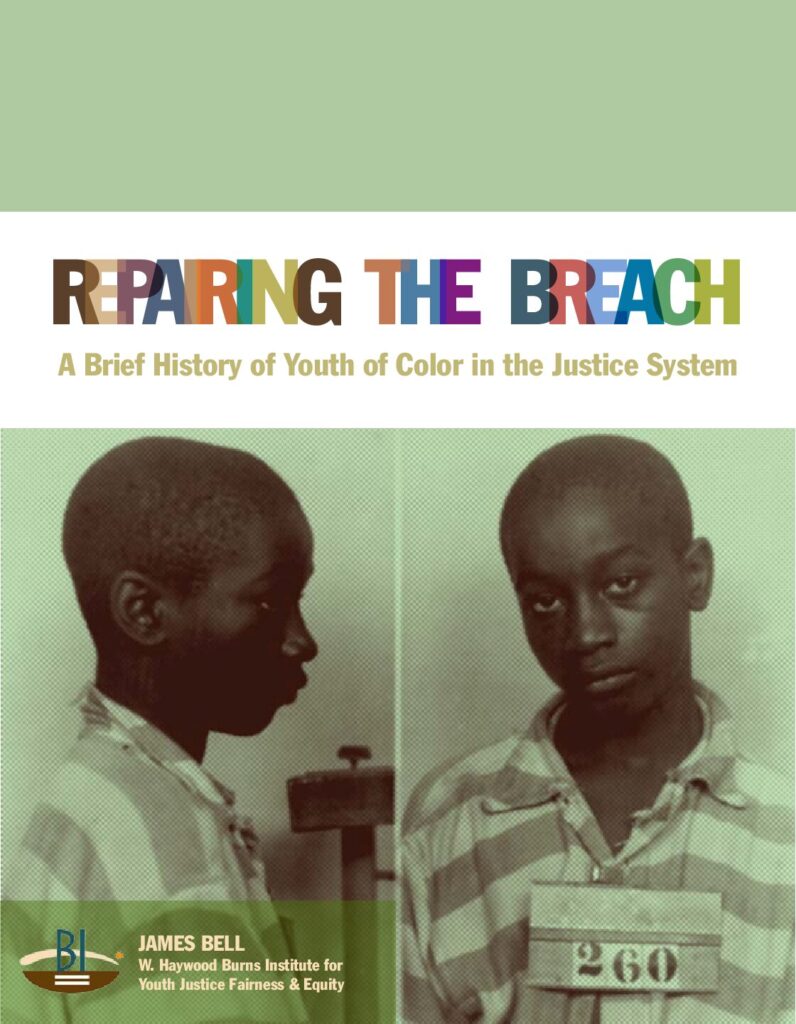
The W. Haywood Burns Institute for Youth Justice Fairness & Equity released a report outlining the history of how youth of color have been treated in the juvenile legal system over time as a framework for meaningfully engaging in the fight against mass incarceration. “Trying to meaningfully address the unacceptable levels of racial and ethnic…

From the introduction: “Justice Policy Institute found that the average cost of the most expensive confinement option for a young person in 48 states was $588 per day, or $214,620 per year. The data show that in 40 states taxpayers spend at least $100,000 a year for a single young person’s confinement, and in 12…

From the introduction: “Communities across the country have come together to demand meaningful changes to law enforcement practices in the wake of the tragic murders of George Floyd, Breonna Taylor, and Rayshard Brooks at the hands of the police. The focus has rightly been on how deadly police actions have had an outsized impact on…
From the Abstract: “Technical probation violations are common among probation-involved youth and, across many jurisdictions, may result in detention or residential placement. The current study examined prevalence of technical violations occurring during one’s first probation period, the average time to technical violation, and individual-level and justice-related factors related to technical violations among probation-involved youth in…

From the conclusion: “Maryland has the most extreme racial disparities for those incarcerated for long terms in the United States. That should alarm Maryland leadership and its residents. These disparities are rooted in policing practices that target communities of color, a lack of investment and opportunity in historically disadvantaged neighborhoods, and an overly punitive sentencing,…

This Article explores how race functions to ascribe and criminalize disability. It posits that for White students in wealthy schools, disabilities or perceived disabilities are often viewed as medical conditions and treated with care and resources. For students of color, however, the construction of disability (if it exists) may be a criminalized condition that is…

From the executive summary: ‘This comprehensive study of 804 New York City public middle and high schools sought to isolate the independent impacts of suspension, as well as to disentangle the effects, if any, of student, school, and neighborhood characteristics. Conversely, the study also explored the relationship of restorative justice and other positive practices to…

Abstract: Research indicates that sexual minority youth are disproportionately criminalized in the U.S. and subjected to abusive treatment while in correctional facilities. However, the scope and extent of disparities based on sexual orientation remains largely overlooked in the juvenile justice literature. This study, based on a nationally representative federal agency survey conducted in 2012 (N=8,785;…
This study surveys 7073 youth across residential and secure placement facilities to assess their experiences. The surveys showed that a majority of youth in detention and correctional facilities experienced confinement during daytime hours, unsanitary living conditions, poor food quality, and difficulty sleeping. The surveys also showed that racial disparities continue to exist in correctional facilities,…

On December 14, 2016, the U.S. Department of Justice entered into a settlement agreement with the St. Louis County Family Court to remedy constitutional violations. The settlement agreement covers policies and practices to ensure the due process and equal protection rights of all youth are upheld. This includes early appointment of youth defense counsel, prohibition…


On November 28, 2016, the DOJ filed a Statement of Interest in response to a lawsuit filed in South Carolina, challenging two state statutes as void for vagueness in violation of the Due Process Clause. The lawsuit alleged that the vague language in the statute resulted in the criminalization of common youthful behavior, racial disparities,…
This paper from the Executive Session on Community Corrections at the Harvard Kennedy School examines the history of youth incarceration and discusses how the inherently flawed model of youth prisons demands systemic reforms, including closure of youth prisons, to actualize safer communities, and positive youth outcomes. From the introduction: “For 170 years, since our first youth correctional institution opened, America’s approach…
From the abstract: “A monumental shift in juvenile justice is underway, inspired by the wide recognition that incarceration is not the solution to youth crime. In its place, “electronic monitoring” has gained widespread support as a new form of judicial control over youth offenders. Supporters herald it as “jail-to-go”: a cost-efficient alternative to incarceration that…

On July 31, 2015, the U.S. Department of Justice released its investigation findings into the St. Louis County Family Court, finding due process and equal protection violations. The findings include right to counsel violations by denying constitutionally adequate defense representation, privilege against self-incrimination violations by requiring a child to admit to allegations for diversion, inadequate…
This report from Human Rights Watch provides an overview of the impact of Florida’s direct file statute on youth tried as adults in the state. Additionally, the report contains recommendations to different systems practitioners and decisionmakers for ending the direct file practice. From the report: Florida transfers more children out of the juvenile system and…

From the abstract: “Despite the promise of Gideon, providing “the guiding hand of counsel” to indigent defendants remains unmanageable, largely because the nation’s public defender offices are overworked and underfunded. Faced with overwhelming caseloads and inadequate resources, public defenders must engage in triage, deciding which cases deserve attention and which do not. Although scholars have…

From the introduction: “This report will describe, dissect, and draw lessons from Connecticut’s striking success in juvenile justice reform for other states and communities seeking similar progress. The first section details the timeline and dimensions of change in Connecticut’s juvenile justice system over the past two decades. In 1992, Connecticut routinely locked up hundreds of…
