
Cost/Benefit Analysis
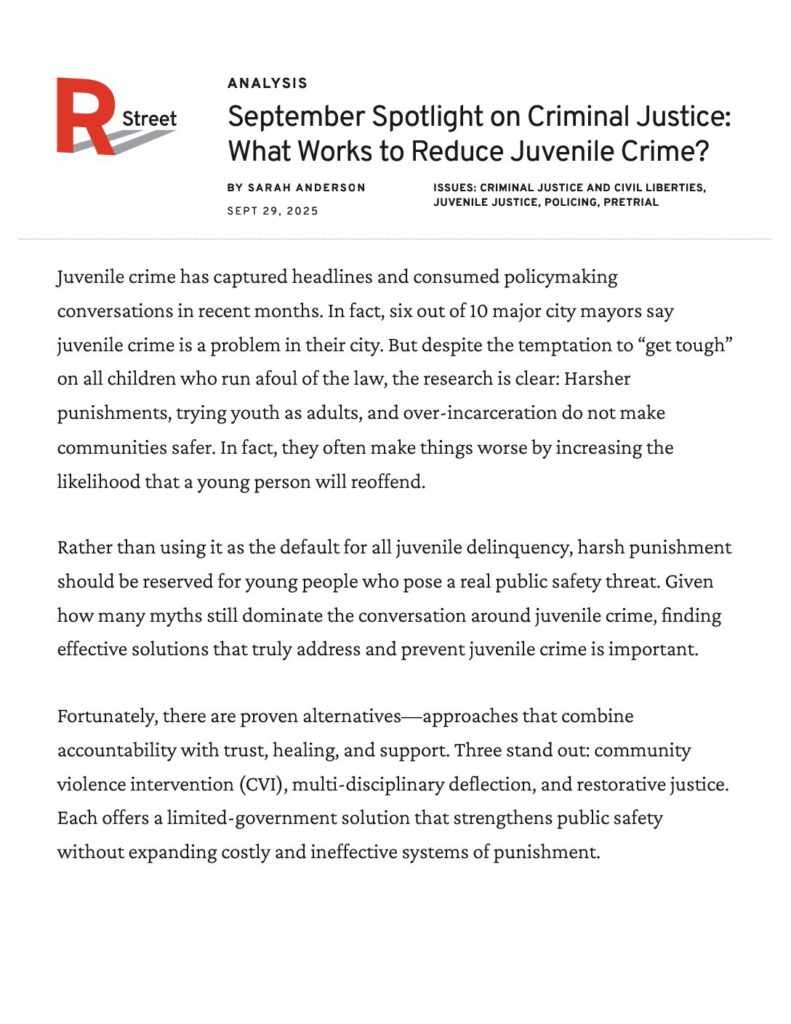
From the R Street Institute: “Juvenile crime has captured headlines and consumed policymaking conversations in recent months. In fact, say six out of 10 major city mayors say juvenile crime is a problem in their city. But despite the temptation to “get tough” on all children who run afoul of the law, the research is clear: Harsher punishments, trying youth…
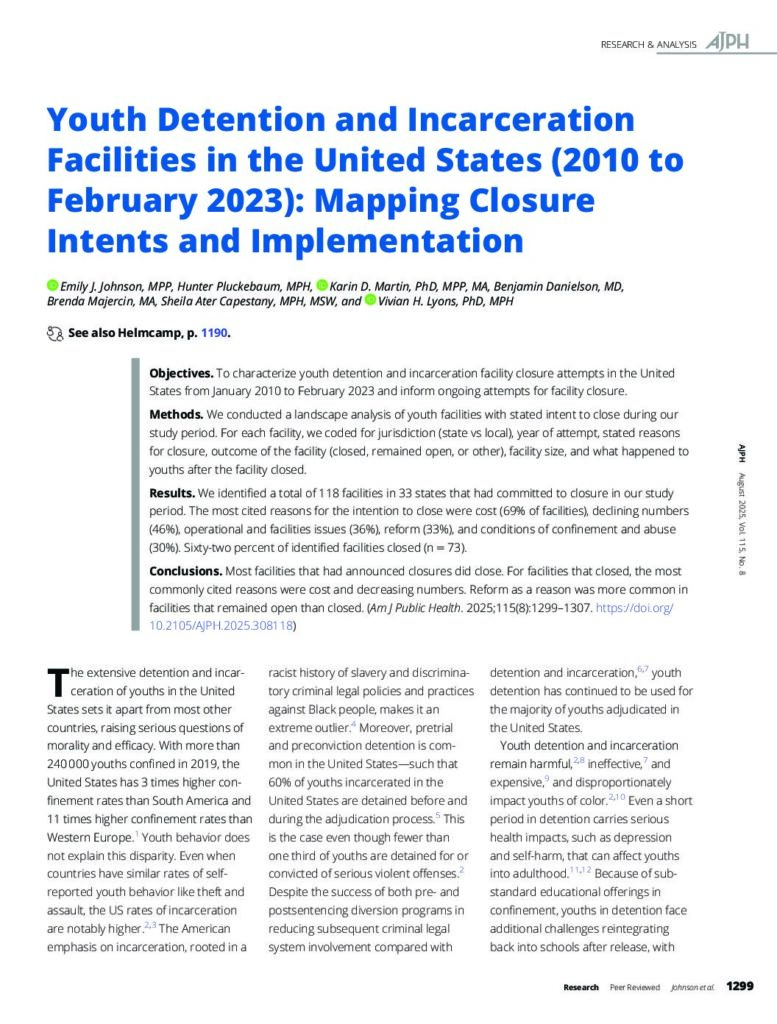
From the Discussion: “This study illuminates pathways for future research to explore facility closures. Such research should investigate the impact of specific drivers supporting completed closures of youth facilities, including the combination of stated reasons to appeal to different audiences. Notably, we only found 1 paper in our scoping review that explores the strategies used…
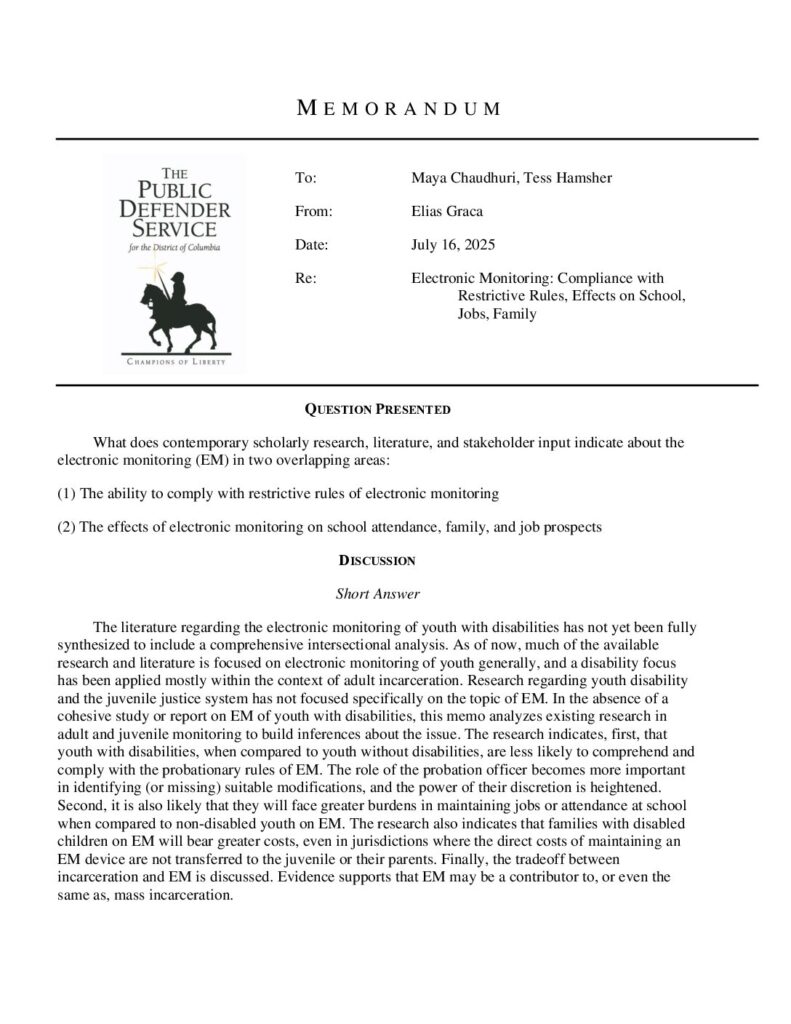
This memorandum from the Public Defender Service for the District of Columbia discusses the contemporary research and literature on electronic monitoring and its impacts on school attendance, family, and employment. The memorandum also discusses the real-world practicalities that make it difficult for youth to comply with the restrictive rules that often accompany electronic monitoring orders. From the memorandum: “The literature regarding the electronic monitoring of youth with disabilities has not yet been fully synthesized to…


This report challenges the notion that Georgia’s youth legal system is built to rehabilitate and suggests measures that protect the health and humanity of all the state’s children. First, this report will explore the myth of the “superpredator” and its impact on perceived Black youth criminality. Second, it will detail the state’s school-to-prison pipeline and…

Florida routinely pushes Black children out of schools and into a legal system with well-documented harms. In recent years, the state has made significant investments in school law enforcement and self-proclaimed “tough love” youth legal system policies, purportedly in the name of public safety. However, these investments have yielded a system that disparately disciplines, arrests,…

This report examines racial disparities, policing landscapes, and budgets in twelve jurisdictions across the country, comparing the city and county spending priorities with those of community organizations and their members. While many community members, supported by research and established best practices, assert that increased spending on police do not make them safer, cities and counties…

From the abstract: “Roughly one in four juveniles arrested in the U.S. spend time in a detention center prior to their court date. To study the consequences of this practice for youth, we link the universe of individual public school records in Michigan to juvenile and adult criminal justice records. Using a combination of exact…


From the introduction: “Justice Policy Institute found that the average cost of the most expensive confinement option for a young person in 48 states was $588 per day, or $214,620 per year. The data show that in 40 states taxpayers spend at least $100,000 a year for a single young person’s confinement, and in 12…

From the conclusion: “Maryland has the most extreme racial disparities for those incarcerated for long terms in the United States. That should alarm Maryland leadership and its residents. These disparities are rooted in policing practices that target communities of color, a lack of investment and opportunity in historically disadvantaged neighborhoods, and an overly punitive sentencing,…
The Columbia University Justice Lab released a report spotlighting New York City’s Close to Home initiative, an effort that reduced the rate of youth sent to state-operated prisons in New York City. “This case study describes the development of the Close to Home (C2H) initiative, beginning with a review of what the system looked like…


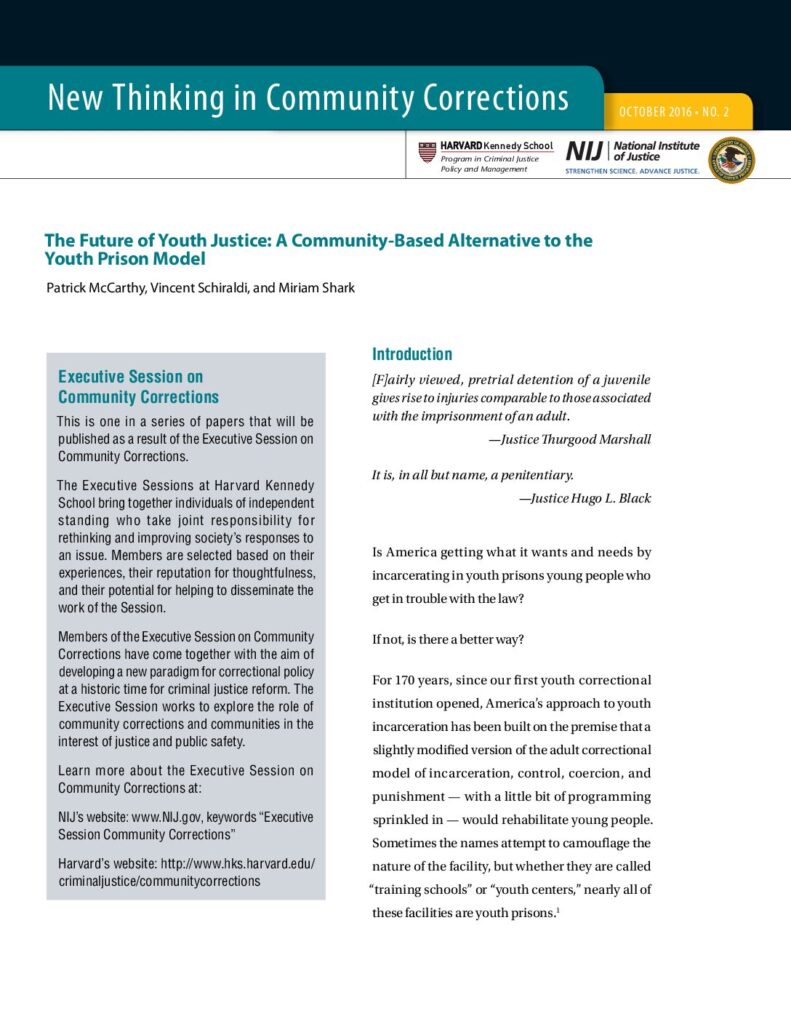
This paper from the Executive Session on Community Corrections at the Harvard Kennedy School examines the history of youth incarceration and discusses how the inherently flawed model of youth prisons demands systemic reforms, including closure of youth prisons, to actualize safer communities, and positive youth outcomes. From the introduction: “For 170 years, since our first youth correctional institution opened, America’s approach…

From the introduction: “This report will describe, dissect, and draw lessons from Connecticut’s striking success in juvenile justice reform for other states and communities seeking similar progress. The first section details the timeline and dimensions of change in Connecticut’s juvenile justice system over the past two decades. In 1992, Connecticut routinely locked up hundreds of…


From the introduction: “This research brief will summarize findings on what is known about substance abuse treatment as it relates to public safety and the use of incarceration. Along with conducting a brief literature review, the Justice Policy Institute (JPI) has compared state data on drug treatment admissions to incarceration rates. While no single solution…

From the introduction: “This research brief will summarize recent findings on what is known about access to quality or substandard housing as it relates to public safety and the use of incarceration. Along with conducting a brief literature review, the Justice Policy Institute (JPI) has compared data on state housing expenditures with crime rates and…

From the introduction: “In this policy brief, we will focus more precisely on the question of who has been most affected by the growth of the corrections system, and illustrate how the impact of the decision to fund the prisons over schools has been concentrated among Americans with little education. The improved high school completion…
