
Data Collection and Analysis

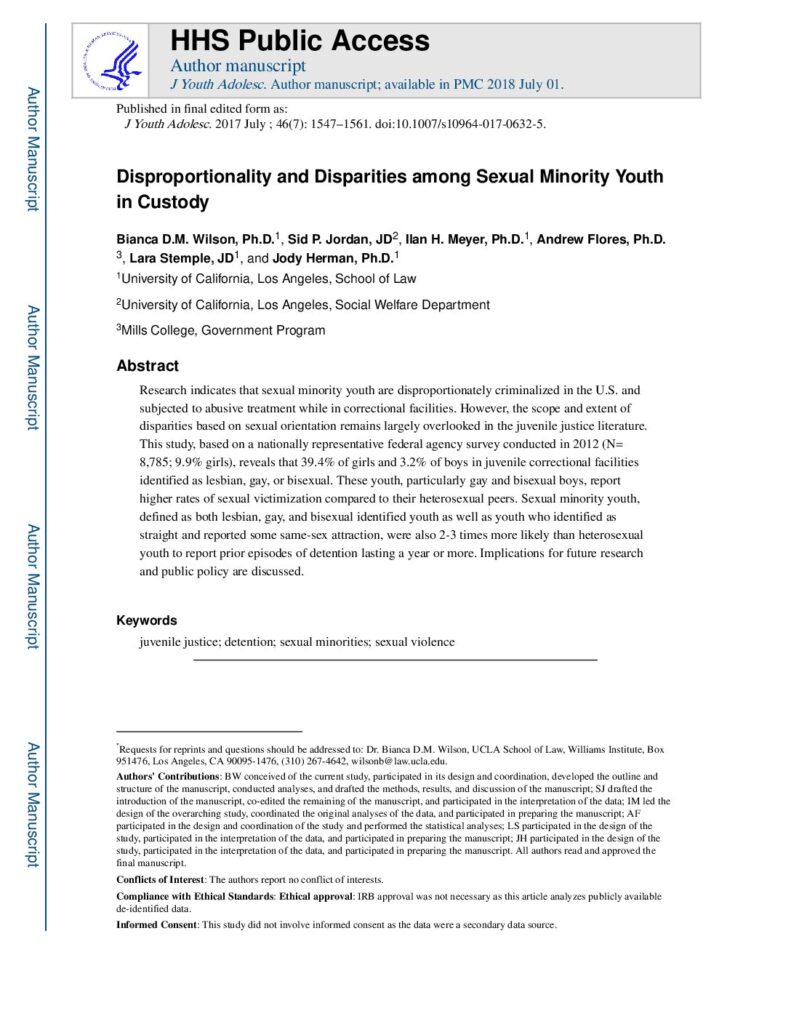
Abstract: Research indicates that sexual minority youth are disproportionately criminalized in the U.S. and subjected to abusive treatment while in correctional facilities. However, the scope and extent of disparities based on sexual orientation remains largely overlooked in the juvenile justice literature. This study, based on a nationally representative federal agency survey conducted in 2012 (N=8,785;…
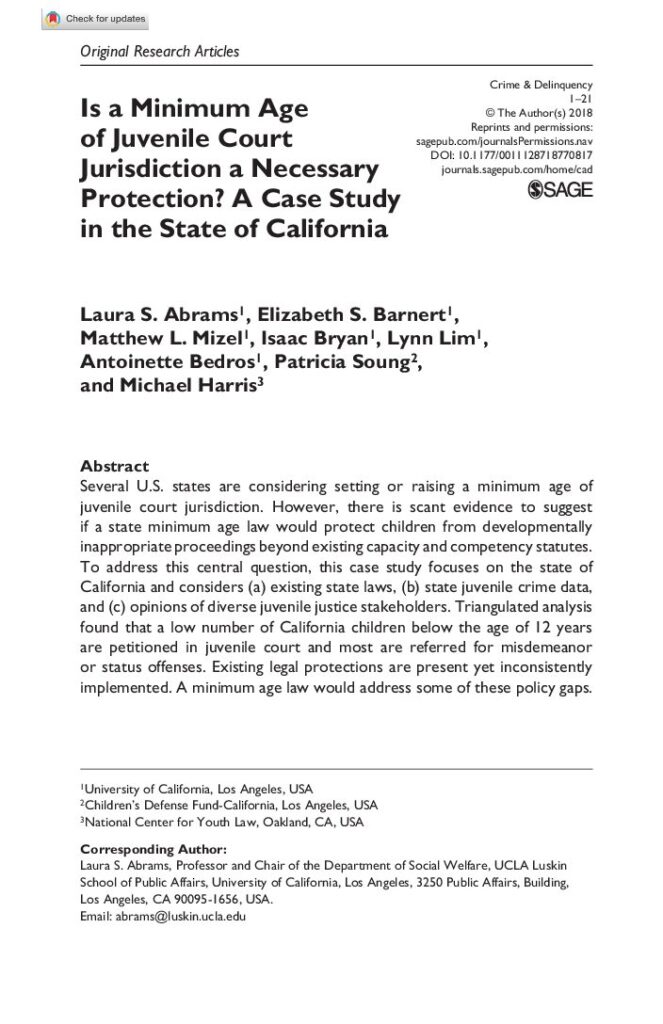
From the Abstract: Several U.S. states are considering setting or raising a minimum age of juvenile court jurisdiction. However, there is scant evidence to suggest if a state minimum age law would protect children from developmentally inappropriate proceedings beyond existing capacity and competency statutes. To address this central question, this case study focuses on the…
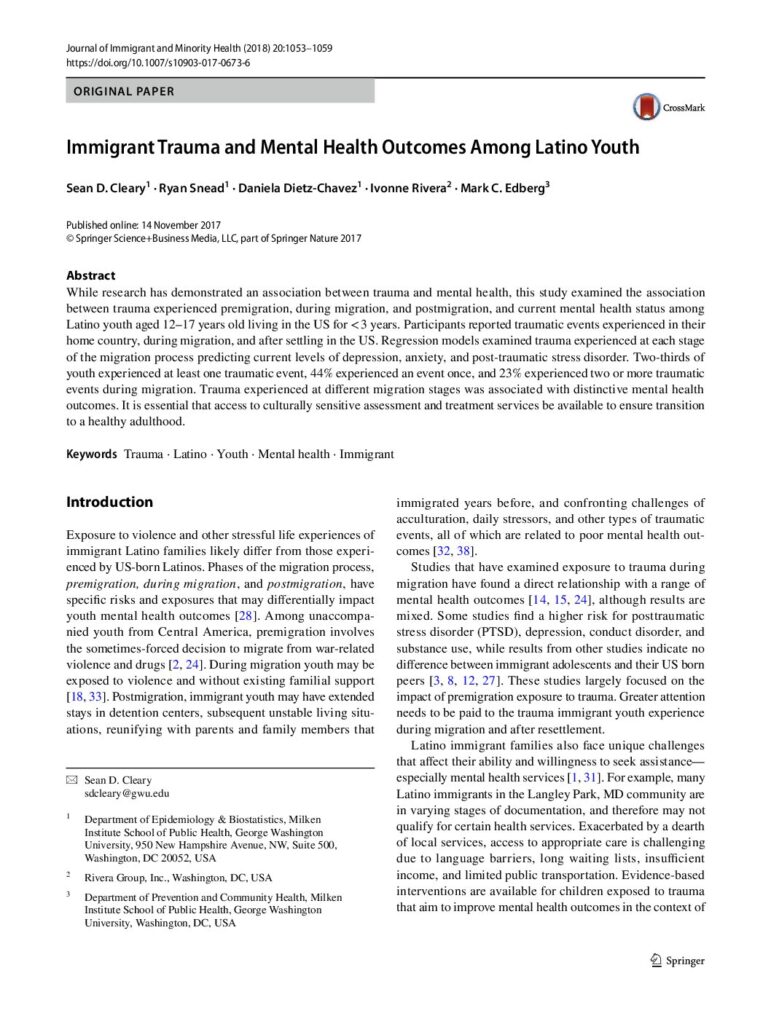
From the Abstract in the Journal of Immigrant and Minority Health: “While research has demonstrated an association between trauma and mental health, this study examined the association between trauma experienced premigration, during migration, and postmigration, and current mental health status among Latino youth aged 12–17 years old living in the US for <3 years. Participants…

This report by the Center for American Progress, Movement Advancement Project, and Youth First offers an overview of youth incarceration in the United States and in particular, data on the experiences and challenges of LGBTQ youth incarcerated in the juvenile legal system. It concludes with several recommendations for reducing system involvement, ensuring fair treatment within…
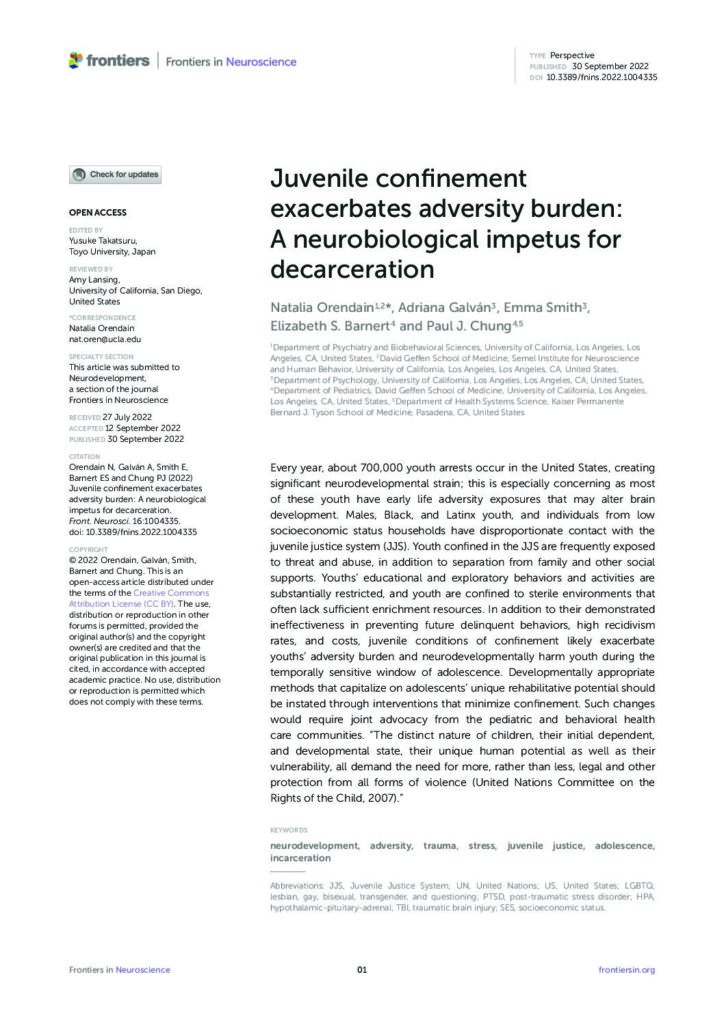
This study surveys 7073 youth across residential and secure placement facilities to assess their experiences. The surveys showed that a majority of youth in detention and correctional facilities experienced confinement during daytime hours, unsanitary living conditions, poor food quality, and difficulty sleeping. The surveys also showed that racial disparities continue to exist in correctional facilities,…
This report from the Annie E. Casey Foundation reviews the 25 years of JDAI data, providing reflections on the work to reduce detention numbers, find community solutions, and reduce racial and ethnic disparities, and identify goals for future reductions of youth in detention. From the report: The Juvenile Detention Alternatives Initiative® (JDAI™) is a nationwide…
This report from Justice Policy Institute highlights lessons learned from states that have raised the age of juvenile court jurisdiction, including Connecticut, Illinois, Massachusetts, New Hampshire, Louisiana, Mississippi, and South Carolina. The report examines state fiscal data, juvenile legal system data, crime trends, confinement data, recidivism research, and case studies to draw conclusions about the…

This policy report features interviews of young people who have been incarcerated in youth facilities in Colorado and details the harmful conditions and culture in these programs. From the Executive Summary: “Despite a mission of rehabilitation rather than punishment, the culture of the Colorado Division of Youth Corrections (DYC) is plagued by punitive practices that…

On December 14, 2016, the U.S. Department of Justice entered into a settlement agreement with the St. Louis County Family Court to remedy constitutional violations. The settlement agreement covers policies and practices to ensure the due process and equal protection rights of all youth are upheld. This includes early appointment of youth defense counsel, prohibition…


On July 31, 2015, the U.S. Department of Justice released its investigation findings into the St. Louis County Family Court, finding due process and equal protection violations. The findings include right to counsel violations by denying constitutionally adequate defense representation, privilege against self-incrimination violations by requiring a child to admit to allegations for diversion, inadequate…
From the report: Despite the strong language provided in the Prison Rape Elimination Act, state laws vary widely as to the regulations and parameters for housing youth in adult prisons. In fact, some states have no regulations or parameters governing the treatment of youth sentenced as adults at all. While some states have fully removed…

This article summarizes a study conducted by Yale Law School, Columbia Law School and Mailman School of Public Health at Columbia University, examining the influence of street stops by police on the legal socialization of adolescents and emerging adults ages 18-26 in New York City. The study showed an association between the number of police…

This report from Human Rights Watch provides an overview of the impact of Florida’s direct file statute on youth tried as adults in the state. Additionally, the report contains recommendations to different systems practitioners and decisionmakers for ending the direct file practice. From the report: Florida transfers more children out of the juvenile system and…

From the introduction: “This report will describe, dissect, and draw lessons from Connecticut’s striking success in juvenile justice reform for other states and communities seeking similar progress. The first section details the timeline and dimensions of change in Connecticut’s juvenile justice system over the past two decades. In 1992, Connecticut routinely locked up hundreds of…
This research article from Frontiers in Human Neuroscience asks, “does the brain activity underlying the production of deception differ depending on whether or not one believes their deception can be detected? To address this question, we had participants commit a mock theft in a laboratory setting, and then interrogated them while they underwent functional MRI…
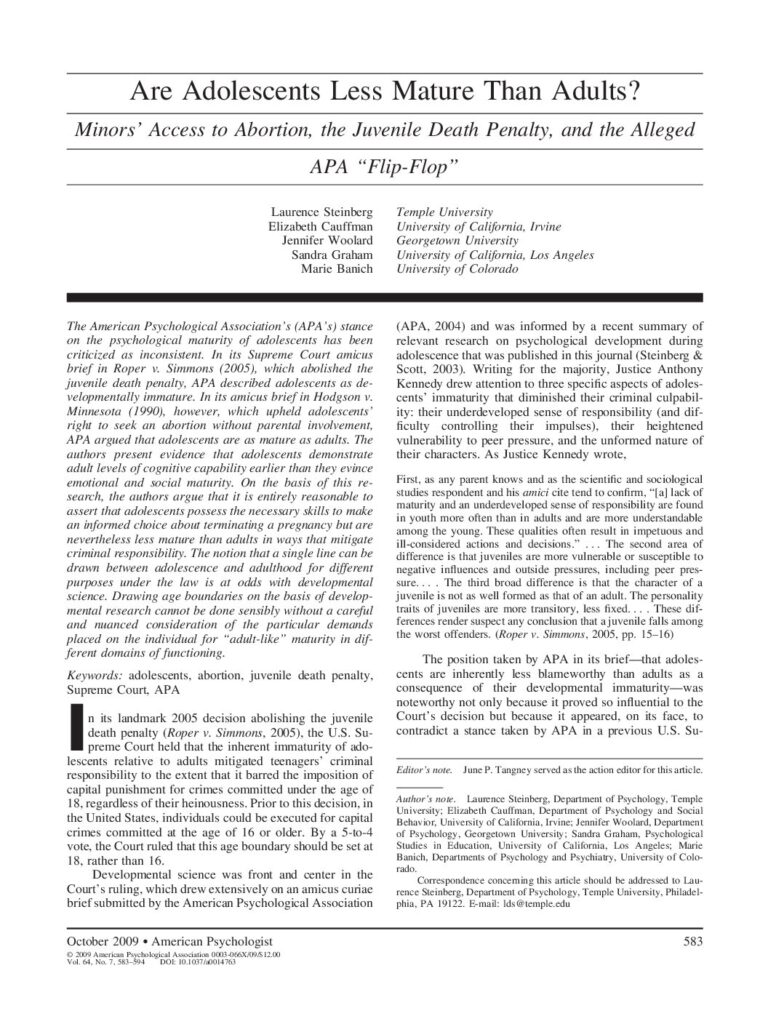
The American Psychological Association’s (APA’s) stance on the psychological maturity of adolescents has been criticized as inconsistent. In its Supreme Court amicus brief in Roper v. Simmons (2005), which abolished the juvenile death penalty, APA described adolescents as developmentally immature. In its amicus brief in Hodgson v. Minnesota (1990), however, which upheld adolescents’ right to…

An expert affidavit from Professor Franklin Zimring outlining relevant data, studies and research supporting that youth who are charged with sex offenses in juvenile court should not be subject to sex offender registry requirements or stigmatization that comes with sex offense adjudications. The affidavit analyzes recent studies highlighting that “the empirical research to date supports…
This survey was conducted by the National Center on Institutions and Alternatives through an OJJDP grant and released in 2009. From the Executive Summary: Although youth suicide in the community has been identified as a major public health problem, juvenile suicide in confinement has received scant attention. The Office of Juvenile Justice and Delinquency Prevention…
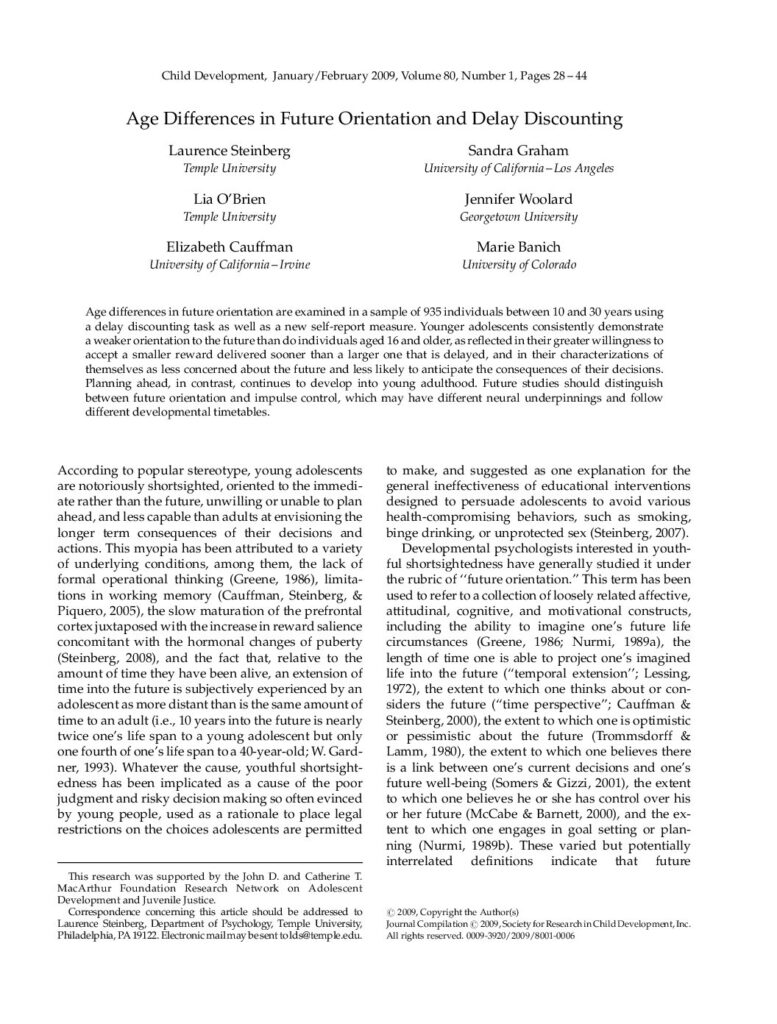
In this research article from Child Development, age differences in future orientation are examined in a sample of 935 individuals between 10 and 30 years using a delay discounting task as well as a new self-report measure. Younger adolescents consistently demonstrate a weaker orientation to the future than do individuals aged 16 and older, as…

This law review article from the publication Psychology, Public Policy and Law, looks at juvenile Miranda warnings and the comprehensibility of the warnings as applied to young people. From the Introduction: “Annually, more than 1.5 million [youth] offenders are arrested and routinely Mirandized with little consideration regarding the comprehensibility of these warnings. The current investigation…

From the introduction: “This research brief will summarize findings on what is known about substance abuse treatment as it relates to public safety and the use of incarceration. Along with conducting a brief literature review, the Justice Policy Institute (JPI) has compared state data on drug treatment admissions to incarceration rates. While no single solution…
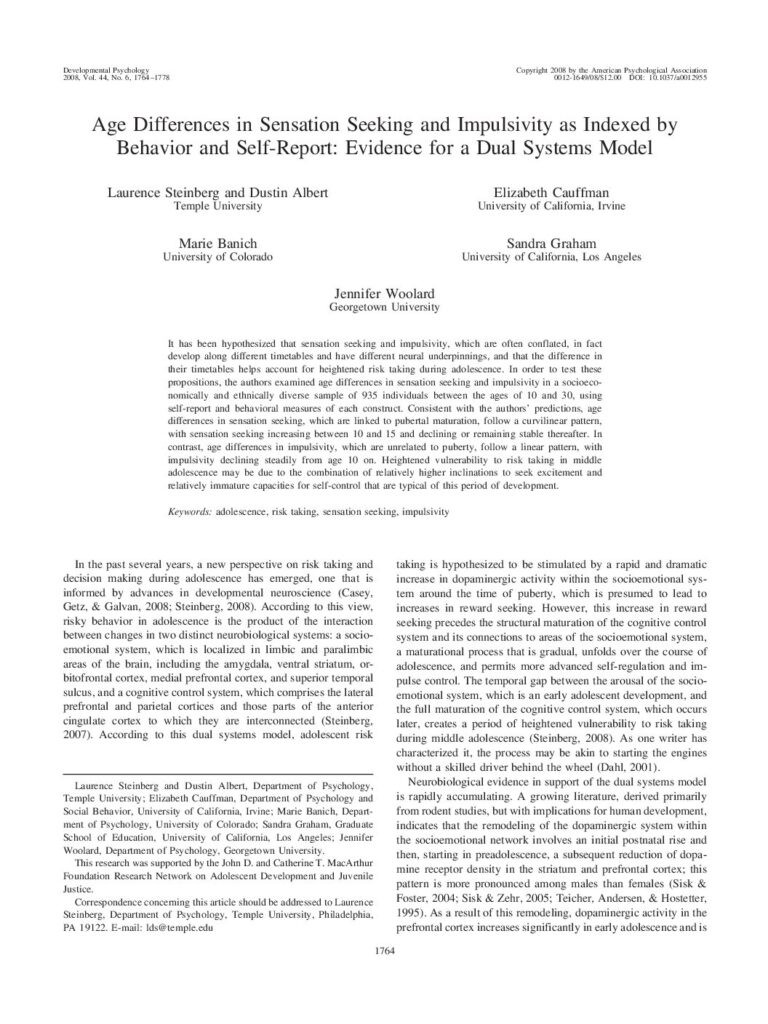
It has been hypothesized that sensation seeking and impulsivity, which are often conflated, in fact develop along different timetables and have different neural underpinnings, and that the difference in their timetables helps account for heightened risk taking during adolescence. In order to test these propositions, the authors examined age differences in sensation seeking and impulsivity…
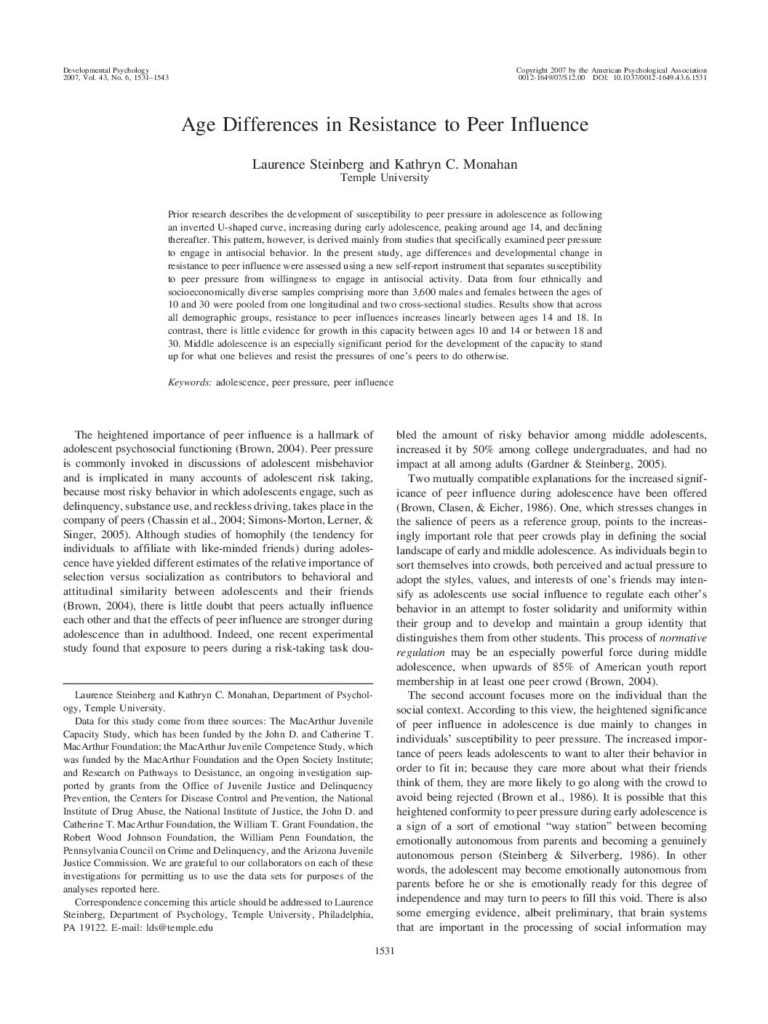
“Prior research describes the development of susceptibility to peer pressure in adolescence as following an inverted U-shaped curve, increasing during early adolescence, peaking around age 14, and declining thereafter. This pattern, however, is derived mainly from studies that specifically examined peer pressure to engage in antisocial behavior. In the present study, age differences and developmental…
