Data Collection and Analysis

The COVID-19 pandemic, declared a public health emergency in the United States on March 13, 2020, had an impact on the policies, procedures, and data collection activities of juvenile courts relating to the referrals and processing of youth. Mitigation efforts such as stay-at-home orders and school closures impacted the volume and types of law-violating behavior…


This report reviews the expanding infrastructure of police surveillance in public schools and highlights the failure of AI technologies and digital surveillance in making schools safer. Further, the report discusses the harms these technologies may cause to Black and Latine youth and youth from other historically vulnerable communities. Calling on youth justice advocates, youth leaders,…


This position paper reviews the research on disparities in justice system outcomes based on whether a person is represented by a public defender or by court-appointed private counsel finding that court-appointed counsel achieve less favorable outcomes due largely to differences in compensation and resources available to them. The paper also reviews the literature on the…

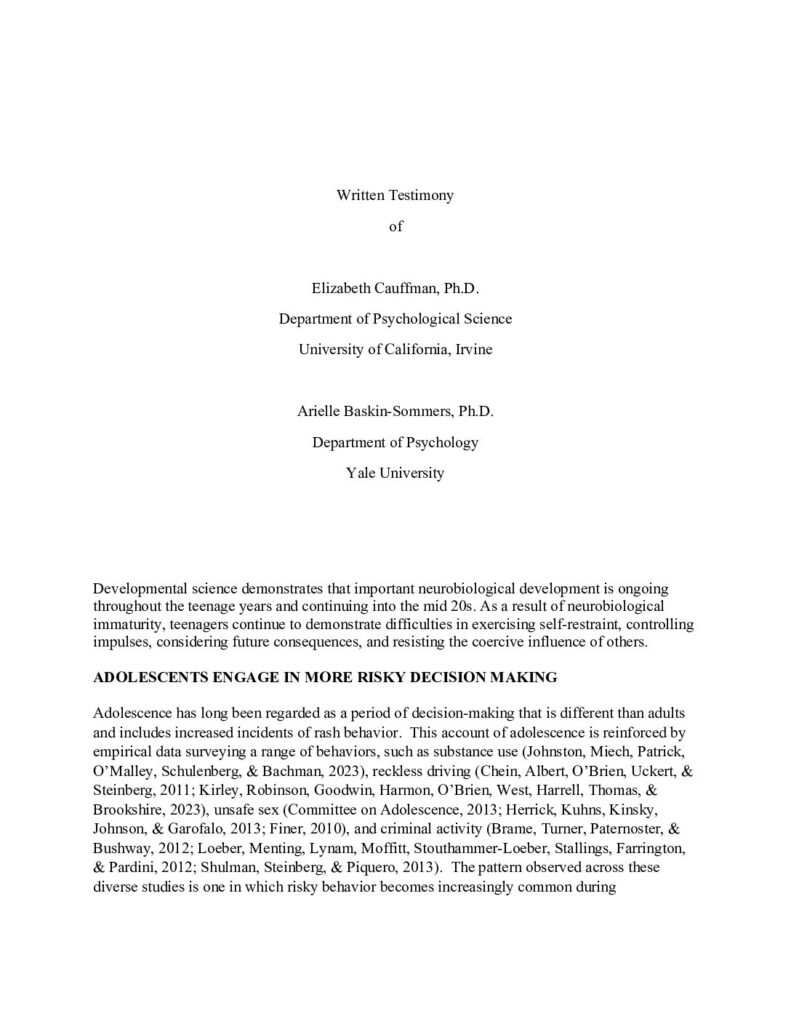
This written testimony from Elizabeth Cauffman, Ph.D. and Arielle Baskin-Sommers, Ph.D. discusses what developmental science says about the impact of brain development on adolescent risk taking, decision making, and susceptibility to social and peer influence as it relates to a young person’s culpability. The testimony also provides information on diversion and its impact on lower recidivism and improved public safety. Below is an excerpt from…
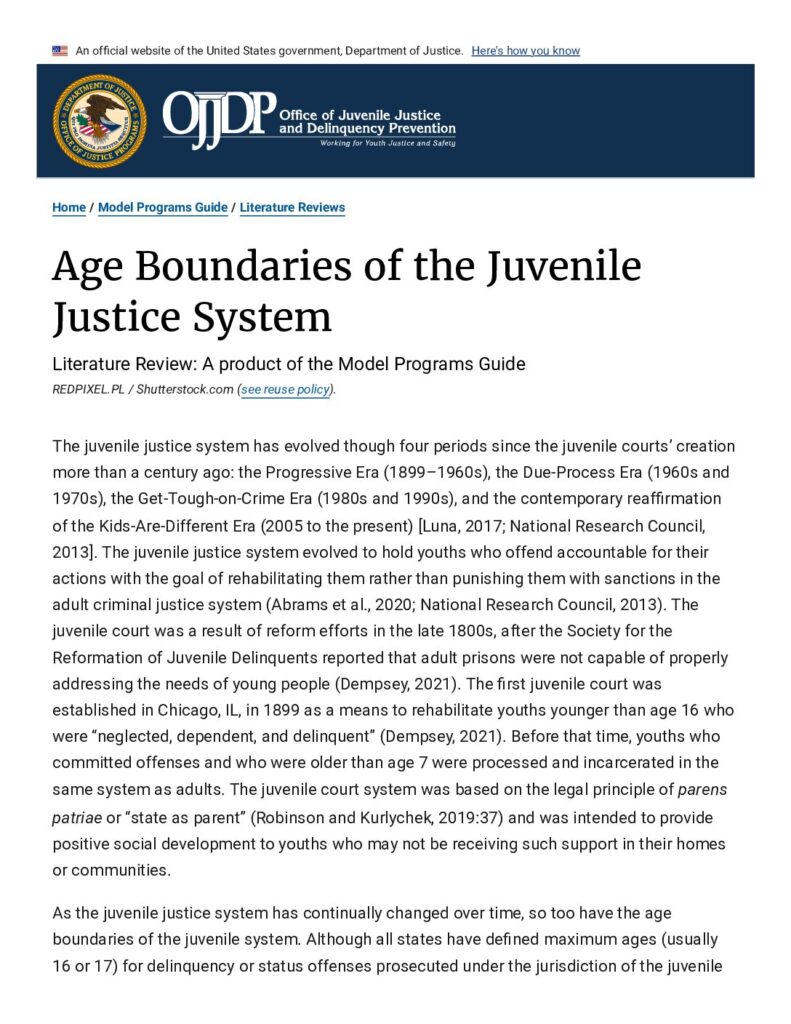
This literature review from the Office of Juvenile Justice Delinquency Prevention assesses age boundaries of the juvenile legal system across the country. From the summary: This literature review discusses the age boundaries of the juvenile justice system. The review provides definitions of juveniles, delinquency, status offenses, and other related terms; gives a summary of the…

From the introduction: “The goal of the Kansas juvenile legal system is ‘to promote public safety, hold juvenile offenders accountable for their behavior and improve their ability to live more productively and responsibly in their community.’ Evidence shows that juvenile fees and fines do the opposite. This report outlines the ways in which fees and…

An annotated bibliography of research on transfer/waiver from Dr. Antoinette Kavanaugh Ph.D., ABPP including research on transfer and recividism, studies on how juvenile court judges weigh transfer factors, and demographic data and analysis on who is transferred to adult court.

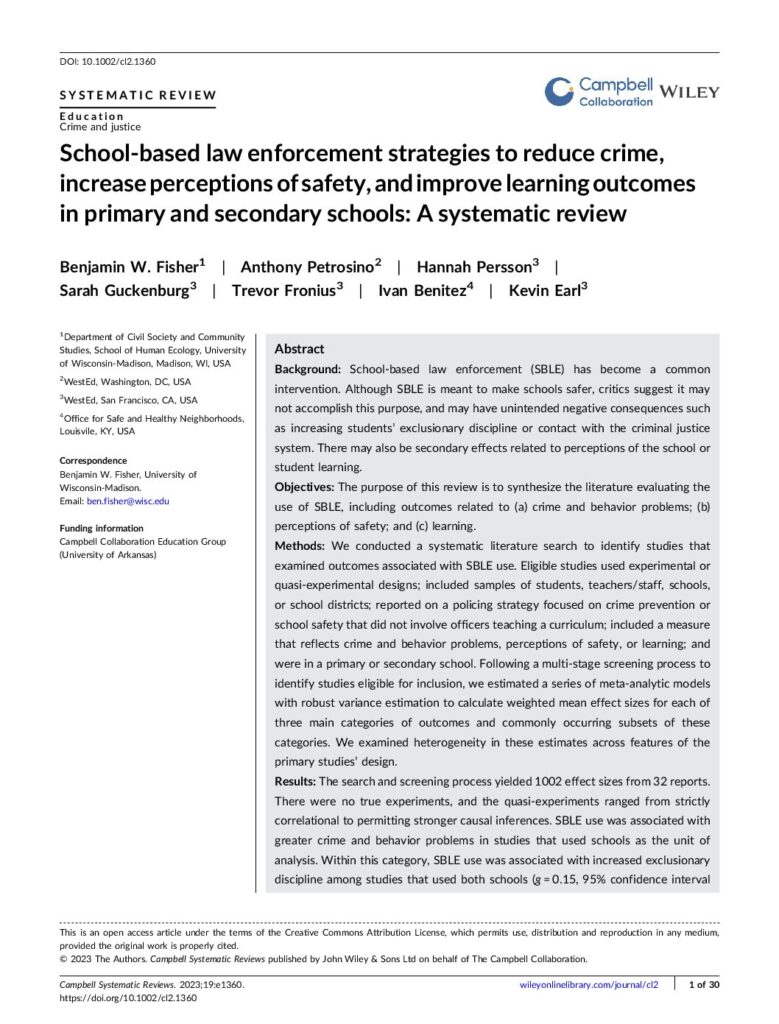
This literature review synthesizes 32 studies evaluating the impact of school-based law enforcement on 1) crime and behavior, 2) perceptions of school safety, and 3) student learning. From the summary: Contrary to what is intended, schools with SBLE had higher rates of crime and behavior problems than schools without SBLE. This was primarily driven…

Semi-annual report from January-June 2023 from the Colorado Division of Youth Services on reported number of physical and sexual assaults, number of facility staff, and other conditions of confinement data in its state-run residential facilities for detained and committed young people.
From the abstract: This paper explores the history of the reforms in Scotland which led up to the raising of the minimum age of criminal responsibility (MACR) in 2019, from age 8 to 12. It also showcases research evidence, from the Edinburgh Study of Youth Transitions and Crime, which indicates that there is both an…

The Center for Justice Innovation conducted an exploratory, participatory action research study of 103 youth ages 15-24 who reported carry guns in a neighborhood of Brooklyn. The research evaluates why these youth carry guns and proposing a collaborative approach to public safety. From the report: “The increase in gun violence experienced in many U.S.…

From the introduction: “A growing body of literature has demonstrated that when schools suspend students, the suspension acts not as a deterrent but as an amplifier of future punishment. Labeling theory has emerged as the predominant explanation for this phenomenon, suggesting that the symbolic label conferred along with a suspension shapes how other people perceive…
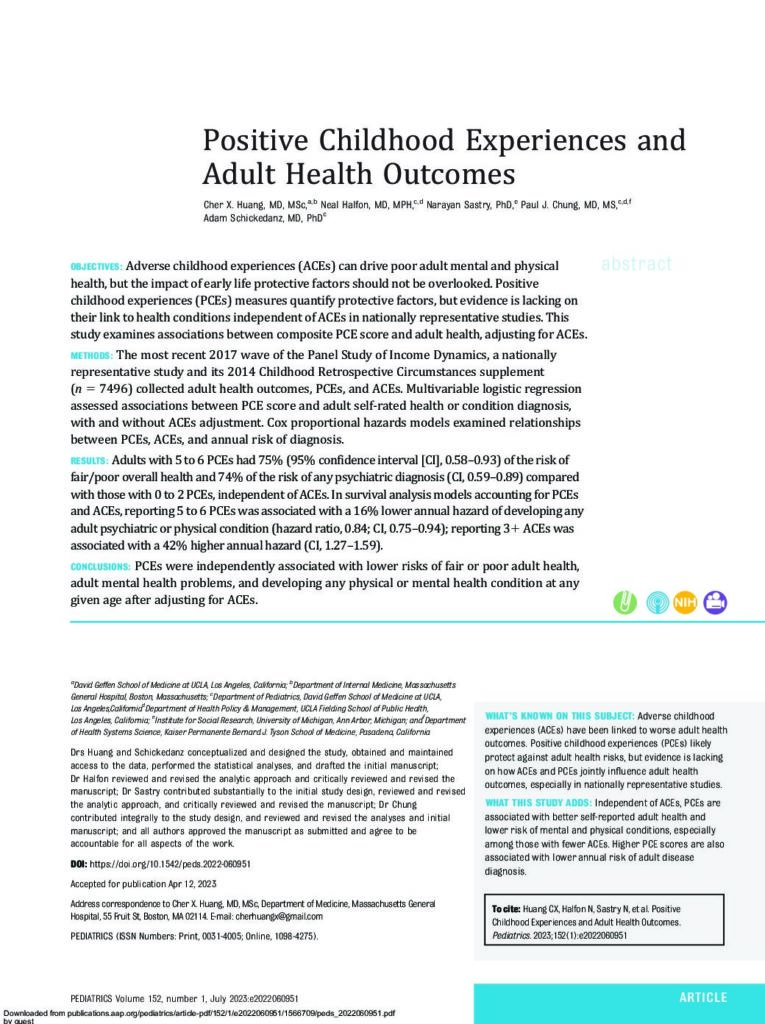
From the abstract: OBJECTIVES: Adverse childhood experiences (ACEs) can drive poor adult mental and physical abstract health, but the impact of early life protective factors should not be overlooked. Positive childhood experiences (PCEs) measures quantify protective factors, but evidence is lacking on their link to health conditions independent of ACEs in nationally representative studies. This…


