
Least Restrictive Alternative
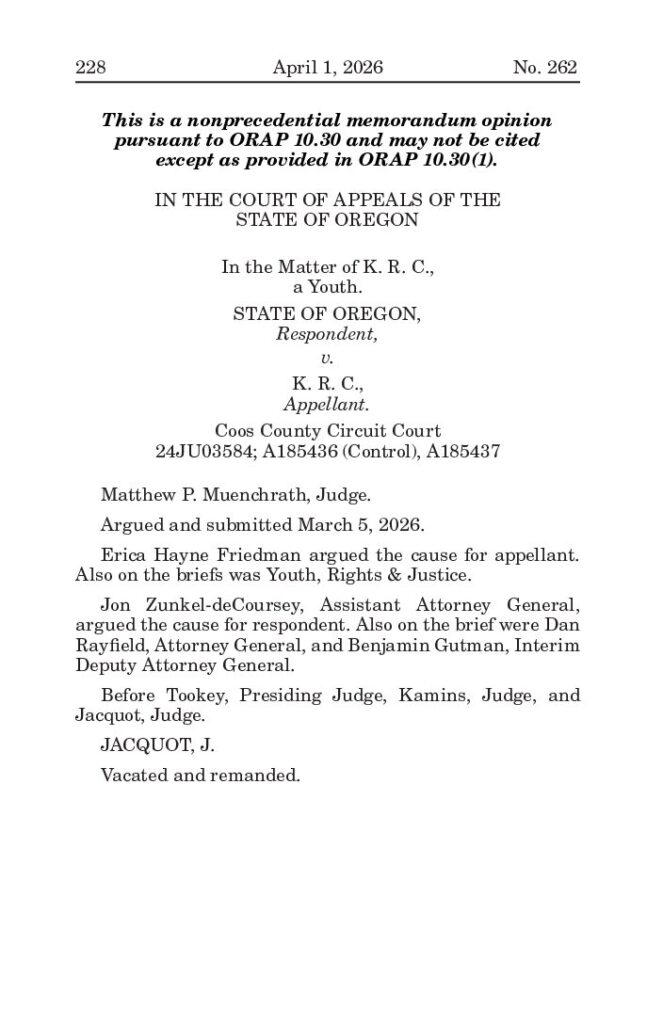
The Oregon Court of Appeals vacated and remanded an adjudication finding that the trial court erred in failing to provide written findings and consider the youth’s best interest. The court stated in relevant part: Assessment of a youth’s best interest is “a child-focused consideration” and “must be child-centered.” Dept. of Human Services v. T. M. D.,…

This complaint filed in the U.S. District Court for the District of Colorado challenges Colorado’s practice of keeping dually involved youth detained on a delinquency case due to a lack of placement options in the state’s foster care system. The complaint raises substantive and procedural due process violations and seeks declaratory and injunctive relief. “The…
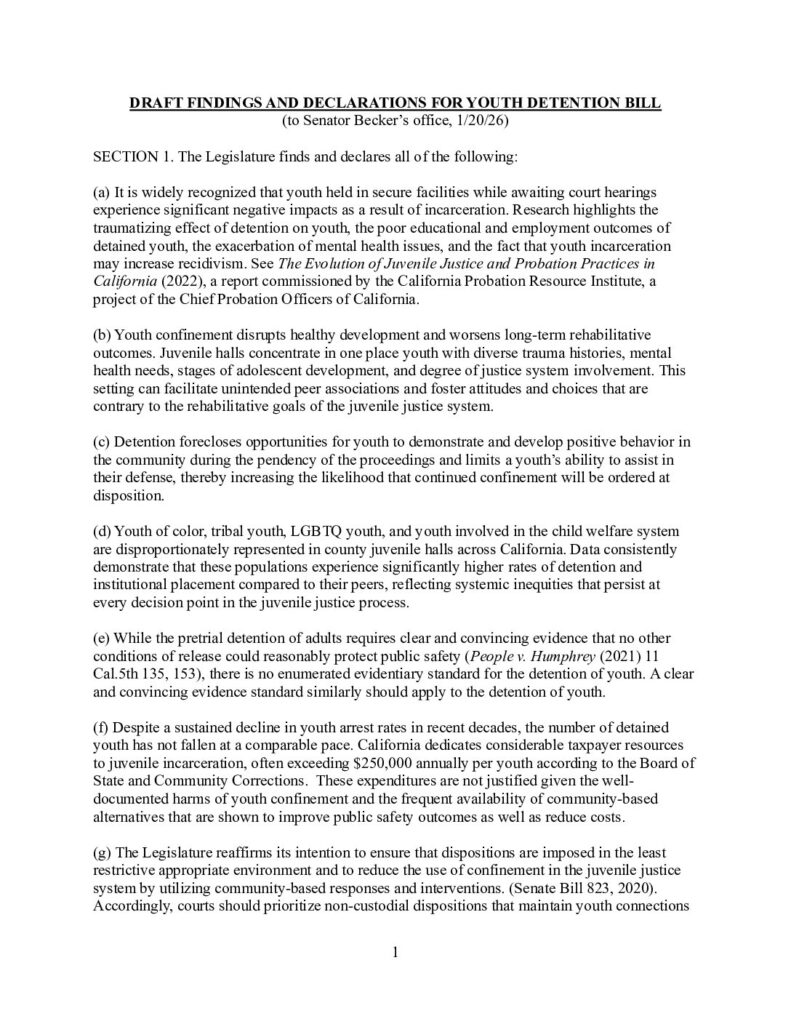
This proposed draft of a legislative “findings and declarations” document for a youth detention and disposition reform bill in California affirms the legislature’s commitment to make placement in juvenile detention “the exception, not the rule.” The draft findings rely on research regarding the impact of detention on young people, racial justice, developmental science, and California…

This memorandum proposes language for a detention and disposition reform bill in California. The memorandum proposes four areas the detention reform bill aims to change including: 1) clarifying the legal standard for pre-adjudication detention of youth, 2) clarifying the juvenile court’s authority to determine whether pre-adjudication detention is still necessary, 3) clarifying the standard at…

A California appellate court reversed a juvenile court’s disposition order committing a youth to a secure youth treatment facility and offered the following language in support. “Before committing a minor to a secure facility, the court must find no less restrict alternative disposition is suitable. In making this determination, “the court shall consider all relevant…


This report from National Institute for Criminal Justice Reform offers six principles of a positive youth justice system (‘PYJS’) including: 1) Minimize contact with the juvenile justice system, 2) partner with youth and families to develop and share ownership of case plans, 3) community-based organizations should take the lead, 4) build on youth assets and…

A sample disposition and mitigation memorandum filed in a juvenile court in Ohio.
From the Introduction of the Paper: “The U.S.’s failure to implement an internationally abiding federal law regulating juvenile justice has important implications on the treatment of incarcerated adolescent populations while incarcerated, rehabilitated, and reintegrated into society. This article will analyze the harmful and outdated legal frameworks and institutional structures of the U.S. juvenile justice systems.…

From the introduction: “This brief is an accompaniment to a short video documentary, ‘Don’t Abandon Us: Addressing Youth, Crime, and Trauma.’ Both designed to help increase awareness among decision makers on how childhood trauma and adverse experiences can contribute to youth crime and future legal system involvement. In a moment of growing concern about crime,…

From the introduction: “This report summarizes changes in youth incarceration following the onset of COVID-19, the key factors that drove and supported Utah’s shift away from incarceration, and the work that the jurisdiction still must do to sustain and build on these early successes.”

Between a Rock and a Hard Place: The Social Costs of Pretrial Electronic Monitoring in San Francisco
This report features findings from in-depth interviews from 66 people who were court-ordered to electronic monitoring (EM) in San Francisco County, California. Highlighting the nature and difficulties program participants face while trying to comply with EM programs, the report demonstrates the harms of EM, including finding safe housing, securing employment, social isolation, trouble maintaining physical and emotional connections to loved ones, and increased likelihood of new contacts with law enforcement. From…


This paper from the Executive Session on Community Corrections at the Harvard Kennedy School examines the history of youth incarceration and discusses how the inherently flawed model of youth prisons demands systemic reforms, including closure of youth prisons, to actualize safer communities, and positive youth outcomes. From the introduction: “For 170 years, since our first youth correctional institution opened, America’s approach…
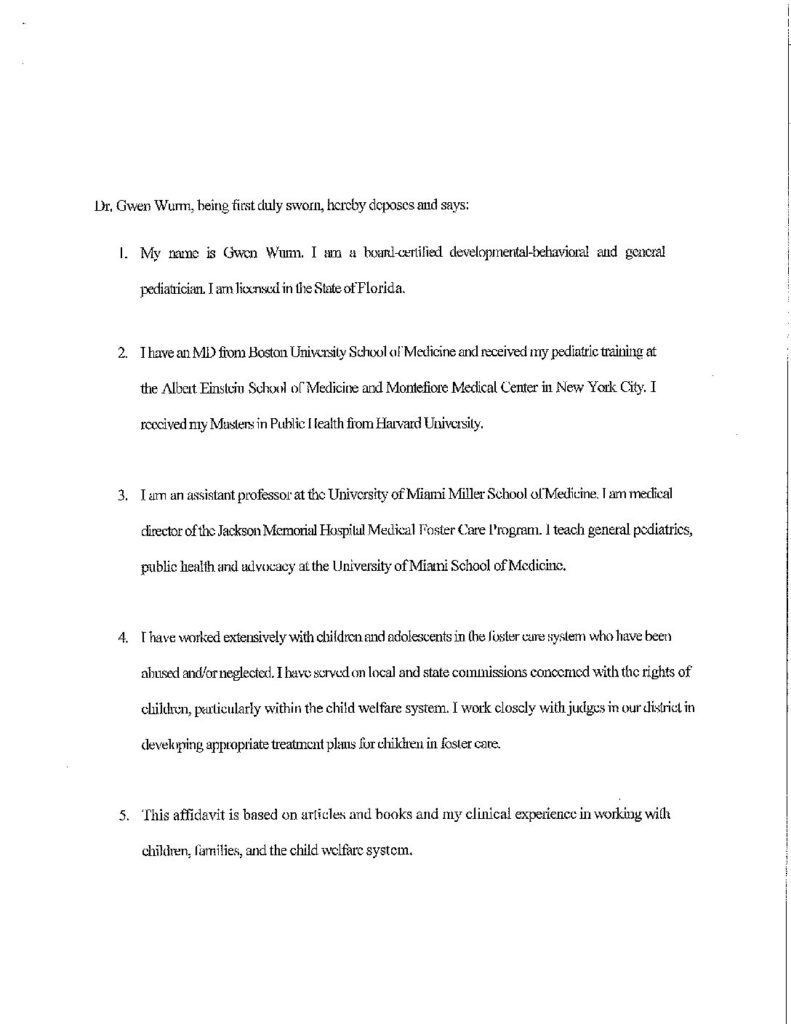
This expert affidavit from Dr. Gwen Wurm, a pediatrician licensed in the state of Florida, describes the impact that indiscriminate shackling has on adolescent, cognitive, and psychosocial development. The affidavit also describes the traumatizing effects of shackling on children who may have experienced abuse, neglect or other mental distress.

From the introduction: “This report will describe, dissect, and draw lessons from Connecticut’s striking success in juvenile justice reform for other states and communities seeking similar progress. The first section details the timeline and dimensions of change in Connecticut’s juvenile justice system over the past two decades. In 1992, Connecticut routinely locked up hundreds of…
