
Racial Justice


This Article is one of the first to explore the racialized impact of the two most controversial and ubiquitous forms of what we call “imputed liability murder.” An analysis of ten years of murder prosecutions in the state of Minnesota reveals that imputed liability murder is anything but a fringe subtype of homicide: an astounding…


This article is a transcript of a lecture given by Professor Chaz P. Arnett at a Symposium hosted by the University of Maryland Francis King Carey School of Law’s Journal of Health Care Law & Policy. Professor Arnett discusses juvenile courts’ increased reliance on electronic monitoring, which he classifies as “e-carceration,” or the “the digital…

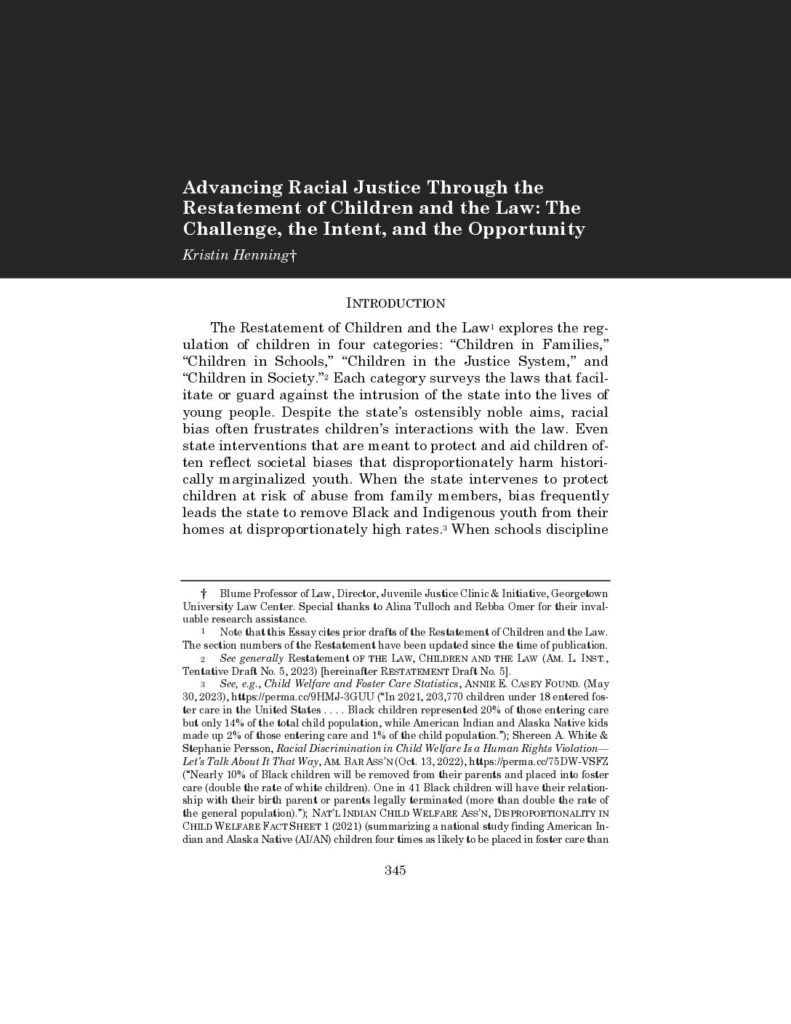
From the Introduction: “Racial inequities are addressed to varying degrees in at least three of the four sections of the Restatement of Children and the Law. This Essay evaluates whether and how well this Restatement advances racial justice and identifies additional opportunities for the ALI to address racial inequities now and in future iterations of the Restatement. The…


Outlines steps that states must take to comply with the minimum requirements of the U.S. Constitution to protect the rights of youth facing deprivations of liberty.


