
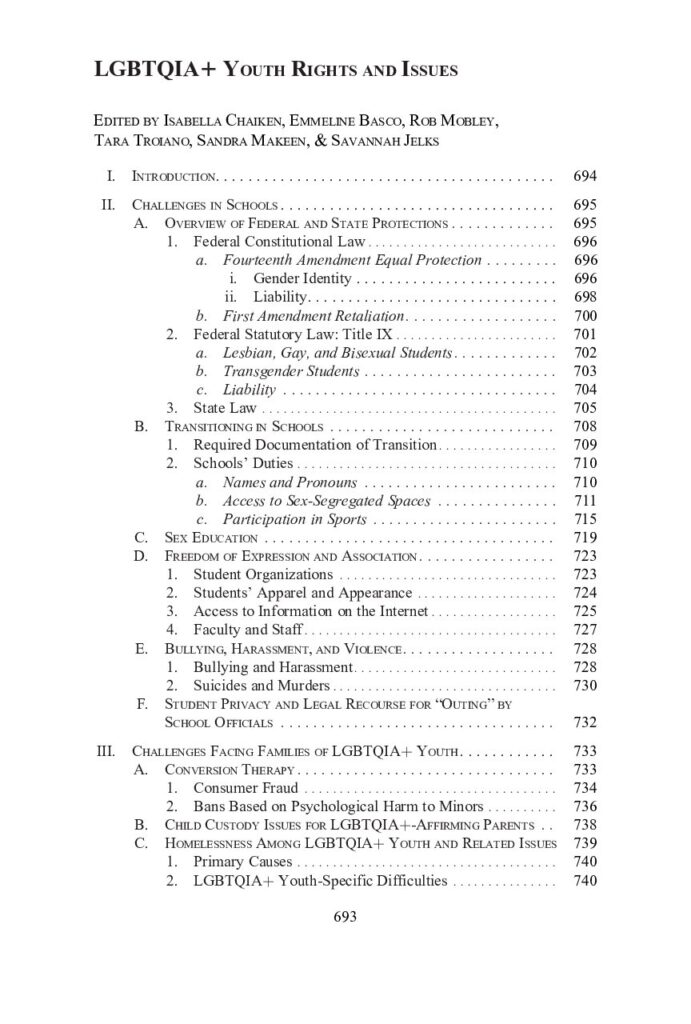
From the introduction: “This Article discusses the myriad challenges lesbian, gay, bisexual, transgender, and questioning (LGBTQIA+) youth face in the United States (U.S.). The Article focuses on issues LGBTQIA+ (the “plus” holds space for other sexual identities not represented within the acronym) youth confront in school as well as the issues faced by families with…

On May 15, 2024, the DOJ submitted a letter to Kentucky Governor Andy Beshear to notify the state of the commencement of a DOJ investigation into nine juvenile facilities operated by the Kentucky Department of Juvenile Justice (DJJ). The specific issues the DOJ outlined they would investigate include excessive use of chemical force, physical and…

This report reviews the expanding infrastructure of police surveillance in public schools and highlights the failure of AI technologies and digital surveillance in making schools safer. Further, the report discusses the harms these technologies may cause to Black and Latine youth and youth from other historically vulnerable communities. Calling on youth justice advocates, youth leaders,…
This report by the National Center for Youth Law urges policymakers and decisionmakers to center the rights and well-being of children and youth in AI policy. It highlights the risks of AI reinforcing bias and inequality in areas such as child welfare, education, healthcare, juvenile justice, and immigration, while emphasizing the need to protect children’s…


School-based arrests have long made up a substantial number of cases in the juvenile legal system. As a result, youth defenders often represent clients who have been seized, searched, or interrogated on school grounds. This guide provides a general overview of the law governing school seizures, searches, and interrogations and practice tips for challenging evidence…

This is a sample motion from Maryland asking the court to dismiss a petition in the interest of justice based on the school district’s violation of the “Child Find” provisions of the Individuals with Disabilities Education Act (20 U.S.C. § 1401 et. seq.) as applied to the respondent, Jane Doe.
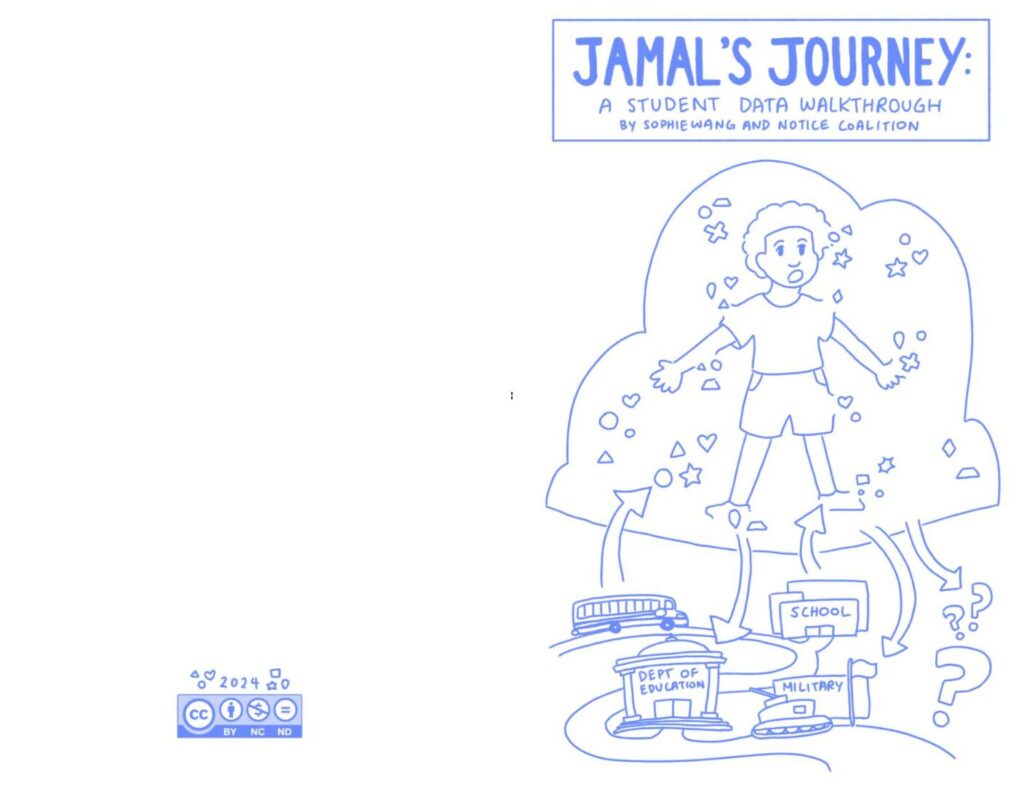
This infographic from the No Tech Criminalization in Education (NOTICE) Coalition provides a walkthrough of a student’s experience in a data-driven school from kindergarten to the end of high school. The resource includes information on different forms of information sharing and surveillance technologies and individual know your rights information for students navigating digital surveillance.
This research report from Project Unloaded and Ahzul explores teens’ perspectives on guns and gun ownership and demonstrates how fact-based education and communication on the risks associated with guns has the potential to change attitudes and behaviors related to gun ownership. From the Introduction: “In 2023, Ahzul conducted research on behalf of the gun violence…
The Michigan Court of Appeals affirmed the trial court’s suppression of NC’s statements, finding that the interview conducted of NC in the principal’s office by the Chief of Police was custodial and required Miranda warnings. The court stated in relevant part: “These facts sufficiently support that Nelson subjected NC to a custodial interrogation. Specifically, the…

This research report by the ACLU provides an overview of surveillance technology (“EdTech Surveillance”) industry in K-12 schools and critically explores the industry’s claims, the efficacy of the products, and their impacts on students and schools. The report also provides recommendations for best protecting students and promoting better surveillance technology decision-making among elected officials, school…

From the introduction: “Imagine you’re a student with a disability that impacts how you interact with others and process situations. In an instant, that disability may be criminalized, and you could find yourself thrust into a juvenile justice system that offers little support and few education resources. This scenario is all too common. Thousands of…

This guide is meant to help young people in Oregon understand the collateral consequences to juvenile court involvement and adjudications, and what they can do to overcome those consequences. Written in youth-friendly language, this guide walks through how young people should talk about their juvenile court record, the impact of their record on school, jobs,…
This amicus brief by the Juvenile Law Center and Rise for Youth argues schools and school officials are increasingly entangled with law enforcement, especially, through the use of school resource officer programs, impacting students’ constitutional rights. The brief argues that O.W., a 13-year old student in this case, had his Fifth Amendment rights violated when his vice principal and the school resource officer compelled him to make an incriminating statement…

From the introduction: “A growing body of literature has demonstrated that when schools suspend students, the suspension acts not as a deterrent but as an amplifier of future punishment. Labeling theory has emerged as the predominant explanation for this phenomenon, suggesting that the symbolic label conferred along with a suspension shapes how other people perceive…

This article discusses the legal landscape of school surveillance, including digital and artificial intelligence surveillance, through the lens of Fourth Amendment and federal privacy laws. From the Abstract: “Since the Covid-19 pandemic, schools have escalated their use of educational technology to improve students’ in-school and at-home learning. Although educational technology has many educational benefits for…


From the Executive Summary, developed by Equip for Equality: “The children in the Juvenile Temporary Detention Center (“JTDC”) are some of the most vulnerable youth in Cook County, many having experienced significant trauma and violence as part of their daily existence. The JTDC is the juvenile jail for Cook County, housing youth awaiting adjudication of their cases, as well…


From the introduction: “This brief offers context on the youth criminalization crisis in the United States. We then outline a series of harmful elements in the Bipartisan Safer Communities Act. Specifically, we review provisions that: • Increase funding for threat assessments, surveillance, and greater police presence in schools; • Expand data-sharing between law enforcement and…
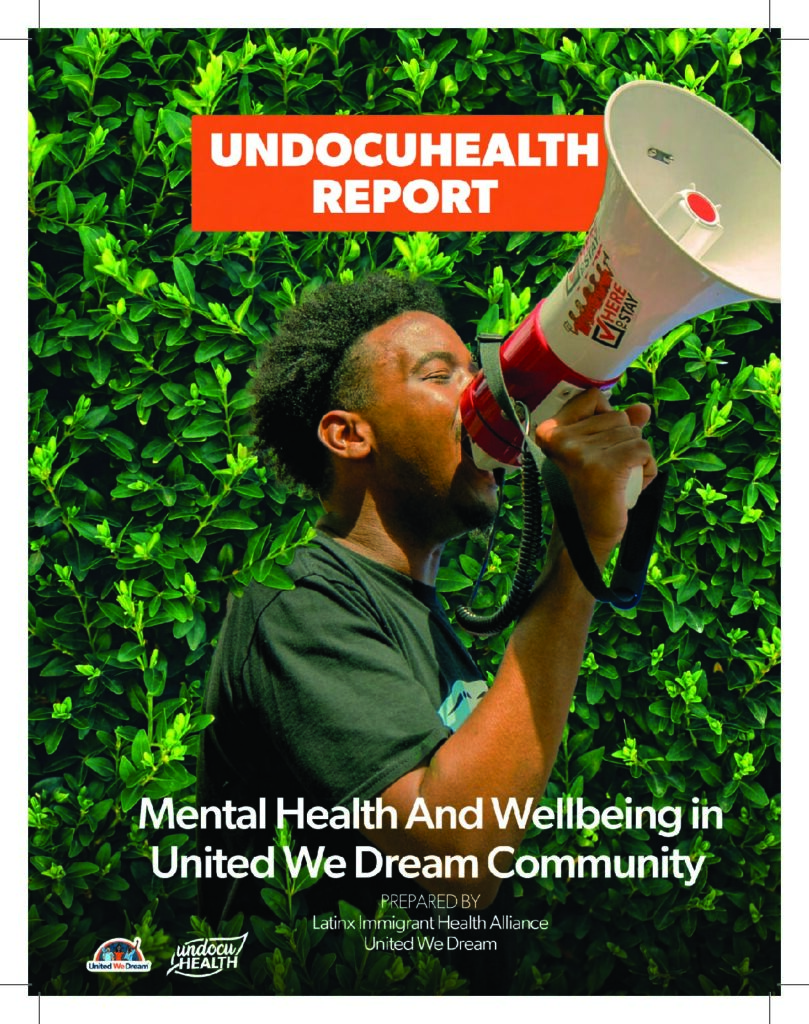
United We Dream and the Latinx Immigrant Health Alliance released a report issuing survey findings of over 600 undocumented youth and adults on the impact of COVID-19 and the constant threat of deportation and detention on their mental health and wellbeing. “Overall, participants reported clinical levels of depression, anxiety and global severity, which was exacerbated by…
