
Surveillance
The Gault Center and Juvenile Law Center filed an amicus brief in the Second Circuit Court of Appeals involving New York Police Department’s collection and storage of DNA. From the summary of argument: Amici write in support of Appellant to address the particularly harmful impact that Appellees’ DNA collection and storage practices have on children,…
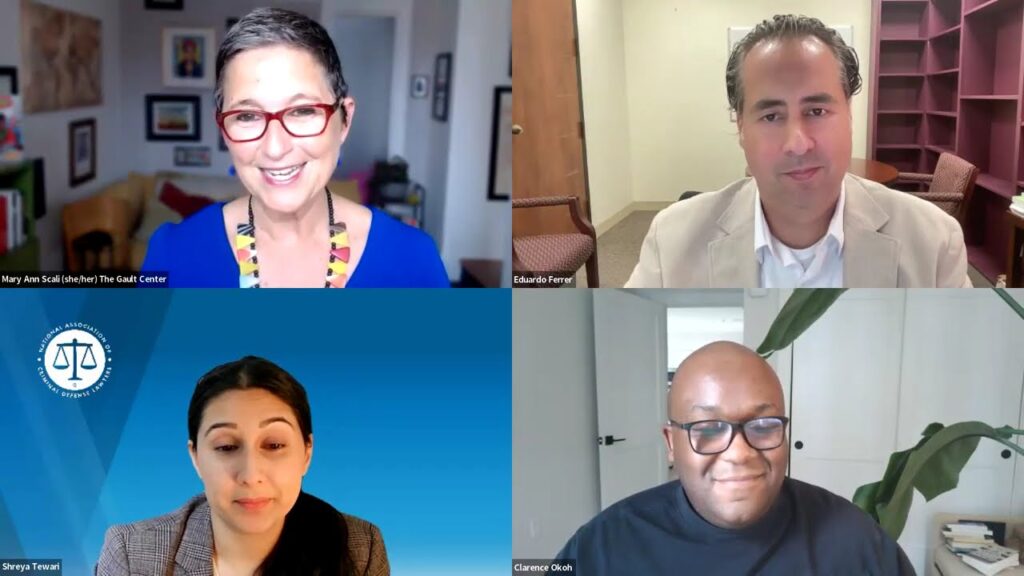
On July 14th, 2026, the Gault Center and the Georgetown Juvenile Justice Clinic & Initiative hosted a webinar on Learning, Litigating, Liberating: Defending Against AI Surveillance of Youth. As AI Surveillance of youth increases in everyday lives from “bullying monitors” to vape detection to facial recognition and so much more, this webinar provides an overview of how and where AI Surveillance is being used and what youth defenders and…
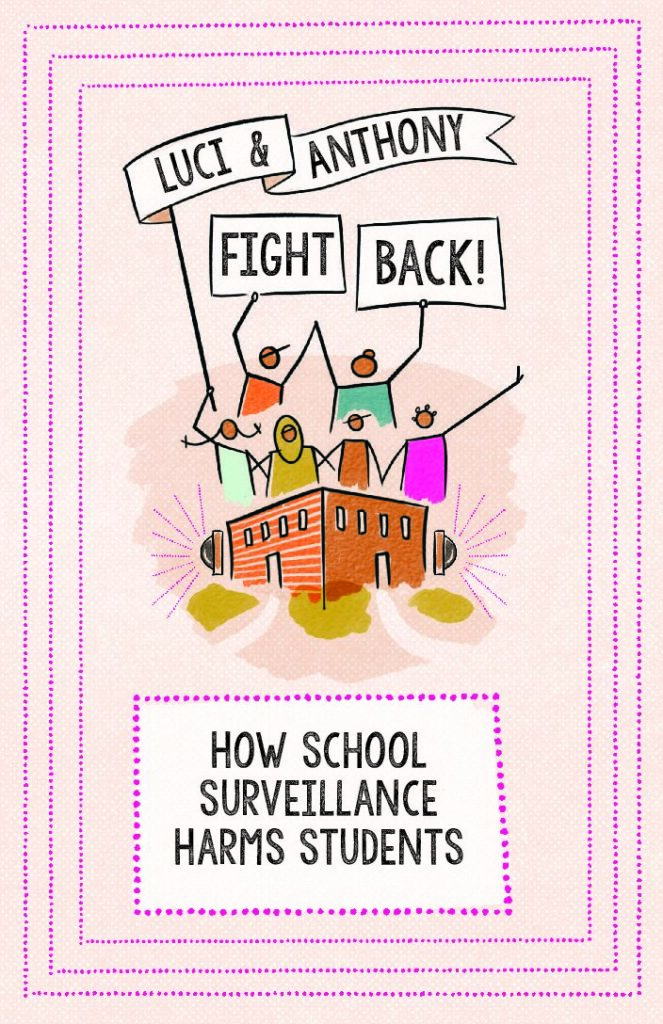
This zine on school surveillance by the National Campaign for Police Free Schools, a campaign that is co-convened by the Advancement Project and the Alliance for Educational Justice, provides know your reality and know your rights information about surveillance technologies used in schools, at home, and in communities. From the introduction: “This zine workbook is…
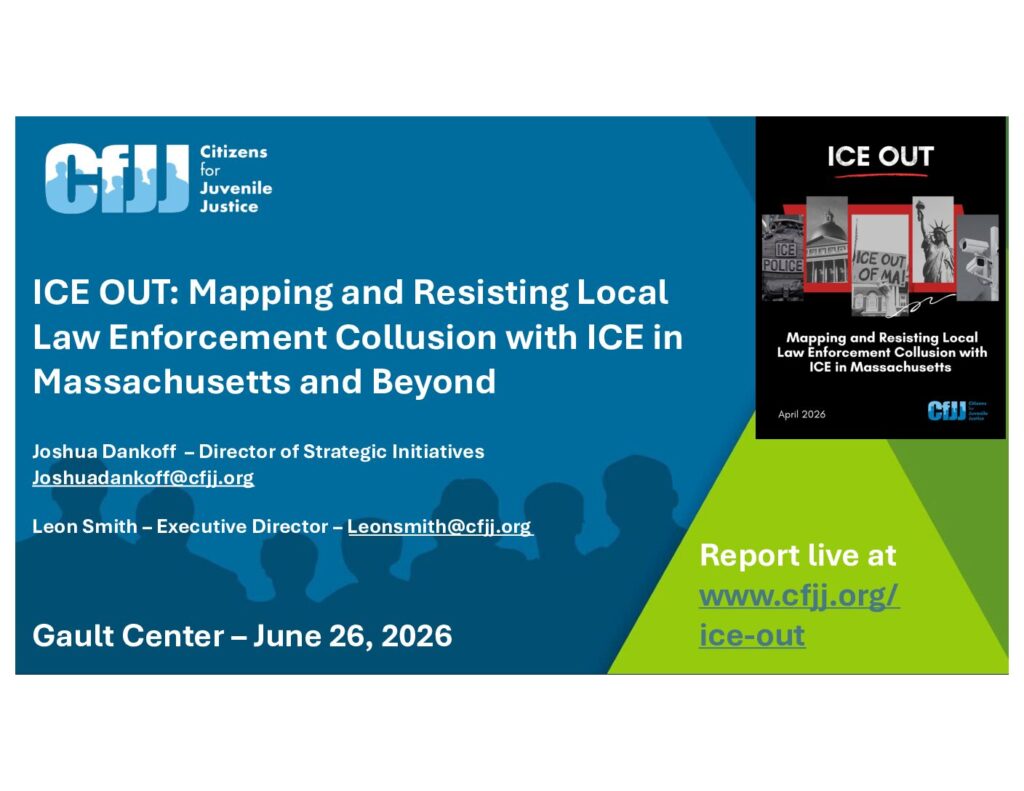
On June 26, 2026, Joshua Dankoff and Leon Smith from Citizens for Juvenile Justice (CfJJ) offered a training for the Gault Center’s New England Region on mapping and resisting local law enforcement collusion with ICE in Massachusetts and beyond. The training walked through CfJJ’s report that culminated from over 90 public records requests submitted to…
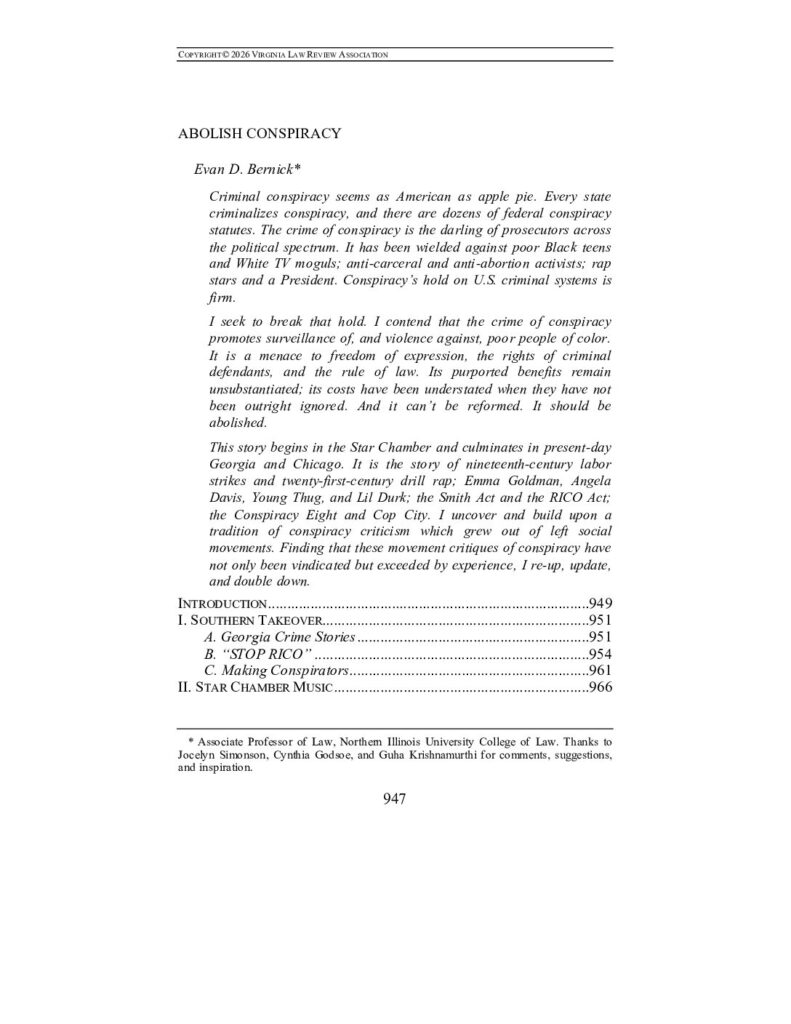
From the Abstract: Criminal conspiracy seems as American as apple pie. Every state criminalizes conspiracy, and there are dozens of federal conspiracy statutes. The crime of conspiracy is the darling of prosecutors across the political spectrum. It has been wielded against poor Black teens and White TV moguls; anti-carceral and anti-abortion activists; rap stars and…
This article was published by Professor Juan Caballero in the Loyola of Los Angeles Law Review. From the abstract: American history is littered with threats and attempts at mass deportation. The Trump administration’s announced policy of mass deportations is the most recent manifestation of such a policy and one that perhaps poses an unprecedented threat…
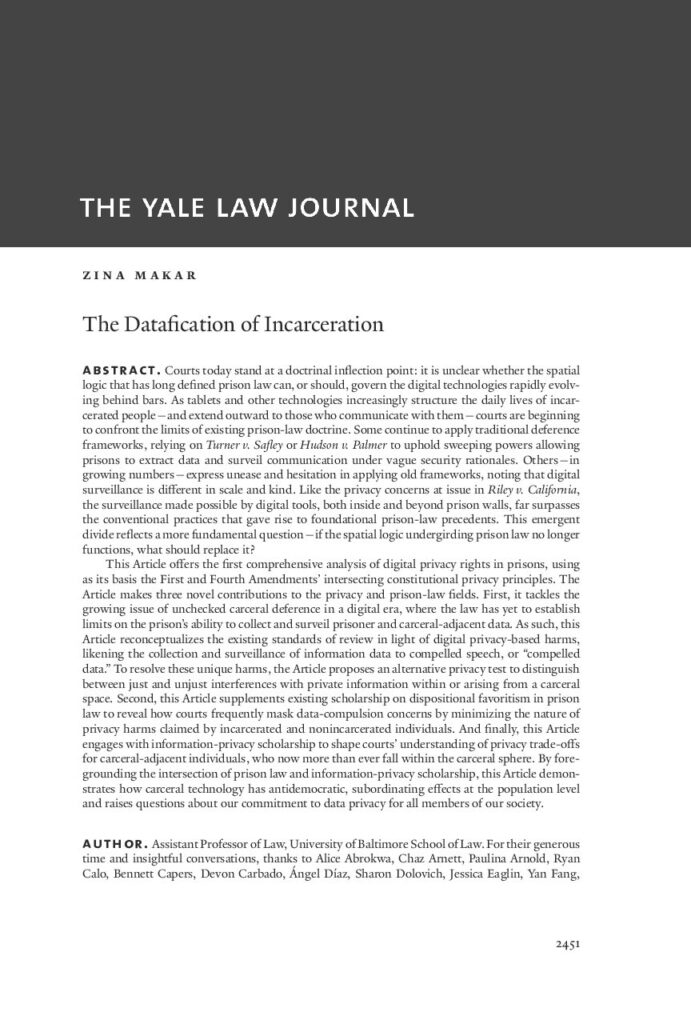
This article by Professor Zina Makar was published in the Yale Law Journal. From the abstract: Courts today stand at a doctrinal inflection point: it is unclear whether the spatial logic that has long defined prison law can, or should, govern the digital technologies rapidly evolving behind bars. As tablets and other technologies increasingly structure…
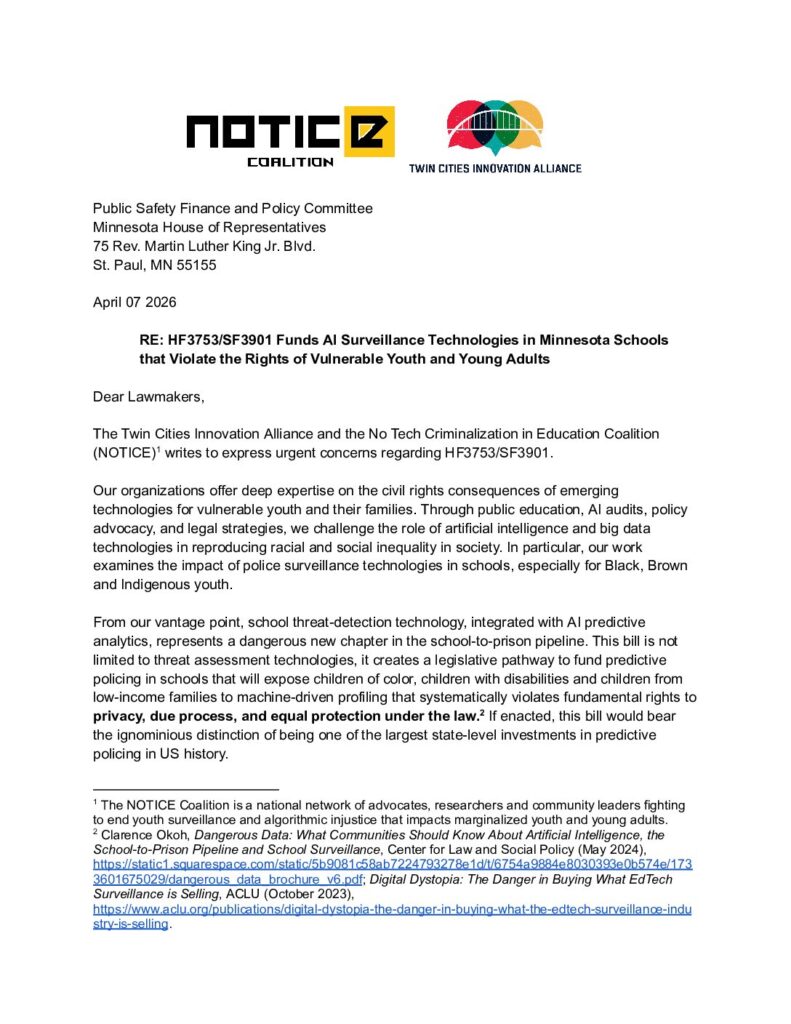
This testimony from the No Tech Criminalization in Education Coalition (NOTICE) opposes funds for AI surveillance technologies in Minnesota schools and outlines the ways these technologies violate the rights of youth and young adults including student data privacy concerns, the known pathway these technologies create to algorithmic discrimination in schools, and the scientific validation and…

This report by Citizens for Juvenile Justice (CfJJ) investigates the level of information sharing and collusion between police and courthouse staff with federal Immigration and Customs Enforcement (ICE) in Massachusetts. CfJJ filed more than 90 public records requests in the state and found that police and courthouse staff regularly share information with ICE, effectively becoming…
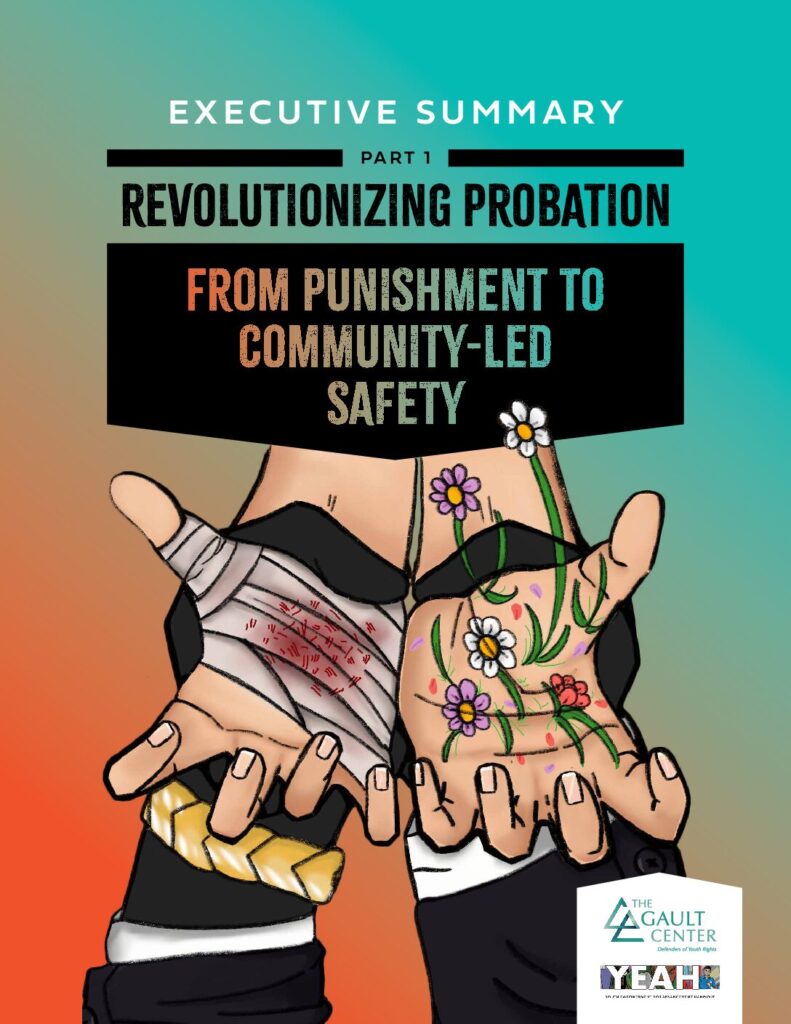
Summarizes what young people are saying about juvenile probation and offers a visual timeline highlighting the historical lineage of probation as a form of racialized social control.
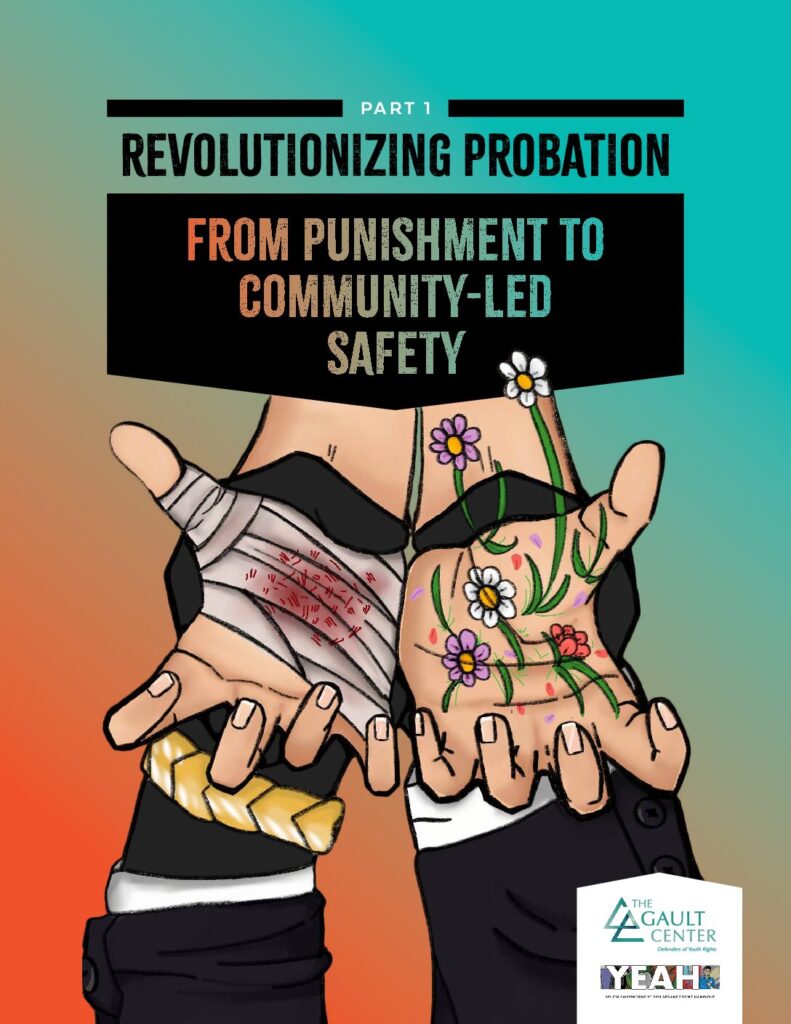
Examines young people’s experiences on juvenile probation and the racialized history of juvenile probation in our country.
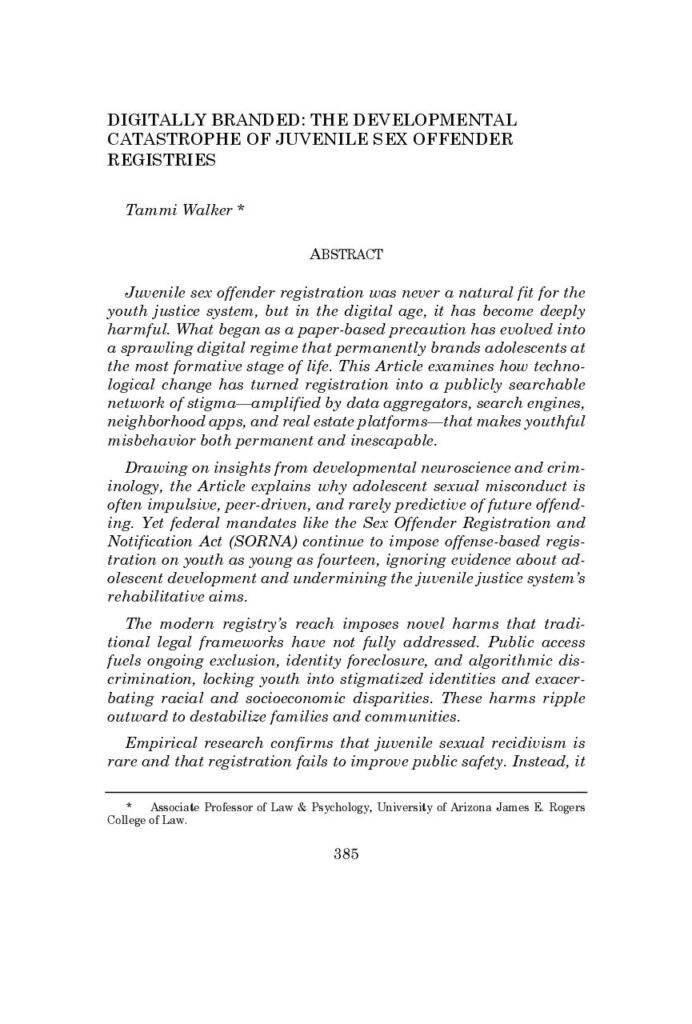
“Juvenile sex offender registration was never a natural fit for the youth justice system, but in the digital age, it has become deeply harmful. What began as a paper-based precaution has evolved into a sprawling digital regime that permanently brands adolescents at the most formative stage of life. This Article examines how technological change has…
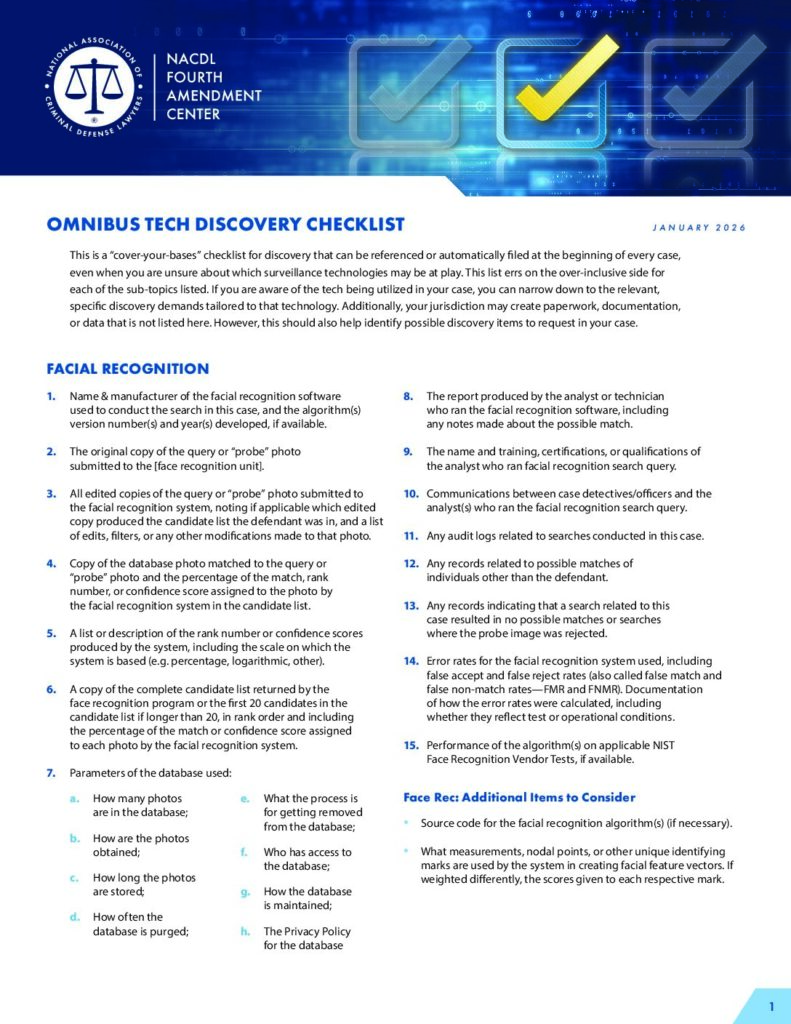
This checklist from the National Association of Criminal Defense Lawyers’ Fourth Amendment Center is a checklist of tech-related items defenders should consider when requesting discovery. Items covered in this checklist include facial recognition software and logs, geofencing warrants and materials, cell-site location information, automatic license plate readers, drone software and licensing, and body worn camera…
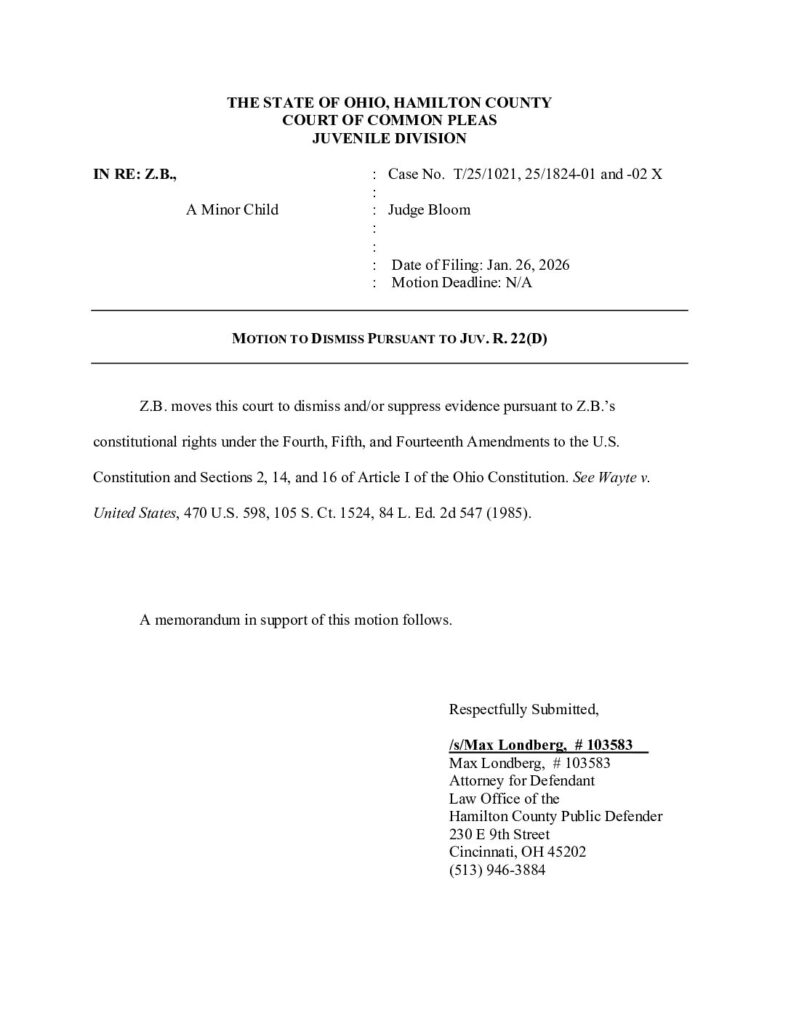
This sample motion argues for special discovery and dismissal and/or suppression based on a claim of selective prosecution in a jaywalking case. Highlighting local police data on racial disparities in jaywalking-related stops, this motion argues that police conduct had a discriminatory effect on Black youth in Cincinnati, in violation of their state and federal equal…
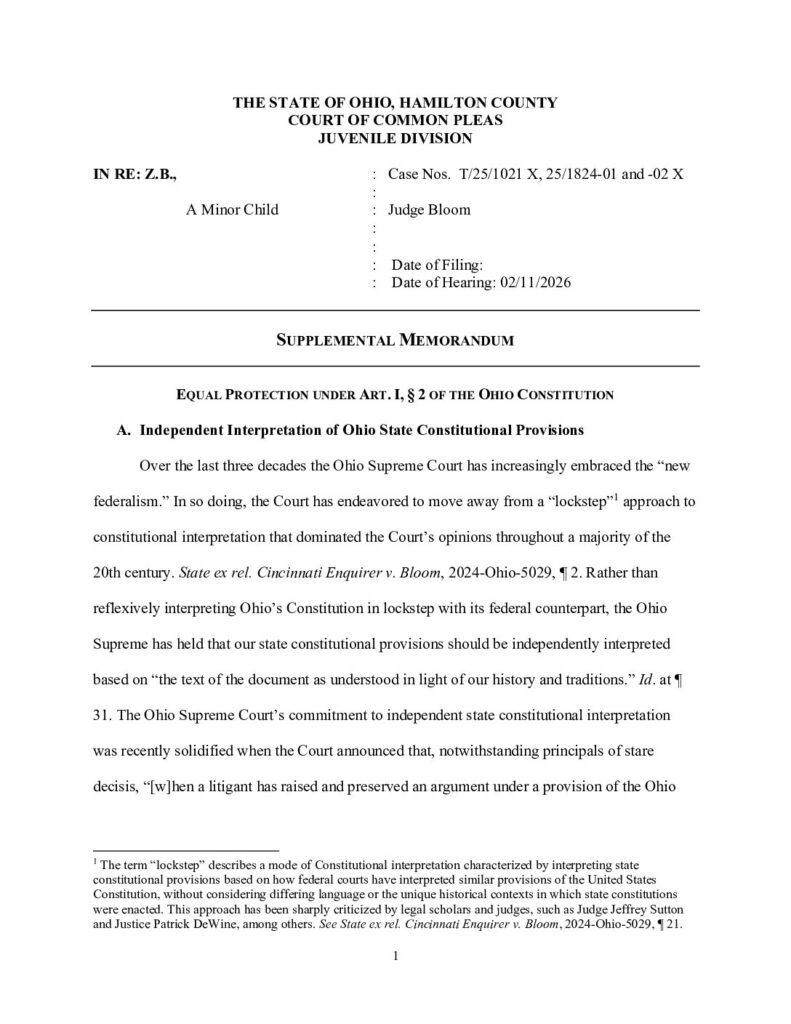
This supplemental memorandum is related to the sample motion to dismiss and/or suppress evidence based on selective prosecution, which argues for special discovery and dismissal and/or suppression based on a claim of selective prosecution in a jaywalking case. This supplemental memorandum outlines Ohio’s Equal Protection guarantee in the context of the impact of implicit racial…
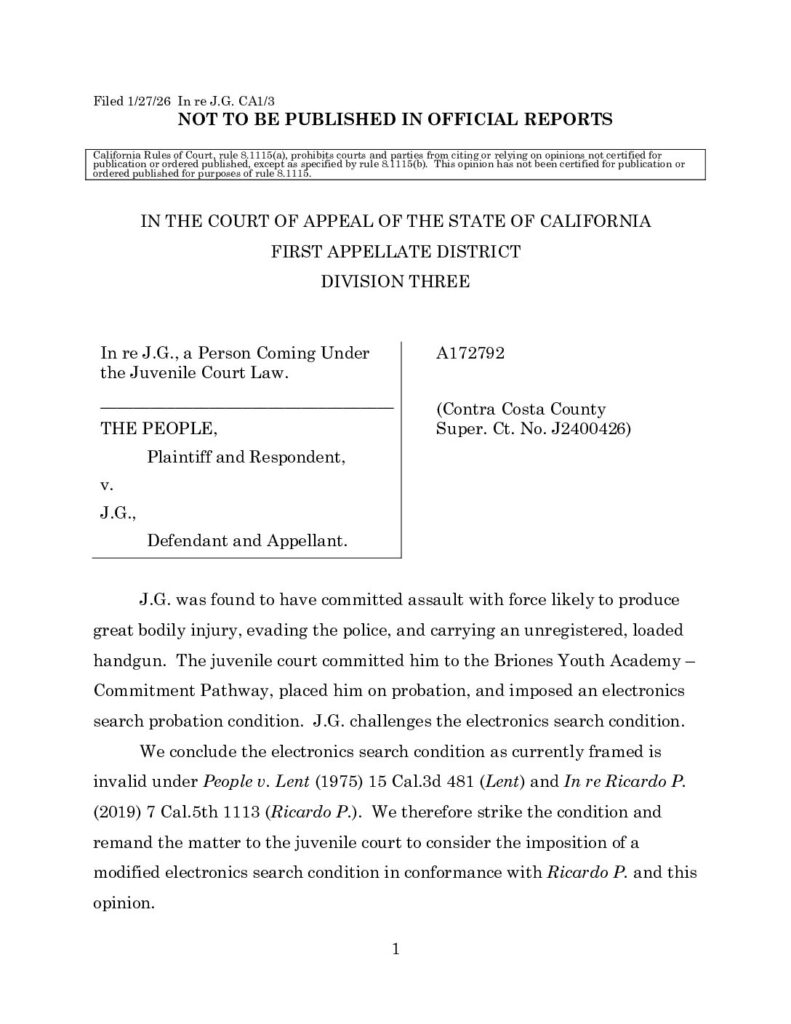
The California Court of Appeals, First District held the courts imposition of an electronics search probation condition invalid, finding under the first and third prongs of the Lent test that the condition “1)has no relationship to the crime which the offender was convicted, and 3) requires or forbids conduct which is not reasonably related to…


In October 2025, the Gault Center convened over three hundred youth defense lawyers and advocates at our annual Youth Defender Leadership Summit. Together, we practiced the cultivation of community in service of building a more just, more liberated, and more human humanity for all children and for us all. This resource captures the shared learnings…
This article focuses on the policies and practices of community supervision programs, and the impact they have on individuals with disabilities, including discriminatory practices that prevent disabled individuals from successfully completing probation or parole. From the introduction: ” This Article addresses disability discrimination in community supervision programs, a large—but frequently overlooked—component of the criminal legal…

The Center for Democracy & Technology released a report on the current status of AI use in schools and emerging risks. This report covers the interaction of AI with the classroom, students, IEPs, literacy, deepfakes, student activity monitoring, and student privacy. From the report: “Artificial intelligence (AI) has continued to alter the educational experiences of…

“For decades, in the summertime, America has confined certain of its youth in what are essentially open-air heat camps. In city after city, camp-form is established through the enactment of warm-weather juvenile curfews which keep the youth at home or in state-sponsored centers during summer nights and, increasingly, during days as well. Local governments justify…
This memorandum from the American Civil Liberties Union provides litigation strategies for defenders challenging electronic monitoring conditions for young people with disabilities. From the Introduction to the memorandum: “Overall, this research project/memo aims to reduce the use of EM for kids with disabilities. Although there is no straightforward disability or accommodations-related argument for ending EM…
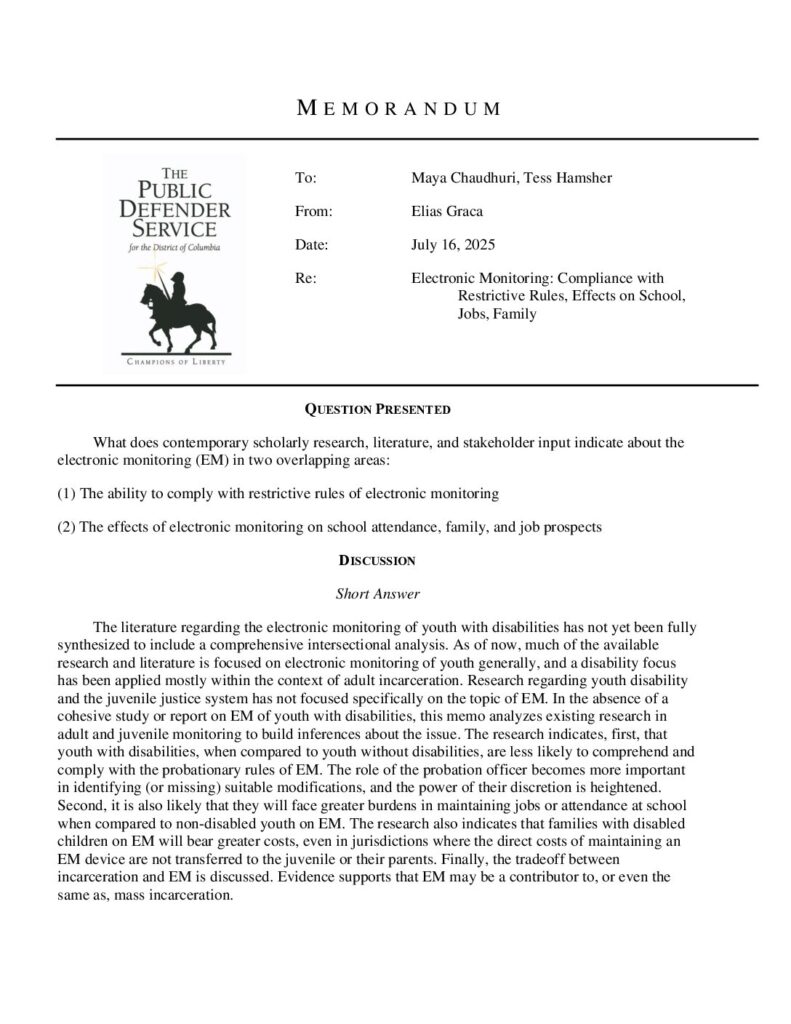
This memorandum from the Public Defender Service for the District of Columbia discusses the contemporary research and literature on electronic monitoring and its impacts on school attendance, family, and employment. The memorandum also discusses the real-world practicalities that make it difficult for youth to comply with the restrictive rules that often accompany electronic monitoring orders. From the memorandum: “The literature regarding the electronic monitoring of youth with disabilities has not yet been fully synthesized to…

This research report by the NAACP Legal Defense Fund provides an in-depth overview of the “At-Risk Youth Program” created by the Pasco County Sheriff’s Office in Tampa Bay, Florida. The Pasco County sheriff’s office relied on a “rudimentary, person-based predictive policing system” based on inherently biased criteria to identify young people who were “destined to…

The Center for Democracy & Technology (CDT) released a report on the impact of generative artificial intelligence (AI) on students in schools. CDT surveyed students, teachers, and parents to understand the prevalence of deepfakes and related issues in K-12 schools. The report offers an overview of non-consensual intimate imagery (NCII), the impact of current responses…
