
Community Investment
On August 11, 2026, the Gault Center & Youth Empowerment for Advancement Hangout (YEAH Philly) hosted a webinar to launch our probation conditions campaign, Under These Conditions: Accountability Should Be Possible. This webinar featured a moderated youth panel, followed by a walkthrough of campaign tools to spark local efforts to transform probation orders and practices.…
From the Abstract: “This article is a practical guide in the fight to abolish the prison-industrial complex as well as institutionalized transphobia and cissexism. Focusing specifically on the practice area of criminal defense, this article proposes a model that must be replicated across jurisdictions wherever transgender people are criminalized. By instituting an interdisciplinary team approach…

This Essay, written by HyeJi Kim at the Gault Center, details the role of youth defenders in abolition. The Essay offers five entry points for youth defenders to embrace an abolitionist ethos to build toward a horizon of interdependence: This Essay is written both in honor of the youth defense community and for the youth…
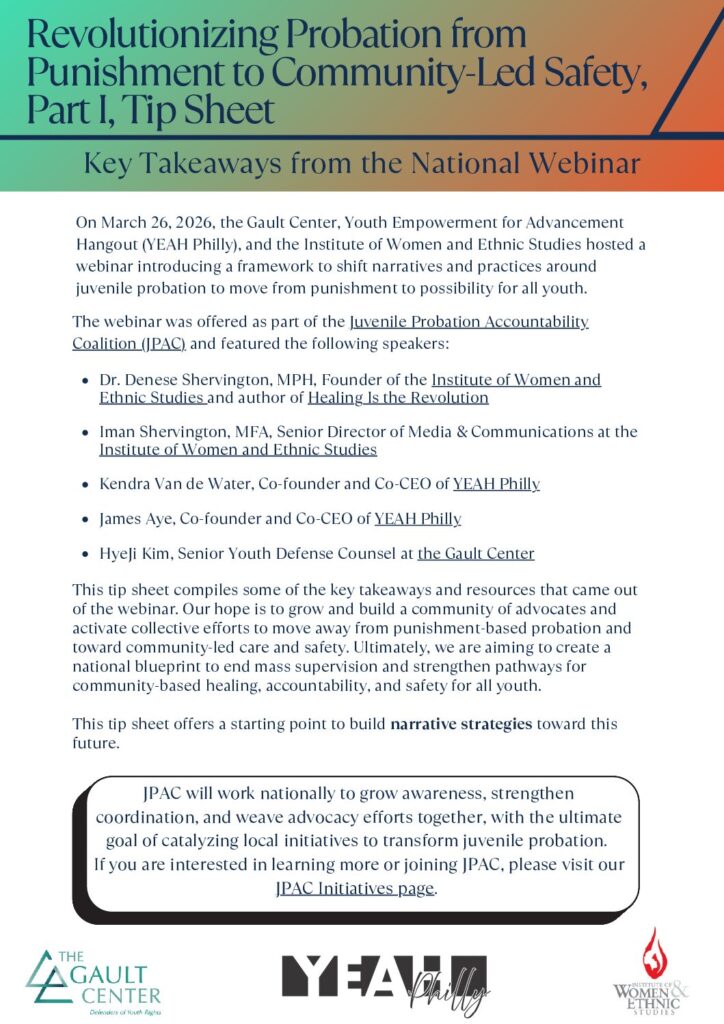
Compiles key takeaways and resources on building narrative strategies to transform juvenile probation, offered during a webinar on Revolutionizing Probation from Punishment to Community-Led Safety, Part I.
On March 26, 2026, the Gault Center & Youth Empowerment for Advancement Hangout (YEAH Philly) hosted a webinar on Revolutionizing Probation from Punishment to Community-Led Safety. This webinar focused on shifting narratives around juvenile probation—to challenge the dominant rhetoric that probation is an act of benevolence that keeps youth and communities safe and to bring…

On March 26, 2026, the Gault and Youth Empowerment for Advancement Hangout (YEAH Philly) co-hosted a webinar on Revolutionizing Probation from Punishment to Community-Led Safety. This resource includes PowerPoint presentations from the Gault Center covering the history and youth experiences on juvenile probation, YEAH Philly highlighting meaningful community-based alternatives, and the Institute of Women & Ethnic…
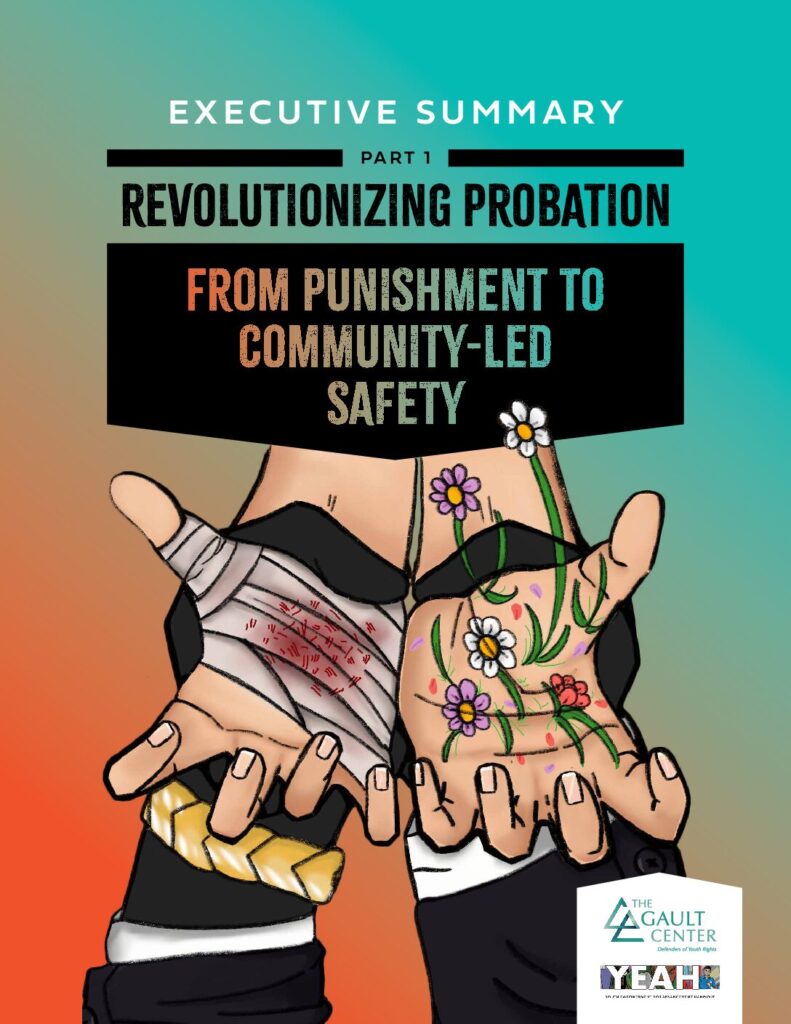
Summarizes what young people are saying about juvenile probation and offers a visual timeline highlighting the historical lineage of probation as a form of racialized social control.
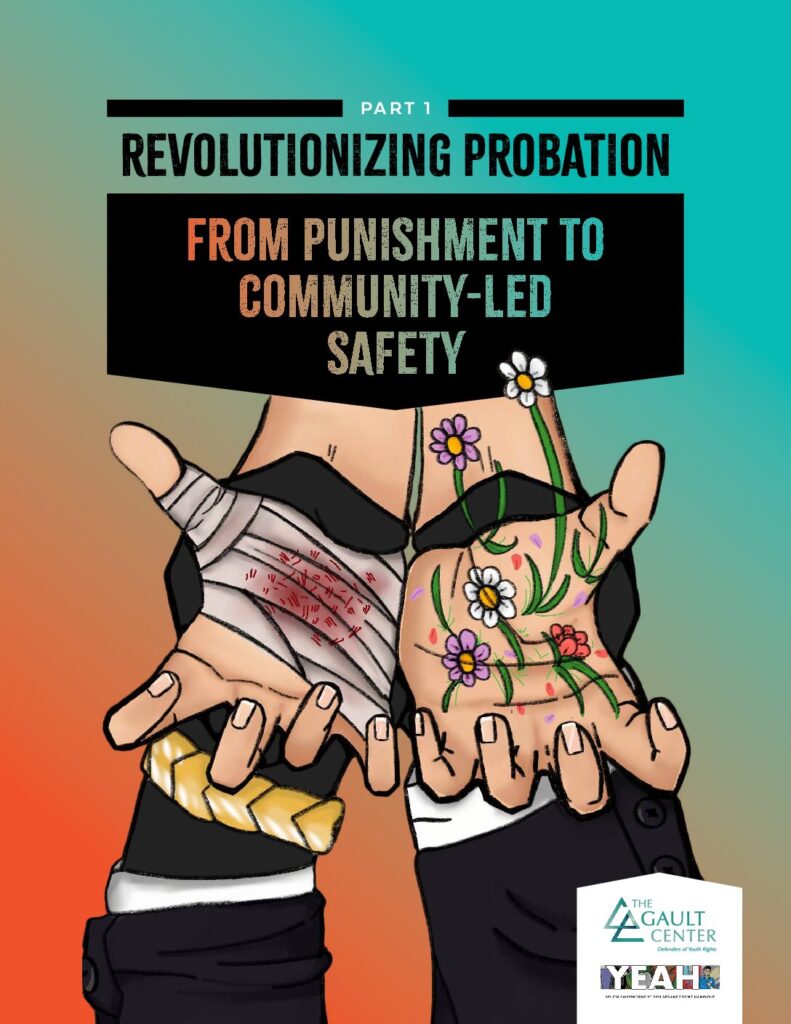
Examines young people’s experiences on juvenile probation and the racialized history of juvenile probation in our country.
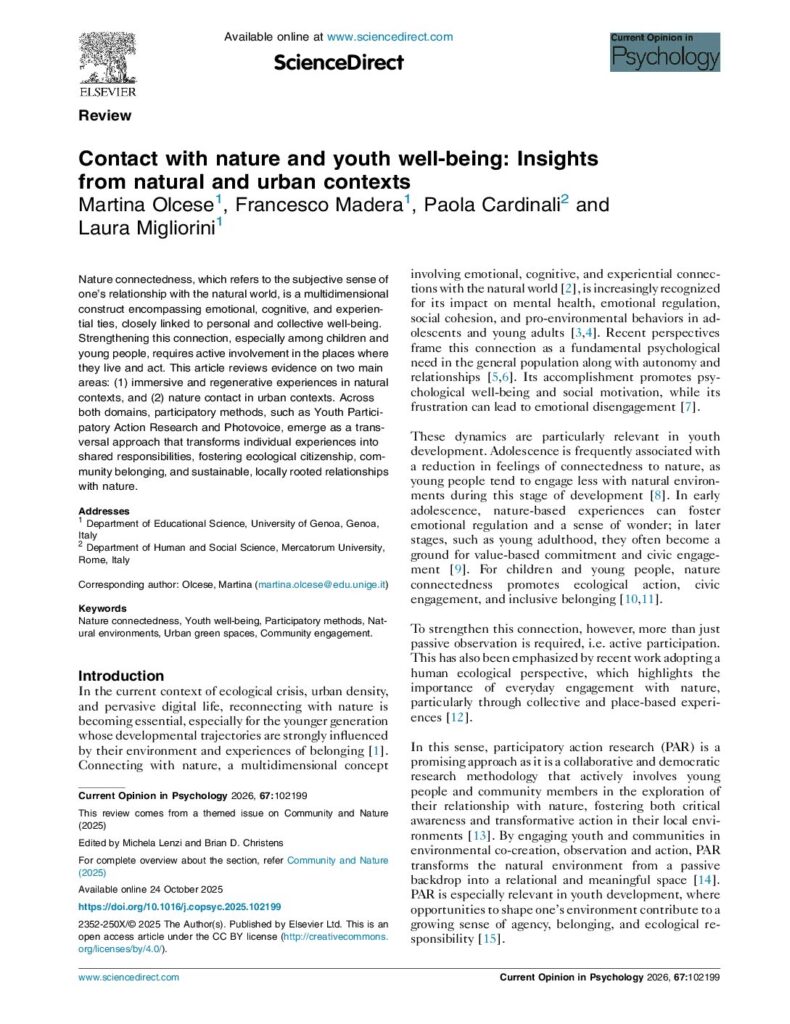
From the article: “Nature connectedness, which refers to the subjective sense of one’s relationship with the natural world, is a multidimensional construct encompassing emotional, cognitive, and experiential ties, closely linked to personal and collective well-being. Strengthening this connection, especially among children and young people, requires active involvement in the places where they live and act.…
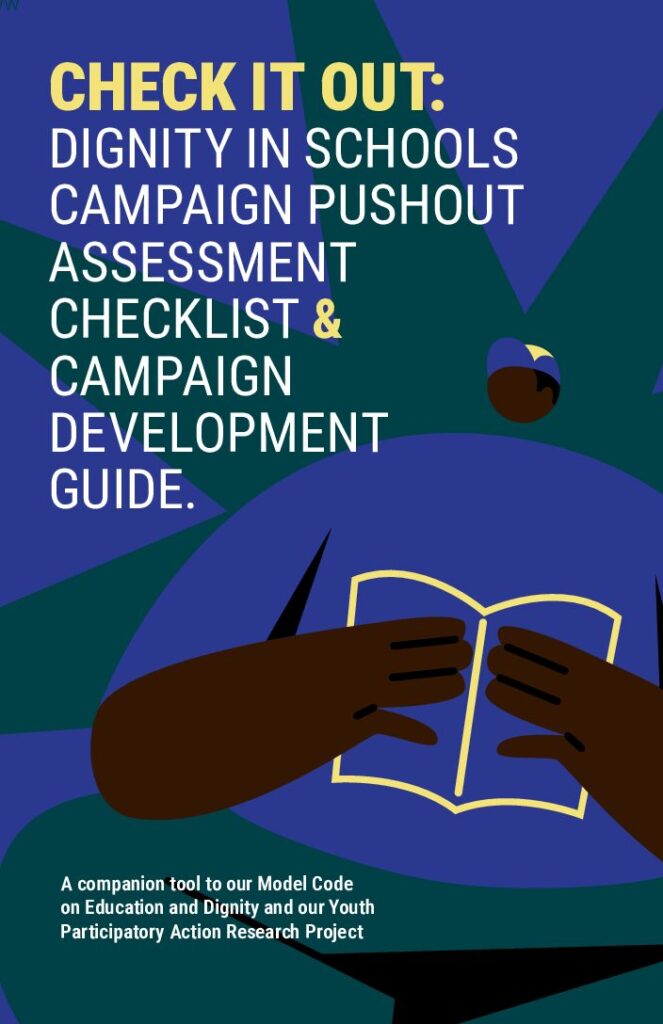
This school pushout assessment and campaign development guide is a companion tool to Dignity in Schools Campaign’s Model Code on Education and Dignity and Youth Participatory Action Research Project. This checklist tool provides a framework for individuals and groups working in schools to assess school policies and practices around discipline, safety, curriculum, logistics, staffing, and other processes to prevent young people from being pushed…

This article featured on the Frameworks Institute website offers research-based communication strategies for combating the manufactured controversy of a “crime emergency” caused by adolescents in Washington D.C. The article provides a topline nonpartisan message for responding to the relentless, toxic messaging around adolescent crime and outlines five framing recommendations for discussing the harmful policies being…

From the Introduction: “Following a 2024 County Council request, the Pierce County Performance Audit Committee contracted with the CoLab for Community and Behavioral Health Policy at the University of Washington to conduct an audit of the county’s juvenile justice system against national and research best practice. The assessment is intended to guide future county investments…

The Health and Reentry Project highlights promising Medicaid policy changes that promote continuity of care for young people returning to their communities following incarceration. The changes will support reentry for young people who are eligible for Medicaid or the Children’s Health Insurance Program by introducing them to services that would start 30 days before release…

This report from the National Center for Youth Law examines the emerging policies across the United States that are likely to reverse the downward trend of youth incarceration rates.
From the abstract: “Hundreds of thousands of children are brought under the jurisdiction of delinquency courts every year in the United States. Despite the reality that most children engage in delinquent behavior during their adolescence, poor children, children of color, children with disabilities, and children who identify as LGBTQIA+ comprise a disproportionate number of those who become delinquency system-involved. These disparities exist…

Georgetown University Law Center Associate Professor Eduardo Ferrer penned this op-Ed on regarding the narrative that there is a “rise” in violent crime in D.C. This narrative is being used to justify regressive tough-on-crime policies that do not improve public safety. Professor Ferrer discusses the perception versus the reality of crime statistics and data, including…

“This paper describes a community-based participatory research (CBPR) approach to evaluation used by an academic-practitioner partnership to refine the logic model for a violent crime reduction program and develop associated performance measures. Through qualitative and quantitative data collection, including semi-structured interviews, engagement with program stakeholders (e.g., program leaders and staff, peer researchers, community residents), community…

This 2024 Impact report from Communities United for Restorative Youth Justice (CURYJ) focuses on the organization’s accomplishments, including the opening of CURYJ’s Youth Power Zone, a physical space that provides community-led, community-owned direct-service programming, advocacy and culturally-rooted healing. CURYJ also highlights the acquisition of a second physical space for community peace, healing, and resilience. Further,…

This report from National Institute for Criminal Justice Reform offers six principles of a positive youth justice system (‘PYJS’) including: 1) Minimize contact with the juvenile justice system, 2) partner with youth and families to develop and share ownership of case plans, 3) community-based organizations should take the lead, 4) build on youth assets and…

A resource guide to navigate a personal or group reading journey of Norma Wong’s “When No Thing Works.” This guide provides questions to accompany each chapter of the book as well as resources for hosting your own Navigation Circle.


From the resource: “This poster is a tool to assess and understand differences between reforms that strengthen imprisonment and abolitionist steps that reduce its overall impact and grow other possibilities for wellbeing. As we work to dismantle incarceration in all its forms, we must resist common reforms that create or expand cages anywhere, including under…


This research report provides an overview of and recidivism rates for a unique multidisciplinary intervention program for youth charged with weapons offenses (GATE/JWOP Program). The report discusses the study methods, 6- and 12-month recidivism rates for the studied cohort, and potential for expansion of the program to applicable state and national jurisdictions. From the Discussion…
