
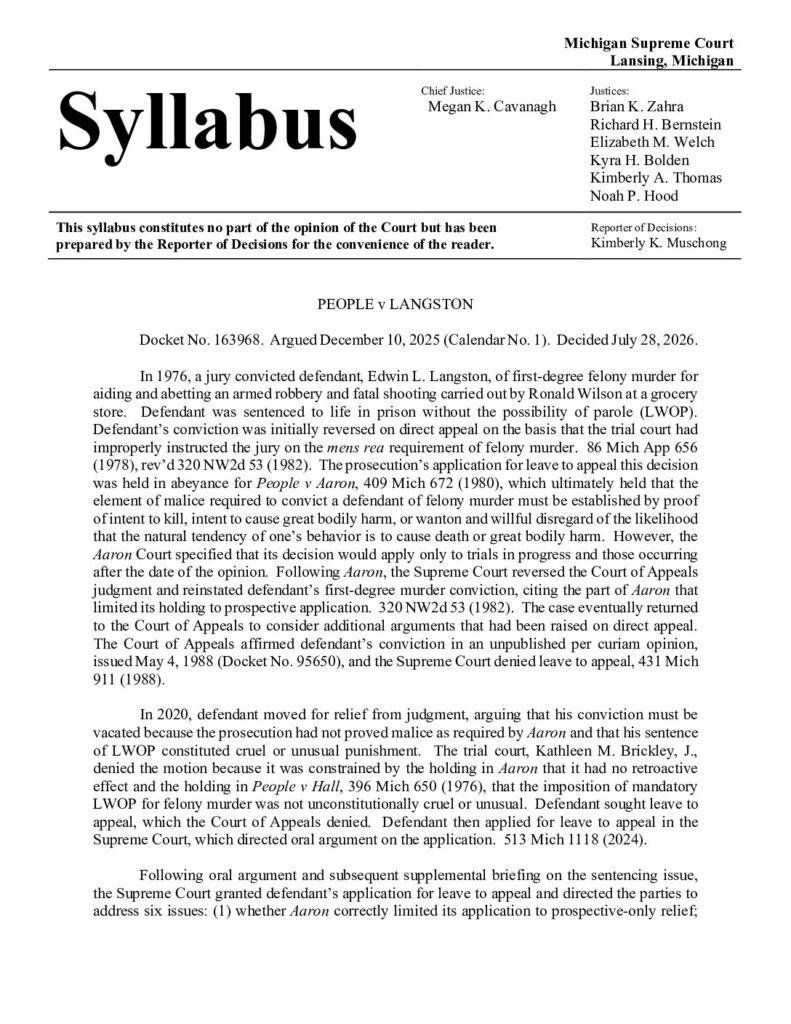
The Supreme Court of Michigan overturned and vacated Mr. Langston’s conviction in part and remanded the case to the trial court for further proceedings, finding that the imposition of mandatory LWOP for pre-Aaron felony-murder convictions constitutes cruel or unusual punishment under Article 1, § 16 of the Michigan Constitution. The court reasoned in part, “[S]ignificant jurisprudential…
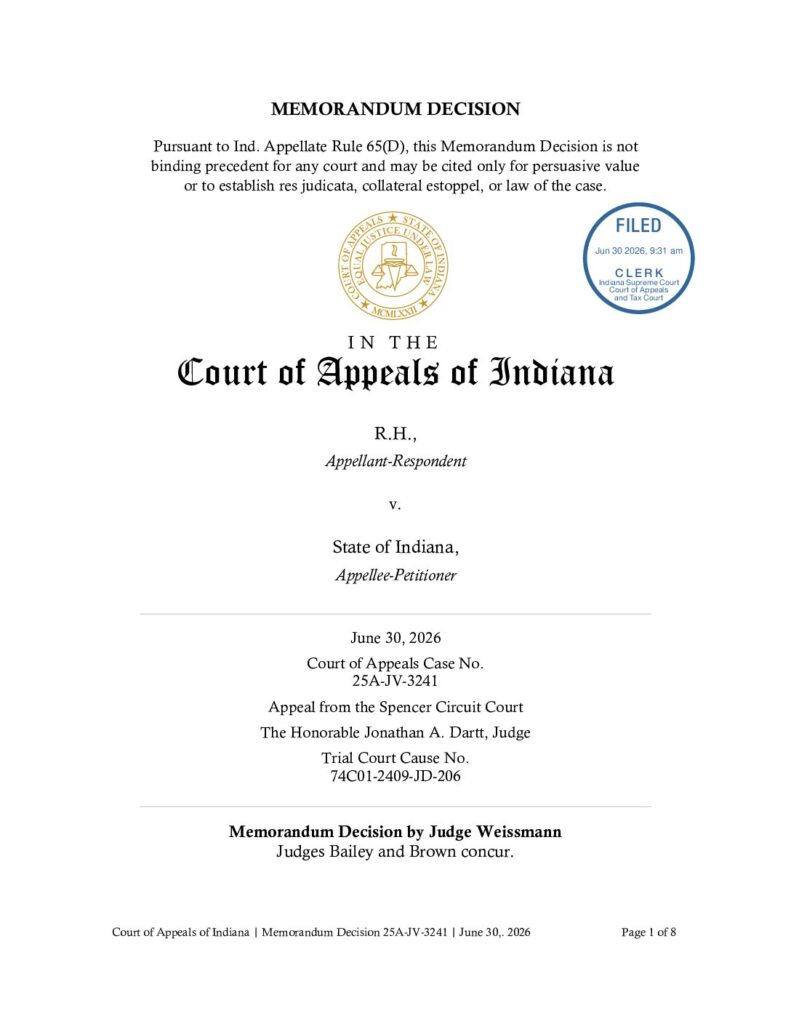
The Indiana Court of Appeals reversed a delinquency adjudication of intimidation based on insufficiency of evidence involving a case of a 12-year-old who joked that she would bring a gun if her backpack wasn’t returned. The court stated in relevant part: To adjudicate R.H. delinquent for acts of intimidation, as alleged, the State had to prove…

From the report by UCLA Center for the Developing Adolescent: “Adolescence, the years between 10 and 25, is a period of profound psychological, social, and brain development. Physical changes during these years are happening at the same time as changes to our social world, as we take on new responsibilities, gain new agency in our…
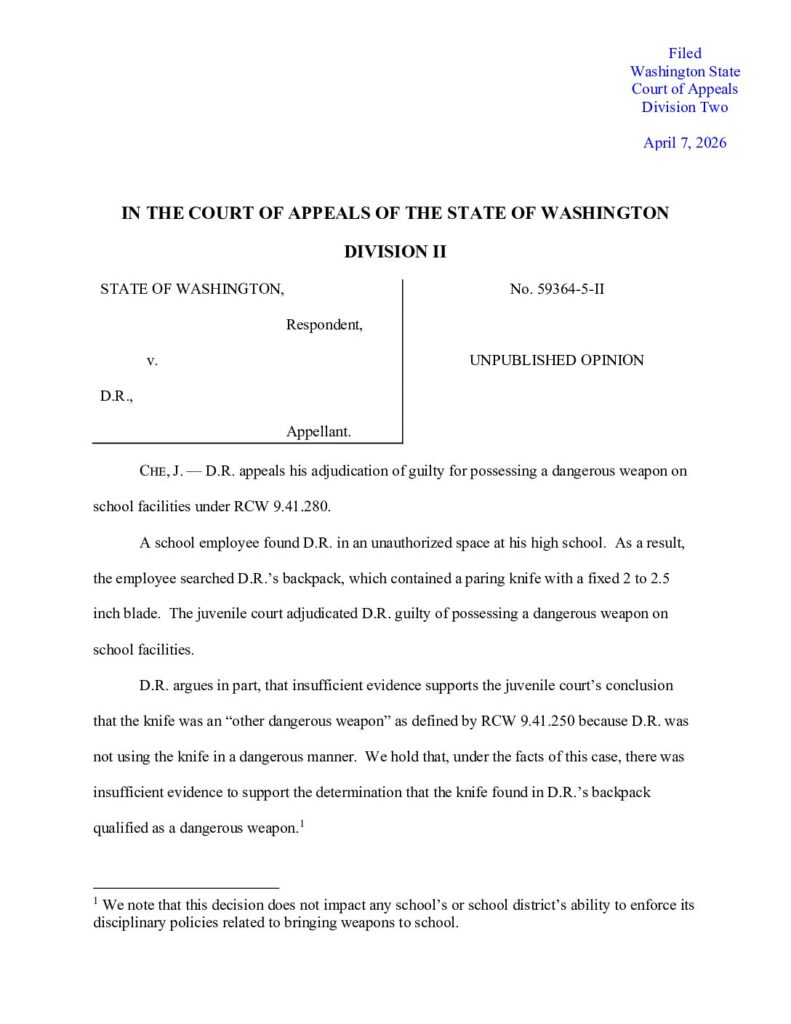
The Washington Court of Appeals found that insufficient evidence supported the trial court’s conclusion that a knife found in D.R.’s backpack was an “other dangerous weapon” as defined by RCW 9.41.250 because D.R. was not using the knife in a dangerous manner,” ordering the trial court to vacate the guilty adjudication and dismiss the charge…
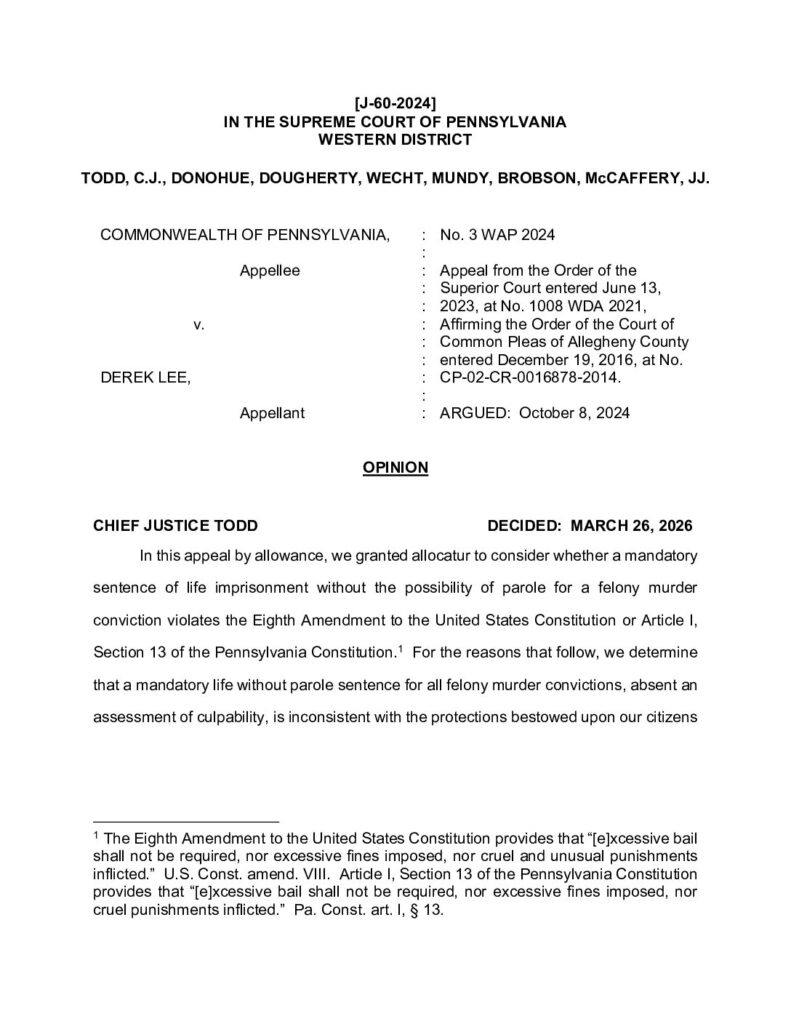
The Supreme Court of Pennsylvania ended the use of mandatory life without parole for felony murder cases based on the state constitution’s prohibition against cruel punishment. Finding that Pennsylvania’s constitutional safeguards against cruel punishment offers greater protections than the 8th Amendment of the U.S. Constitution, the Court reasoned that the blanket imposition of mandatory life…
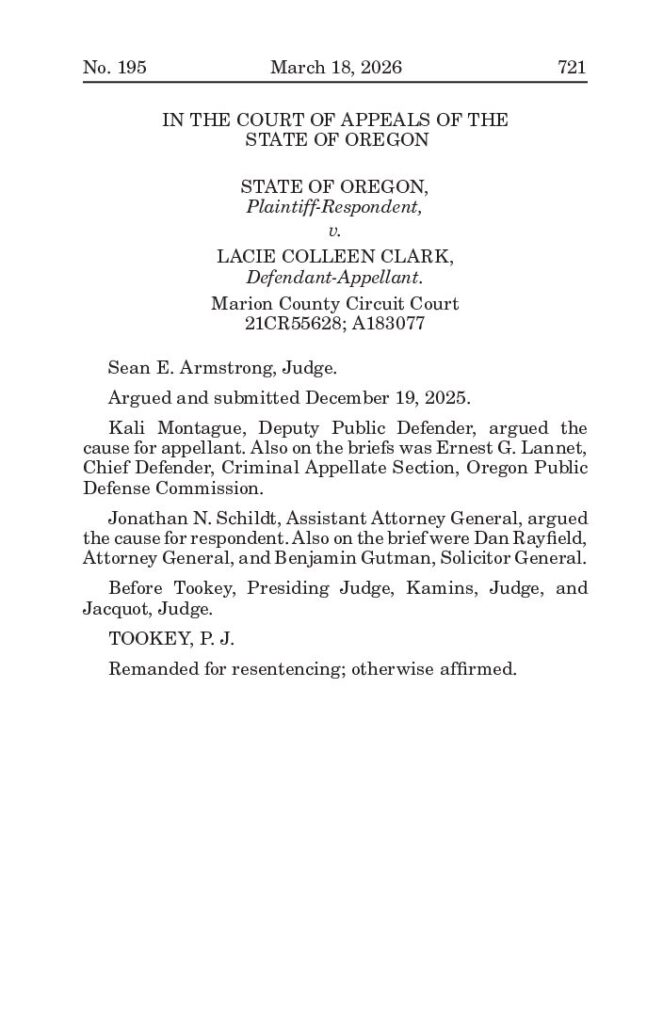
The Oregon Court of Appeals held that a trial court must consider mental health attributes at sentencing pursuant to the Eighth Amendment and the Oregon state constitution’s prohibition against cruel and unusual punishment. The court stated in relevant part: “We agree with defendant that ORS 131.295 and ORS 131.300 provide that objective societal standard. Through…
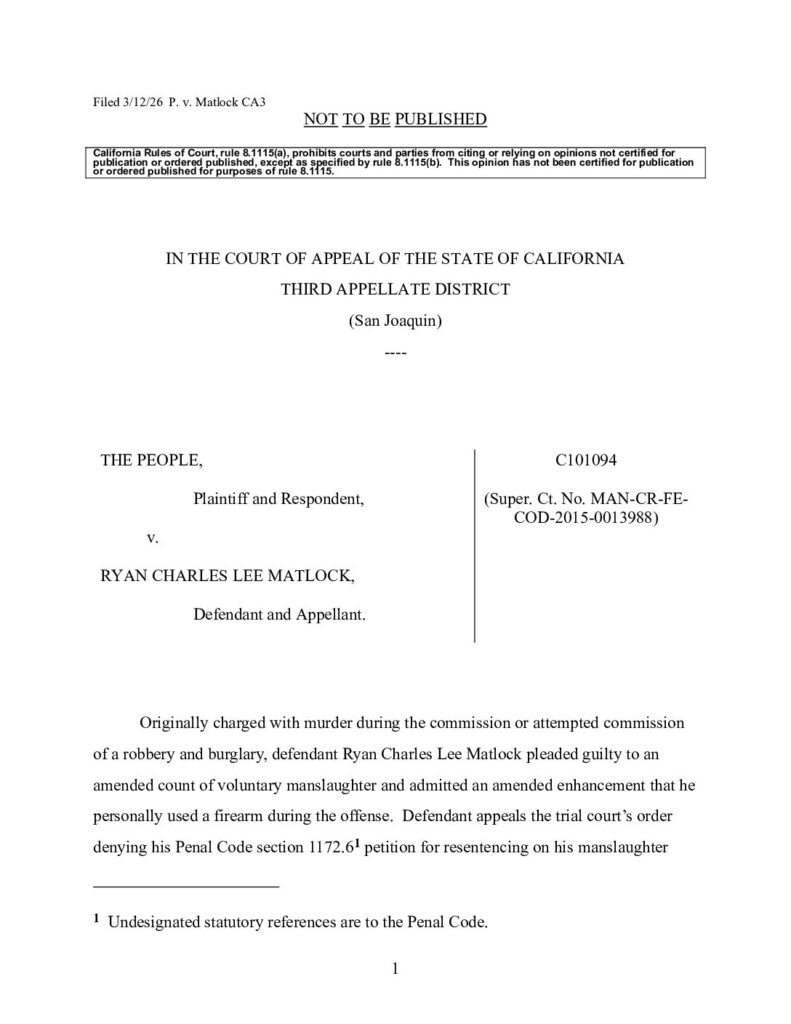
The California Court of Appeals Third District vacated 19-year-old Matlock’s voluntary manslaughter conviction and remanded the case for resentencing, finding that substantial evidence did not support the trial court’s finding that Matlock was a “major participant who acted with reckless indifference to human life.” The court reasoned in part, “Finally, we recognize that defendant’s youth…
“What makes a conviction wrongful? Developments in DNA science have led to a wave of exonerations over the past thirty years, revealing sources of error in the criminal legal process. Innocence organizations proliferated to represent people whose convictions could be overturned by newly discovered evidence. This is vital work for the individuals who are released…
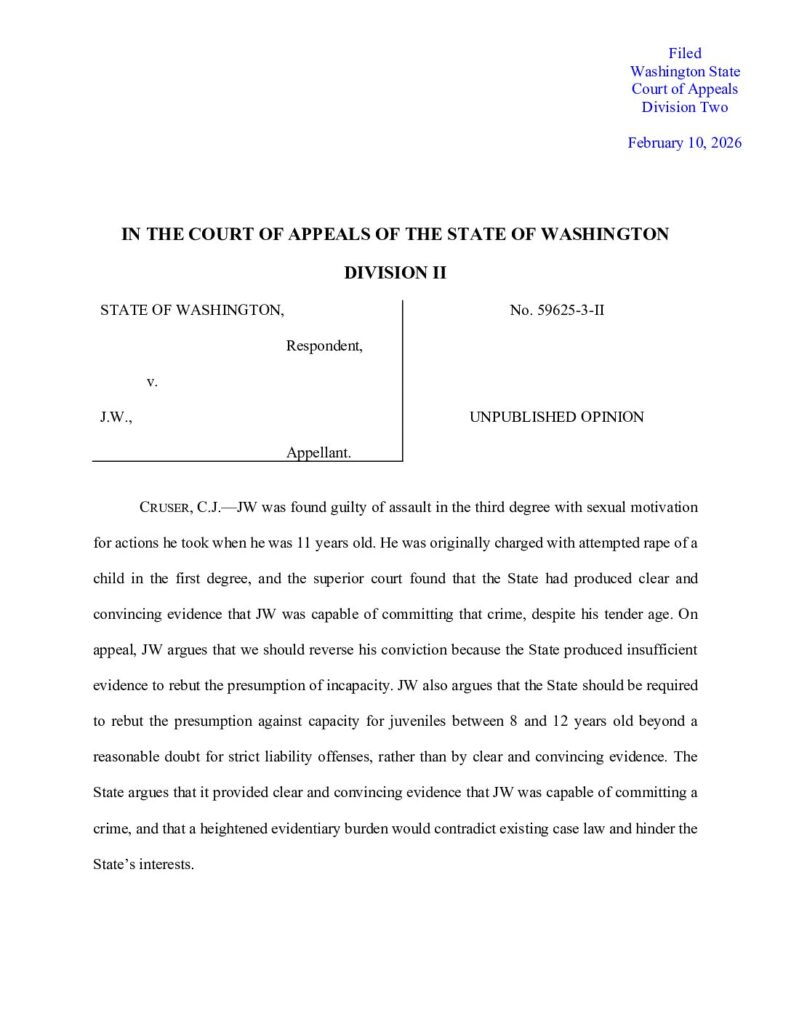
The Washington Appeals Division 2 reversed a conviction involving allegations of an 11-year-old child charged with attempted rape of a child, finding that the state failed to produce clear and convincing evidence that the child was capable of committing a criminal sexual act. The court stated in relevant part: “A child of at least 8…

The California Second District Court of Appeal reversed the juvenile court’s adjudication and disposition orders related to a felony murder charge, finding that the record lacked substantial evidence that the youth acted with reckless indifference to human life. The court stated in relevant part: “Considering the totality of the circumstances, and measured against Emanuel‘s guidance, the…

The Missouri Eastern District Court of Appeals reversed a juvenile court adjudication of second-degree tampering based on insufficient evidence regarding the youth’s requisite culpable mental state. The Court stated in relevant part: “W.M.H. argues the juvenile court erred in finding he committed second-degree tampering because there was insufficient evidence to prove beyond a reasonable doubt W.M.H.…

The Third District Court of Appeal in California vacated a felony murder conviction based on insufficient evidence to support the state’s required “reckless indifference” finding, which must also take into consideration youthfulness at the time of the incident. The court stated in relevant part: “Finally, defendant’s youth also cuts against a finding of reckless indifference. In Moore, supra,…

The Pennsylvania Superior Court vacated a conviction for theft by receiving stolen property finding that the evidence was insufficient to establish that the property was stolen. The court stated in relevant part: “Viewing the record, including the habeas corpus testimony about the VIN number check, and drawing all reasonable inferences from that evidence in the light most…

The Court of Appeals in North Carolina vacated a judgment adjudicating L.K. delinquent for indecent liberties between minors and imposing a Level 1 disposition upon him, based upon the trial court’s failure to state a standard of proof. The court stated in relevant part: “In the case sub judice, our review of the transcripts and…

The Oregon Court of Appeals reversed a juvenile court’s adjudication of reckless burning, holding that a finding of recklessness requires evidence around a young person’s subjective awareness of risk. This case involved a 13-year-old youth who lit a fire on a grassy hill which spread and ended up damaging several homes. At issue was whether…


From the abstract: “Hundreds of thousands of children are brought under the jurisdiction of delinquency courts every year in the United States. Despite the reality that most children engage in delinquent behavior during their adolescence, poor children, children of color, children with disabilities, and children who identify as LGBTQIA+ comprise a disproportionate number of those who become delinquency system-involved. These disparities exist…

The Oregon Court of Appeals reversed the adjudication finding of the trial court, holding that there was insufficient evidence to support a finding that the youth intended to damage playground equipment. The Court of Appeals offered the following language in support: “There is an appreciable difference between intentional action—that is, acting with a conscious objective…


