
Youth in Adult Court

Following the 20th anniversary of the Roper v. Simmons decision that ruled the death penalty unconstitutional for youth under the age of 18, the Death Penalty Information Center released a report on the latest science of adolescent brain development and evolving societal standards that recognize the need for heightened legal protections for 18- to 20-year-olds.…



This report challenges the notion that Georgia’s youth legal system is built to rehabilitate and suggests measures that protect the health and humanity of all the state’s children. First, this report will explore the myth of the “superpredator” and its impact on perceived Black youth criminality. Second, it will detail the state’s school-to-prison pipeline and…

This report details the results of the first-ever state-wide Adverse Childhood Experiences (ACEs) survey administered to people currently incarcerated for crimes they committed as children (under eighteen). The trauma measured from ACEs surveys include physical, sexual, and emotional abuse; physical and emotional neglect; separation from parents; mental illness or substance abuse in the home; parent…


The Court of Appeals of Washington remanded a transfer case to the superior court and offered the following language in support. “Our Supreme Court has made clear that trial courts must be vigilant in addressing the threat of explicit or implicit racial bias that affects a defendant’s right to a fair trial. We hold that…

Florida routinely pushes Black children out of schools and into a legal system with well-documented harms. In recent years, the state has made significant investments in school law enforcement and self-proclaimed “tough love” youth legal system policies, purportedly in the name of public safety. However, these investments have yielded a system that disparately disciplines, arrests,…

The evidence provided in this brief supports bold reforms for youth and emerging adults sentenced to extreme punishments.


The answer, then, is not to simply reform the system of punishment, but to stop surveilling and punishing kids and instead invest in the things that set kids up for success, like education, family support, and access to healthcare. We need to start seeing children as children, not as criminals, and giving them the tools…

This one-page infographic from the Office of Juvenile Justice and Delinquency Prevention illustrates statistics on waiver from juvenile to criminal courts.

This research article explores the history of girls prosecuted as adults in courts across the United States. It explores the effects of childhood trauma and victimization on brain and physical development and the connection to involvement in the criminal legal system as children. The article describes the results of a survey of young women who…
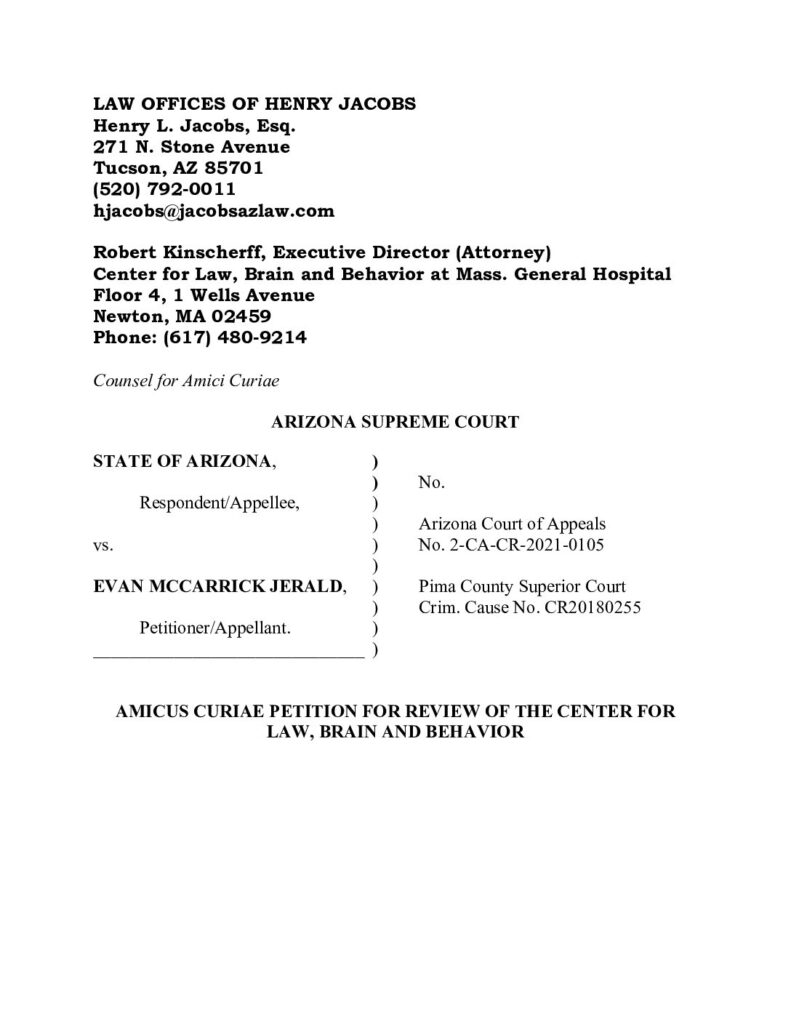
This amicus brief from the Center for Law, Brain, and Behavior highlights the adolescent capacity for significant growth and social maturation as well as criminological evidence on the unlikelihood of reoffending and responsiveness to evidence-based treatment among youth accused of sex offenses. The brief ultimately calls for the court to find that a de facto life without parole sentence is grossly disproportionate based on developmental science and research. From the Summary of Argument: “Evan McCarrick Jerald is…

This paper is part of the Series on Learning from Civil Rights Lawsuits from the Civil Rights Litigation Clearinghouse and focuses on parole review procedures for individuals serving long sentences for crimes committed under age 18, discusses constitutional dimensions of parole review for this group, and proposes model policies supporting a meaningful opportunities for release. From the Executive Summary: “In recent years, people serving…
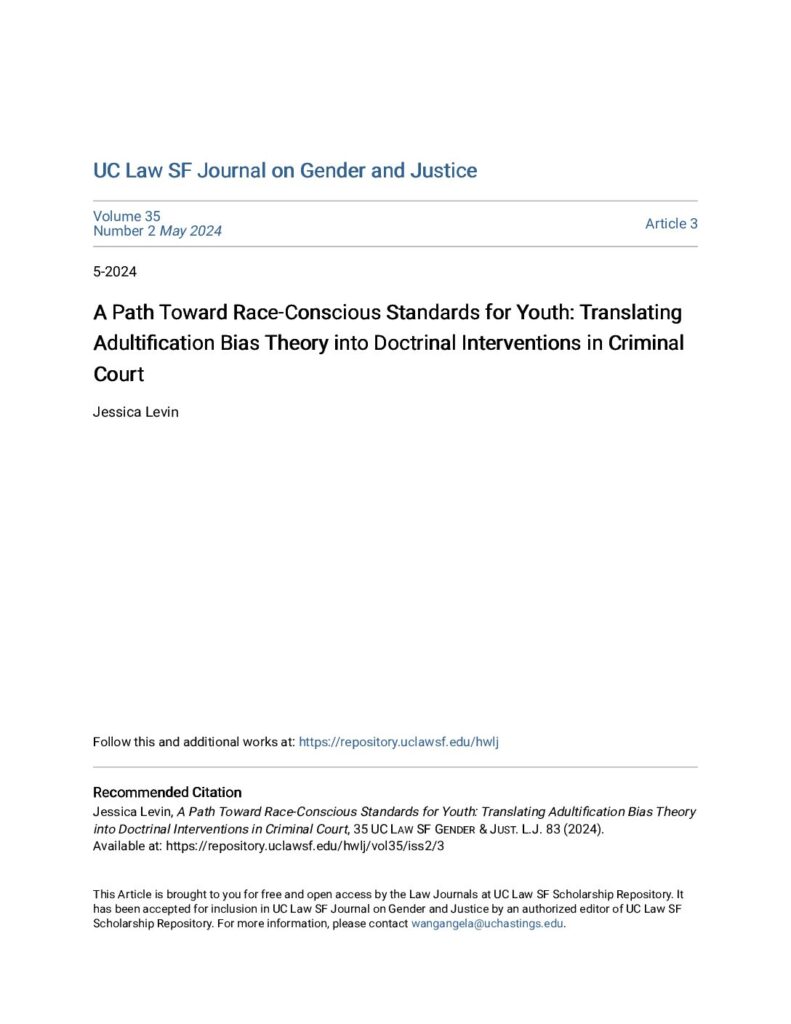
Abstract: “This article demonstrates how advocates can leverage empirical literature regarding adultification bias to craft doctrinal interventions that recognize and remedy the disproportionately harsh treatment of Black youth in the juvenile and adult criminal legal system. Through case examples, all of which I litigated in the Civil Rights Clinic at Seattle University School of Law, I demonstrate how adultification…
