
Youth in Adult Court
From the Introduction of the Paper: “The U.S.’s failure to implement an internationally abiding federal law regulating juvenile justice has important implications on the treatment of incarcerated adolescent populations while incarcerated, rehabilitated, and reintegrated into society. This article will analyze the harmful and outdated legal frameworks and institutional structures of the U.S. juvenile justice systems.…


An annotated bibliography of research on transfer/waiver from Dr. Antoinette Kavanaugh Ph.D., ABPP including research on transfer and recividism, studies on how juvenile court judges weigh transfer factors, and demographic data and analysis on who is transferred to adult court.

The Center for Justice Innovation conducted an exploratory, participatory action research study of 103 youth ages 15-24 who reported carry guns in a neighborhood of Brooklyn. The research evaluates why these youth carry guns and proposing a collaborative approach to public safety. From the report: “The increase in gun violence experienced in many U.S.…
Youths incarcerated in adult correctional facilities are exposed to a variety of adverse circumstances that could diminish psychological and physical health, potentially leading to early mortality. In this cohort study of 8951 youths, the survival model suggested that being incarcerated in an adult correctional facility may be associated with an increased risk of early mortality…
This amicus brief by the Massachusetts Committee for Public Counsel Services argues the remedy of considering parole after fifteen years can be extended to late adolescents from 18-20 years old with life without parole sentences while still protecting public safety. Additionally, the brief argues judicial findings regarding the capacity of late adolescents to change are…
This amicus brief from former Massachusetts judges, the Boston Bar Association, and the Massachusetts Bar Association argues life without parole sentences violate the Commonwealth’s prohibition on cruel and unusual punishment for late adolescents between 18-20 years old for the same reasons they did for youth under 18 years old (as articulated in Diatchenko). Additionally, the brief argues late adolescents have a great propensity…

From the introduction: “This report focuses on individuals who were under the age of 18 at the time the sexual offense occurred and who were adjudicated delinquent in the juvenile justice system or tried and convicted in adult criminal court. While significant research shows the ineffectiveness and harm of registration for individuals who were 18…

The Washington Supreme Court ruled the trial court was required to consider an accused person’s race and ethnicity in the totality of the circumstances when determining whether a person was “seized” in Washington state constitution’s prohibition against unlawful seizure. The court offered the following language in support: As noted above, the article I, section 7…


From the introduction: “One of our goals in producing this report is to inform school administrators, board members, and parent and student stakeholders, giving details about which groups of students are disproportionately arrested and about the gaps that exist in data reporting. We also want to provide guidance on how to address these issues. We…

On December 21, 2021, the DOJ released its investigation of the Connecticut Manson Youth Institution, finding that the conditions violate young people’s rights under the Eighth and Fourteenth Amendments and the Individuals with Disabilities Education Act. In its Investigation, the DOJ stated “specifically, we find that Manson’s isolation practices and inadequate mental health services seriously…
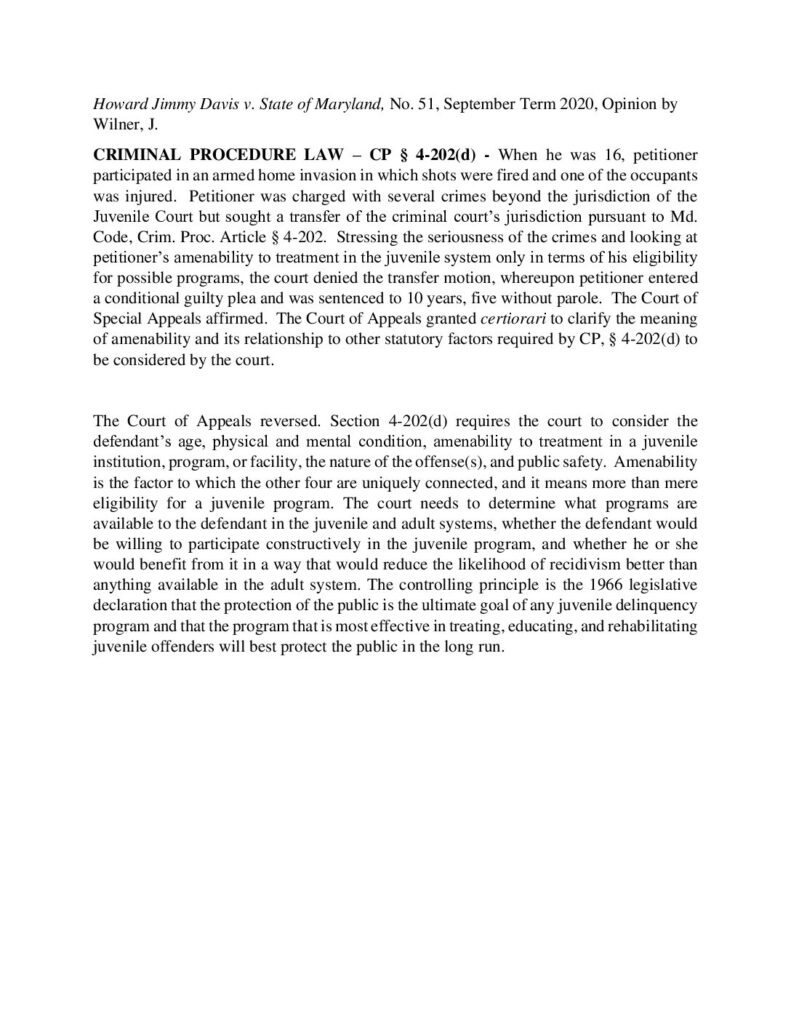
The Maryland Supreme Court held the Circuit Court did not properly consider Petitioner Howard Davis’ amenability to treatment in any institution, facility, or available programs under Md. Code Ann., Crim. Proc. § 4-202.2(b) and remanded the case, ordering the trial court to apply the principles and conclusions regarding amenability to treatment to Howard Davis’ Case. The court offered the following language in support: “To determine amenability to treatment, the court…
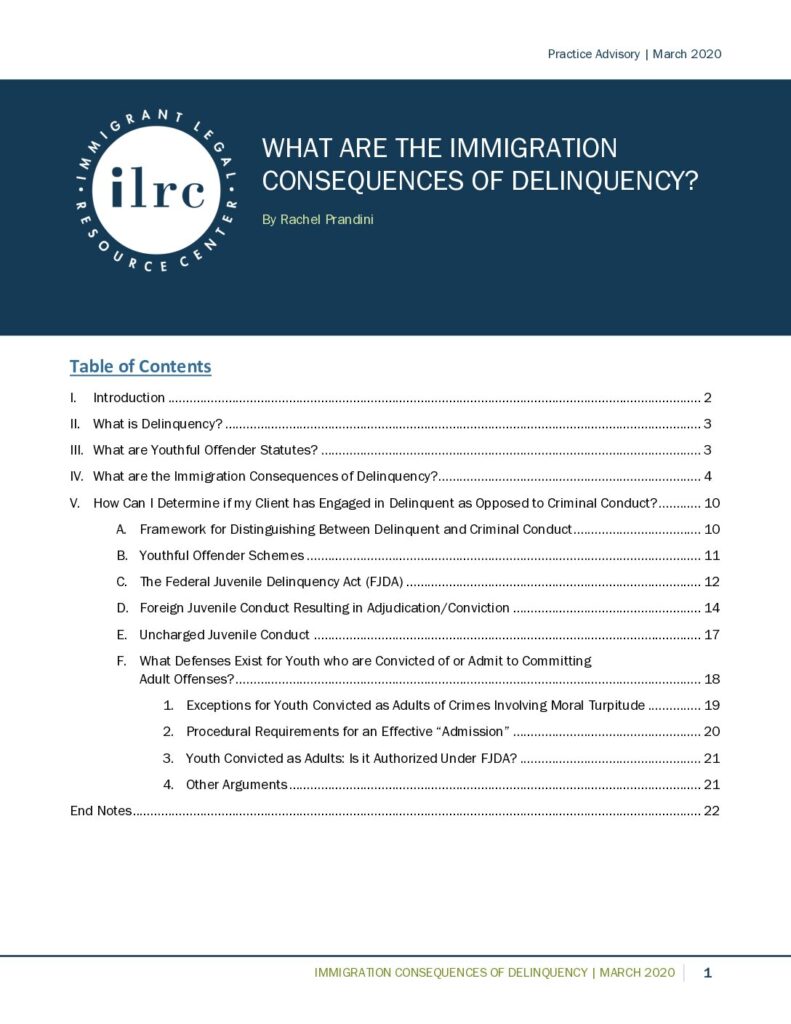
From the introduction: “Addressing juvenile conduct in applications for immigration relief can raise legal and even ethical issues. Some questions advocates frequently have in the course of filing such immigration relief applications for their youth clients include: “What constitutes an arrest? What is a crime? Are youth treated differently than adults for purposes of criminal…


The Ohio Appellate Court vacated a youth’s convictions and transfer order and offered the following language in support. “Because the juvenile court (1) did not identify all of the factors it considered, i.e., the “other information factors” referenced at the amenability hearing, (2) did not identify or discuss the factual or evidentiary basis for its…

Advocates in Maryland created a series of short policy briefs to educate community members about pressing issues. You can see the others in this series here under “Sample Legislative Advocacy Briefs” on the Policy Page of the Racial Justice Toolkit.


On November 15, 2018, a joint settlement was reached to address the conditions of confinement in Florida’s Palm Beach County Jail. The settlement agreement outlines comprehensive changes in the facility, including giving young people time and access to appropriate recreational activities outside of their cells during school hours. The settlement also limits the amount of…

On October 1, 2018, the DOJ filed a Statement of Interest in a federal class action lawsuit on behalf of young people confined in Florida’s Palm Beach County Jail. The DOJ highlights the protections afforded to students with disabilities under the Individuals with Disabilities Education Act (IDEA), and the “independent and shared” responsibilities and obligations…

