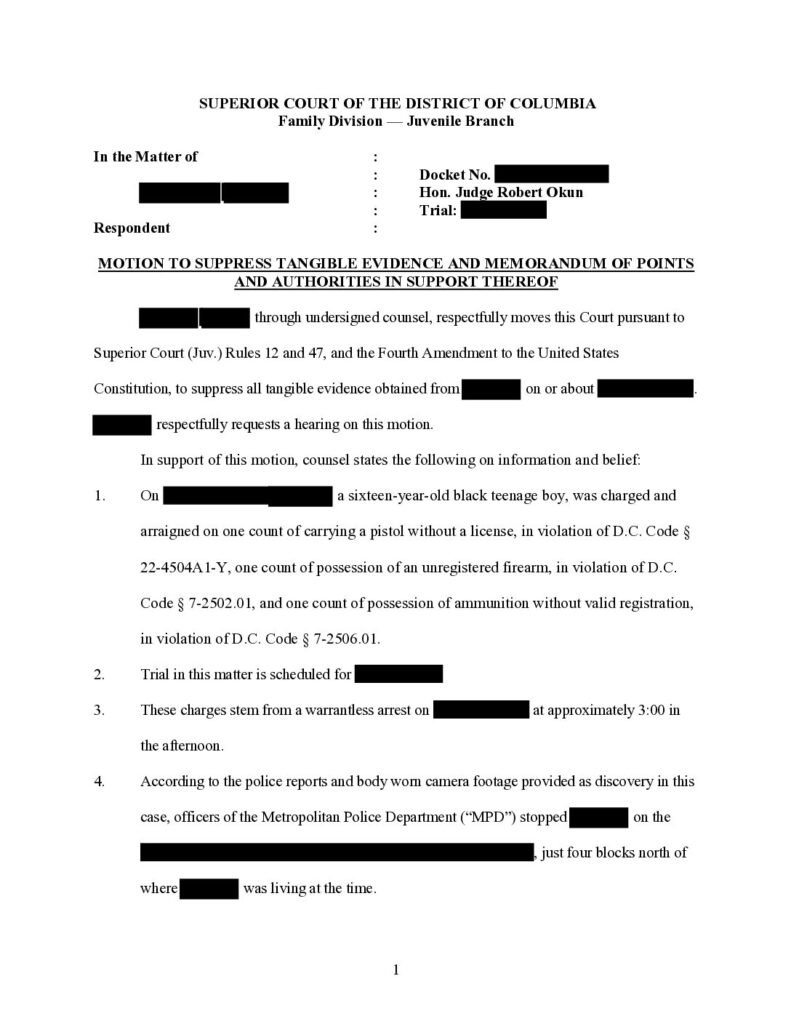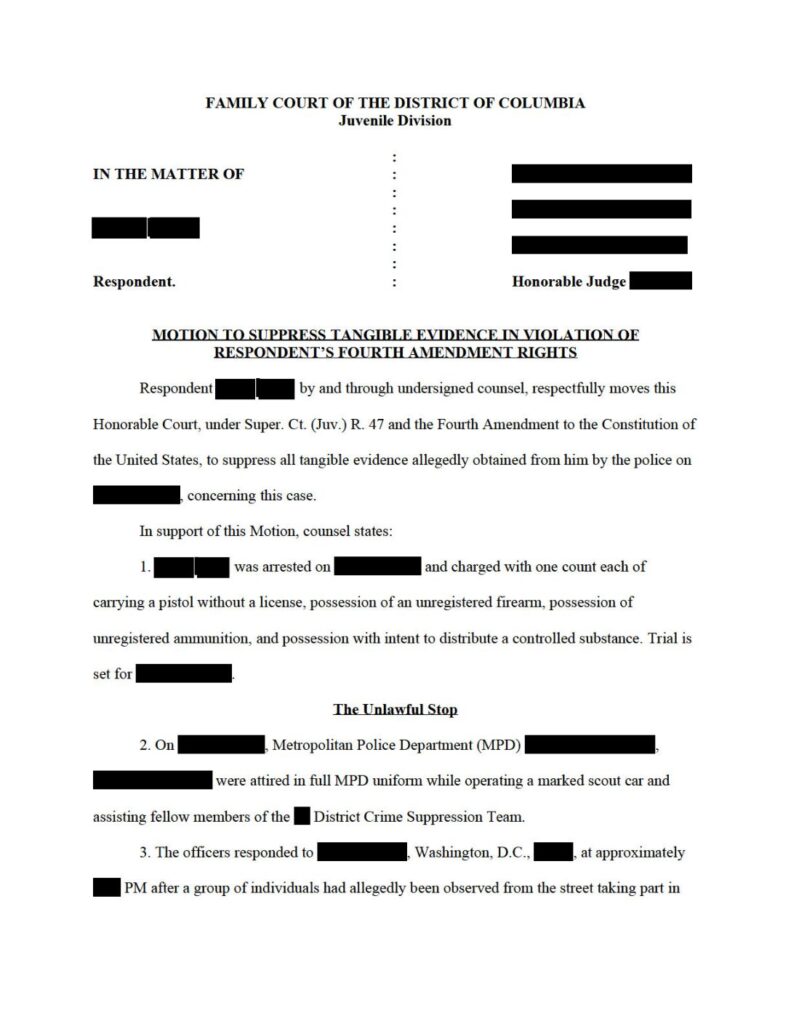
4th Amendment

From the executive summary: “On April 21, 2021, the Department of Justice opened a pattern or practice investigation of the Minneapolis Police Department (MPD) and the City of Minneapolis. By then, Derek Chauvin had been convicted in state court for the tragic murder of George Floyd in 2020. In the years before, shootings by other…
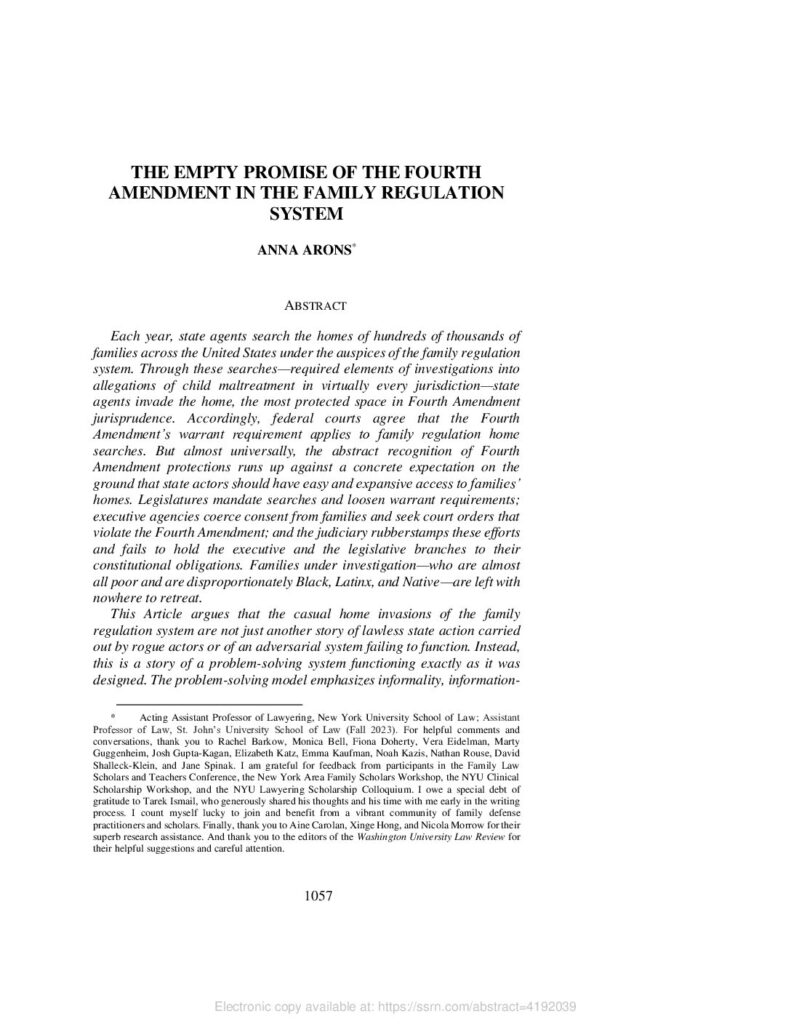
This Article argues that the casual home invasions of the family regulation system are not just another story of lawless state action carried out by rogue actors or of an adversarial system failing to function. Instead, this is a story of a problem-solving system functioning exactly as it was designed. The problem-solving model emphasizes informality,…

This article discusses the legal landscape of school surveillance, including digital and artificial intelligence surveillance, through the lens of Fourth Amendment and federal privacy laws. From the Abstract: “Since the Covid-19 pandemic, schools have escalated their use of educational technology to improve students’ in-school and at-home learning. Although educational technology has many educational benefits for…

From the executive summary: “The Department of Justice has reasonable cause to believe that the Louisville/Jefferson County Metro Government (Louisville Metro) and the Louisville Metro Police Department (LMPD) engage in a pattern or practice of conduct that deprives people of their rights under the Constitution and federal law: • LMPD uses excessive force, including unjustified…

This expert report analyzes the presence of racial bias in a police encounter with Black teenage girls in Colorado. The report utilizes research on implicit racial bias, stereotype threat, adultification, and policing as trauma in its analysis of the facts of the case.

From the introduction: “This brief offers context on the youth criminalization crisis in the United States. We then outline a series of harmful elements in the Bipartisan Safer Communities Act. Specifically, we review provisions that: • Increase funding for threat assessments, surveillance, and greater police presence in schools; • Expand data-sharing between law enforcement and…

The Washington Supreme Court ruled the trial court was required to consider an accused person’s race and ethnicity in the totality of the circumstances when determining whether a person was “seized” in Washington state constitution’s prohibition against unlawful seizure. The court offered the following language in support: As noted above, the article I, section 7…

The New York Supreme Court Appellate Division reversed the guilty plea and conviction of Mr. Thorne after the court denied his motion to suppress, finding that the arresting officers lacked requisite reasonable suspicion to stop him. The Court, citing several inconsistencies in the radio description of the assailant compared to Mr. Thorne, offered the following language in support: “The officers did not have reasonable…

From the introduction: “This Essay centers disability as a lens for analysis in Fourth Amendment jurisprudence. This Essay discusses the ways in which disability mediates interactions with law enforcement and how Fourth Amendment doctrine renders disabled people vulnerable to police intrusions and police violence. More specifically, this Essay critiques the Terry doctrine, consensual encounters, consent…

From the introduction: “This project, which started in fall 2020, was initially intended to be significantly smaller than it turned out to be. Our coalition of authors intended to outline ways juvenile defenders could streamline their representation of youth charged with sex offenses. As the project gained momentum, this team of trial attorneys, social workers,…

This article from Education Week examines the implications of the Pasco County sheriff’s office in Florida using school data and records from the Department of Children and Families to create a list of students that were “at-risk for a life of crime.” Data privacy experts shared with the media that the actions of the Sheriff’s…

From the introduction: “Communities across the country have come together to demand meaningful changes to law enforcement practices in the wake of the tragic murders of George Floyd, Breonna Taylor, and Rayshard Brooks at the hands of the police. The focus has rightly been on how deadly police actions have had an outsized impact on…

Click here to see the defense brief and the defense reply brief.

Click here to read the amicus brief and Myers’ supplemental briefs.

This brief discusses race and seizure.


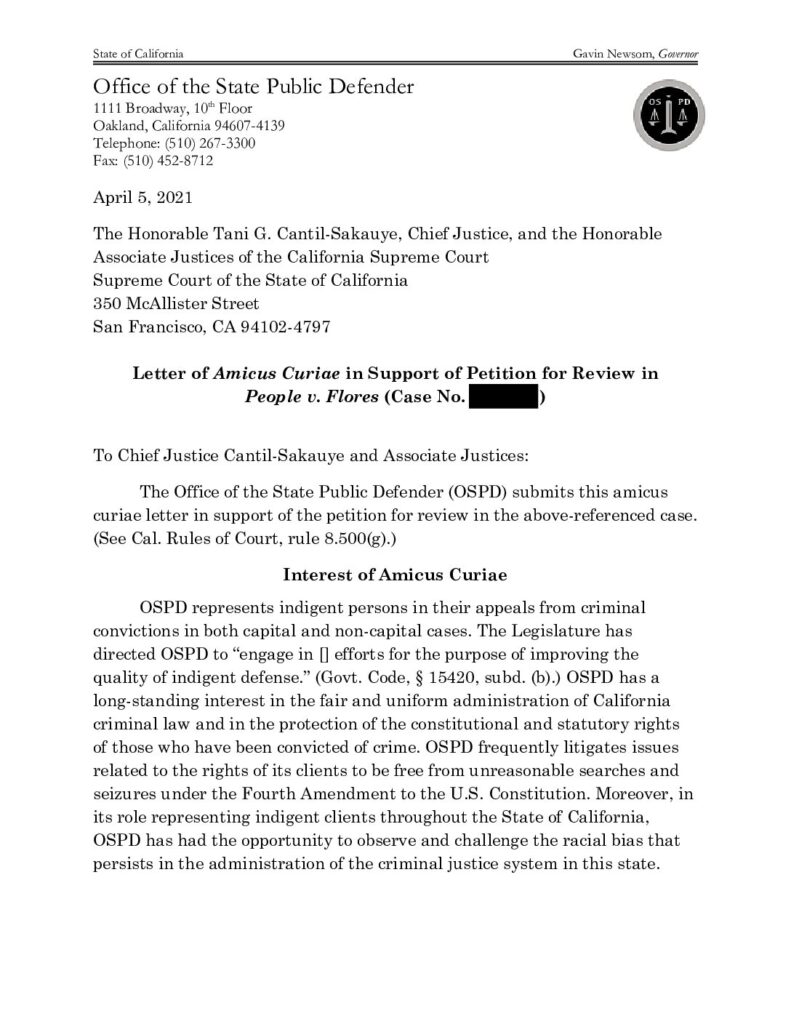
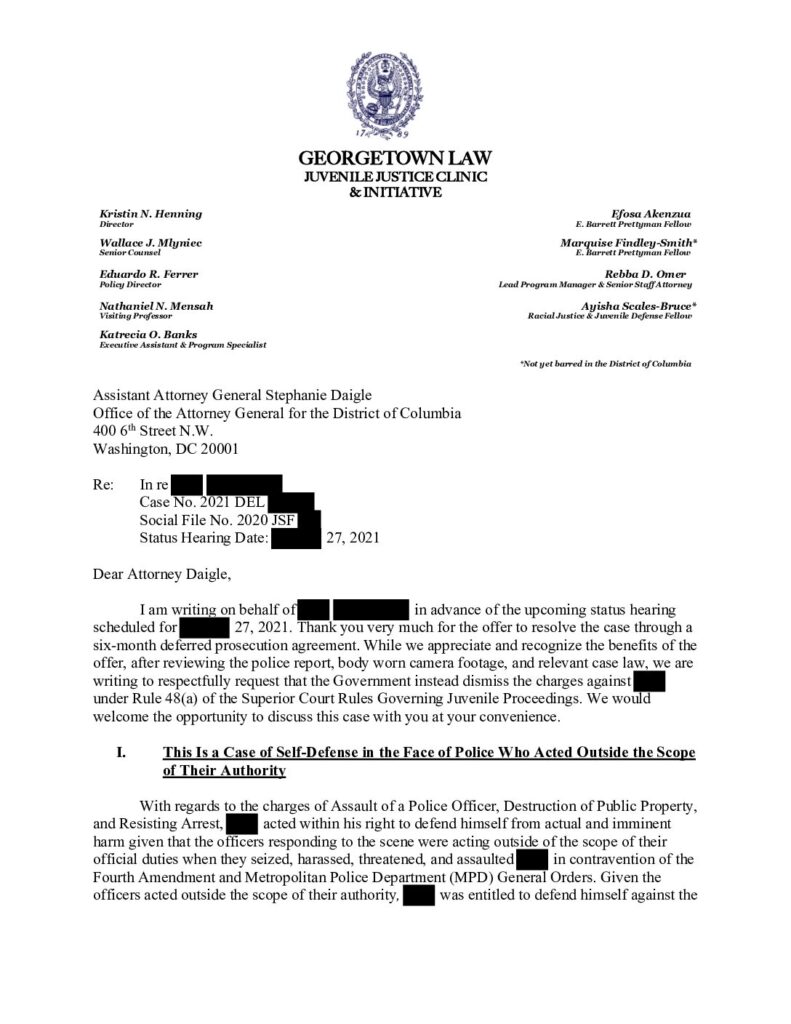

This pleading discusses flight.

This pleading includes statistics.