Diversion


This written testimony from Elizabeth Cauffman, Ph.D. and Arielle Baskin-Sommers, Ph.D. discusses what developmental science says about the impact of brain development on adolescent risk taking, decision making, and susceptibility to social and peer influence as it relates to a young person’s culpability. The testimony also provides information on diversion and its impact on lower recidivism and improved public safety. Below is an excerpt from…
This literature review from the Office of Juvenile Justice Delinquency Prevention assesses age boundaries of the juvenile legal system across the country. From the summary: This literature review discusses the age boundaries of the juvenile justice system. The review provides definitions of juveniles, delinquency, status offenses, and other related terms; gives a summary of the…

The Annie E. Casey Found. (2023). The Annie E. Casey Foundation undertook a three-year analysis from January 2020 to January 2023 of the effects of the Covid-19 pandemic on juvenile detention rates. The analysis concluded with three main findings: 1) Black youth were ten times more likely to be detained than white youth in 2023;…

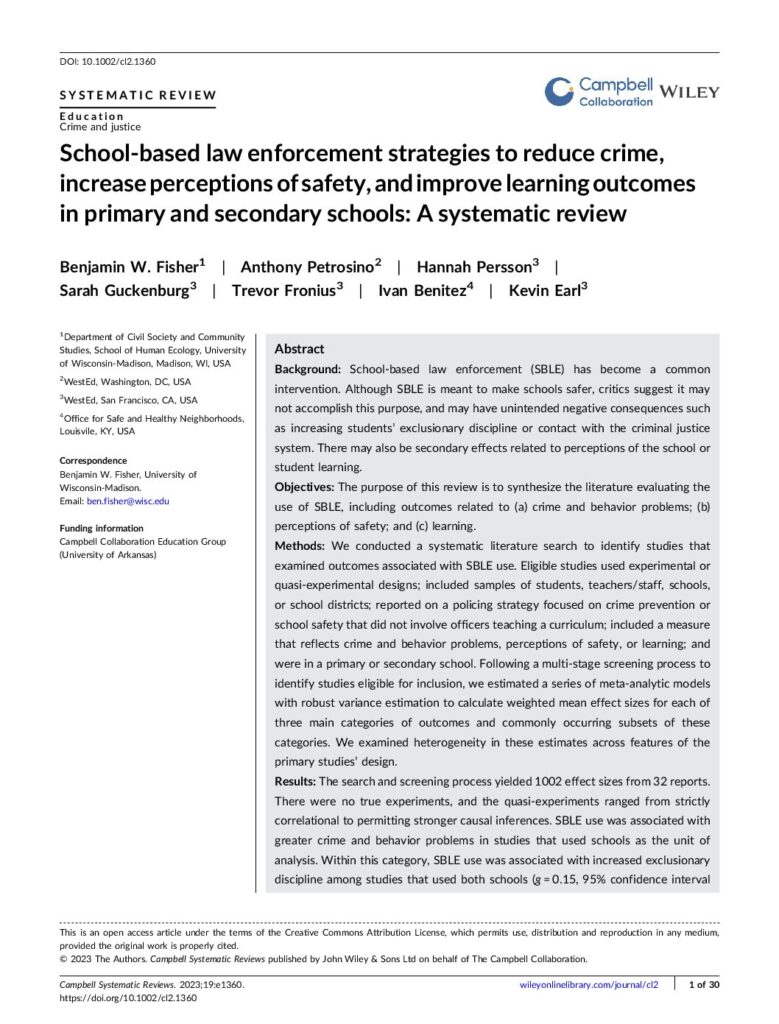
This literature review synthesizes 32 studies evaluating the impact of school-based law enforcement on 1) crime and behavior, 2) perceptions of school safety, and 3) student learning. From the summary: Contrary to what is intended, schools with SBLE had higher rates of crime and behavior problems than schools without SBLE. This was primarily driven…

From the introduction: “Imagine you’re a student with a disability that impacts how you interact with others and process situations. In an instant, that disability may be criminalized, and you could find yourself thrust into a juvenile justice system that offers little support and few education resources. This scenario is all too common. Thousands of…
This statement from the American Academy of Child and Adolescent Psychiatry makes several recommendations to minimize the “harms of childhood incarceration.” The Academy recommends adopting state and federal policy that establishes a minimum age of at least fourteen years old for juvenile court jurisdiction, establishes a maximum age of jurisdiction to include young people to…


From the introduction: “This report summarizes changes in youth incarceration following the onset of COVID-19, the key factors that drove and supported Utah’s shift away from incarceration, and the work that the jurisdiction still must do to sustain and build on these early successes.”

This policy brief draws on Sentencing Project analysis, CDC data, and law enforcement statistics to identify youth gun violence data trends, highlight the racial disparities in victimization by gun violence, and frame the problem of gun violence within the societal factors that create it. It presents new empirical research and synthesizes evidence supporting a public…
This report from The Sentencing Project discusses the state of diversion for youth in the juvenile legal system, existing disparities in diversion and why they are so severe, and strategies for expanding diversion. From the Summary: “Diverting youth from juvenile court involvement should be a central focus in efforts to reduce racial and ethnic disparities…

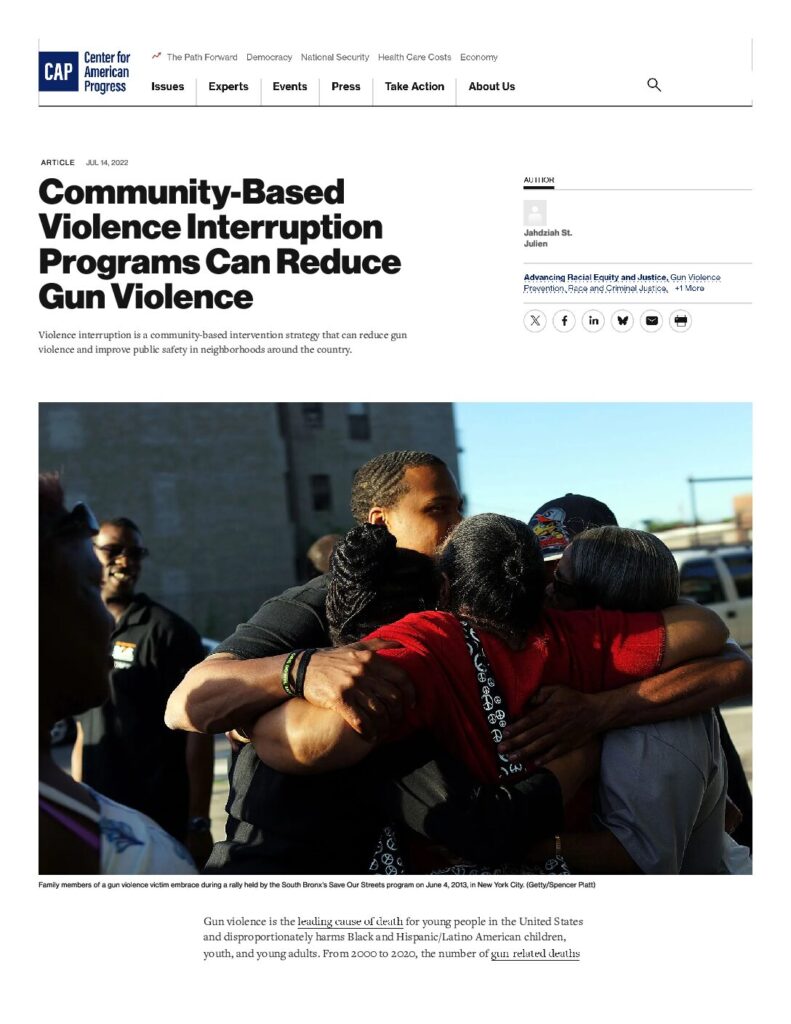
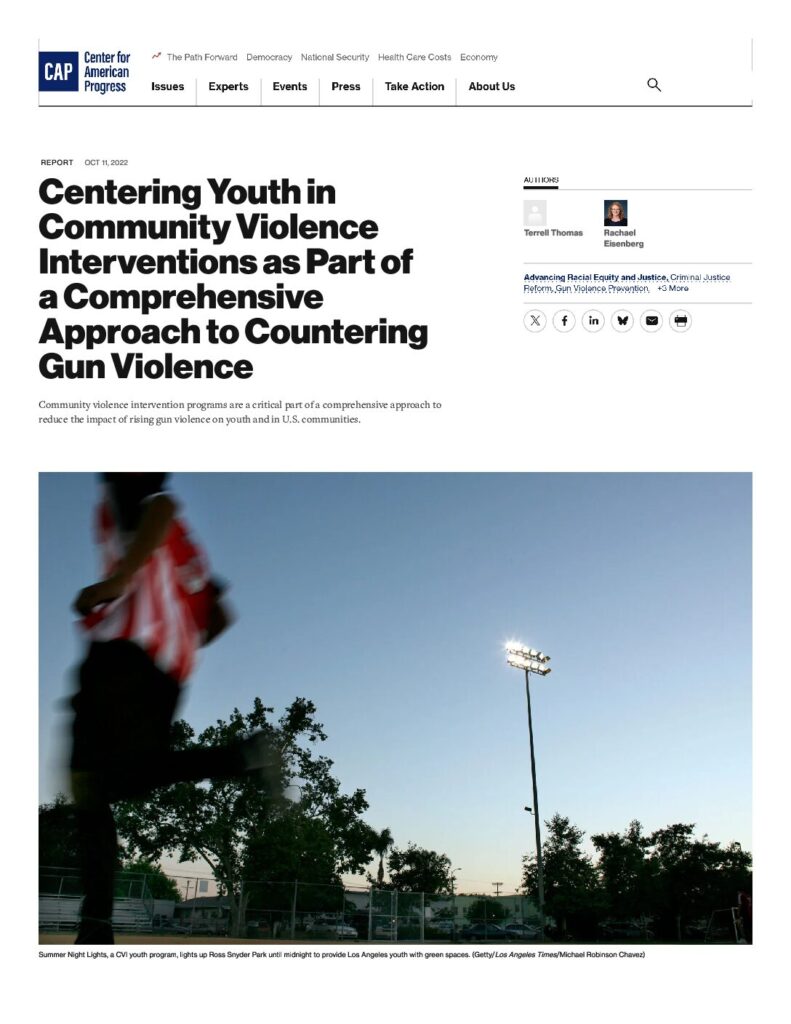
This policy analysis and literature review examines how community-based violence intervention (CVI) programs serve as an evidence-based alternative to punitive, carceral responses to gun violence in communities disproportionately impacted by firearm deaths. It draws on CDC mortality data, program evaluation reports, and organizational documentation from three violence interrupter programs: South Bronx’s Save Our Streets (SOS),…