
State Constitutions
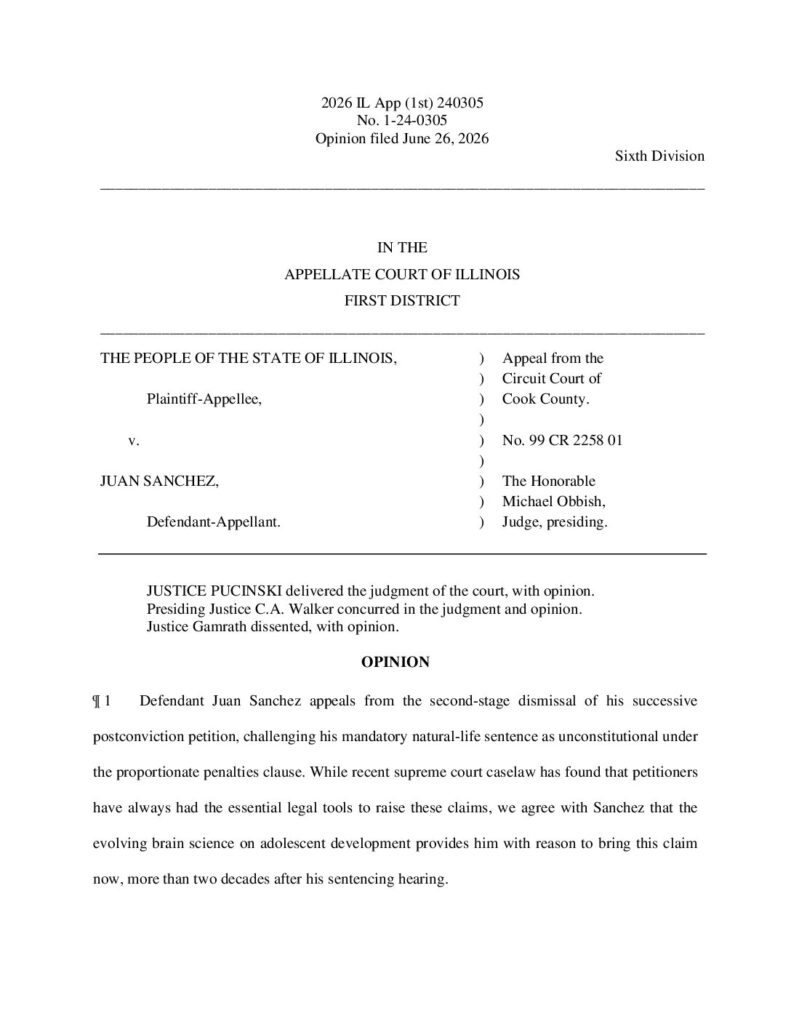
The Illinois First District Court of Appeals granted a full evidentiary hearing on a postconviction petition based on new research on late adolescent brain development that was unavailable at the original sentencing hearing in 2001 and a detailed affidavit connecting that research to the individual’s childhood abuse and trauma. The court stated in relevant part:…
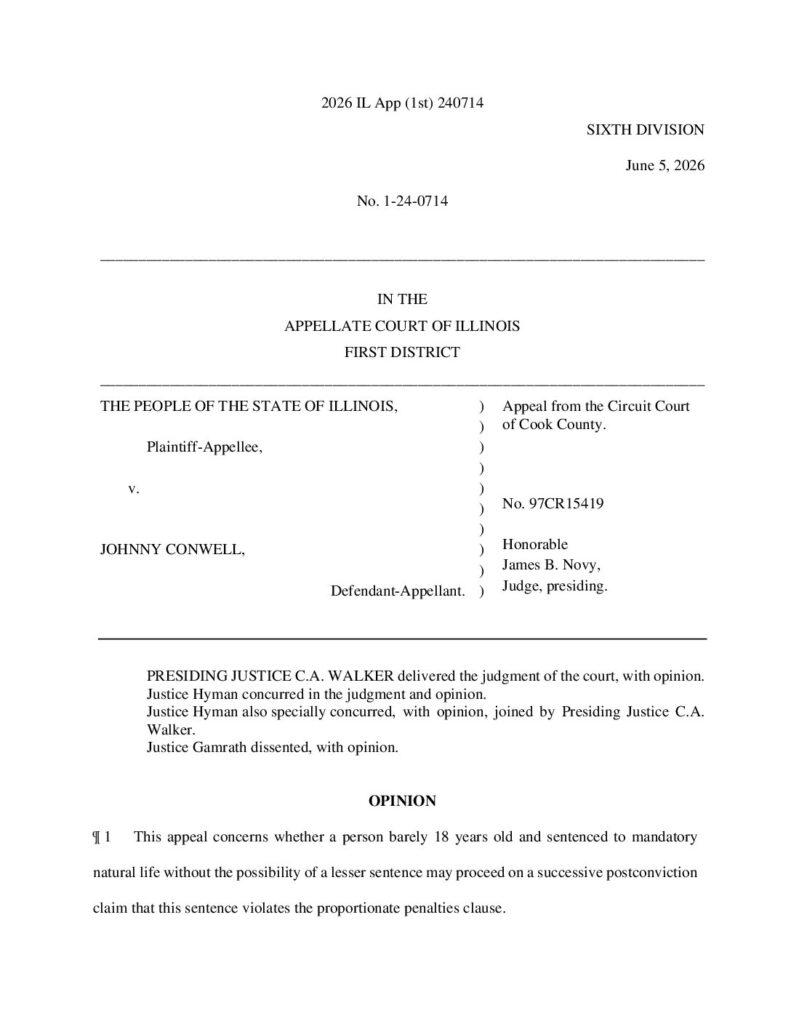
The Illinois 1st District Court of Appeals granted an individual to proceed on a postconviction hearing to challenge his life sentence based on the state’s proportionate penalties clause. The court held that the individual who 18 at the time of the offense was entitled to present mitigating evidence about his age and youthfulness. The court…
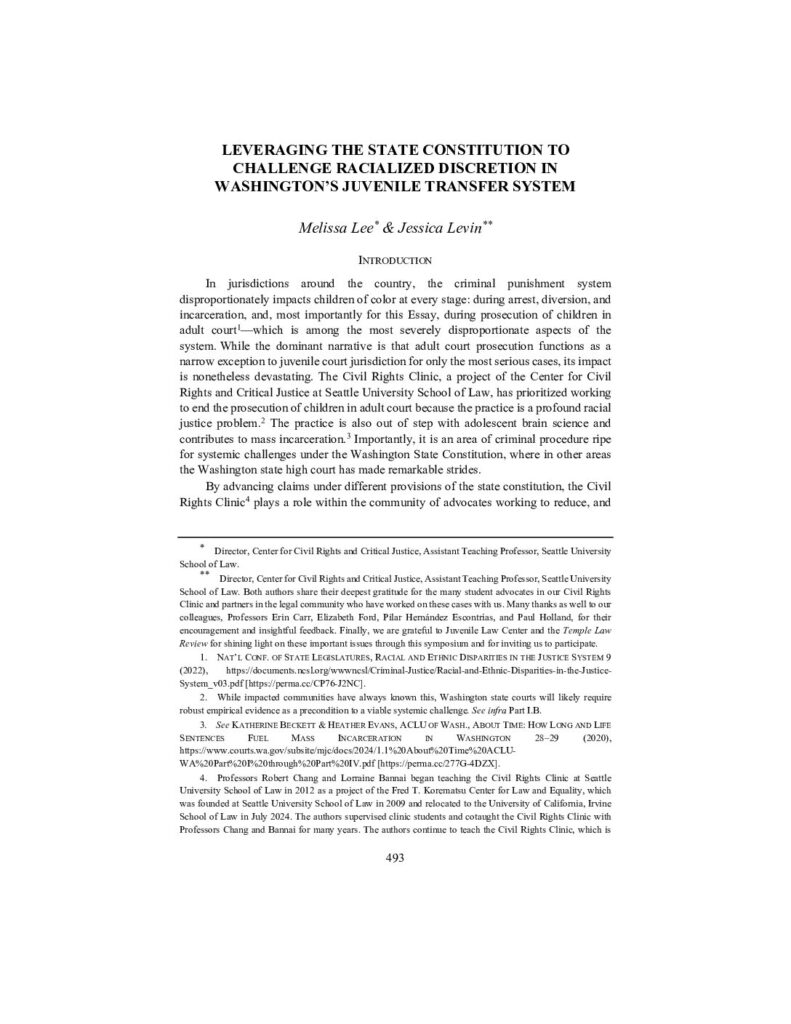
Leveraging the State Constitution to Challenge Racialized Discretion in Washington’s Juvenile System
From the Abstract: In jurisdictions around the country, the criminal punishment system disproportionately impacts children of color at every stage: during arrest, diversion, and incarceration, and, most importantly for this Essay, during prosecution of children in adult court—which is among the most severely disproportionate aspects of the system. While the dominant narrative is that adult…

“Homelessness in the United States has been a humanitarian crisis affecting youth as one of its most vulnerable populations. Education is one of the few opportunities to break through this cycle of poverty. Recognizing the gap in education for homeless students and other students, Congress enacted the McKinney-Vento Act, which guarantees homeless youth educational rights…
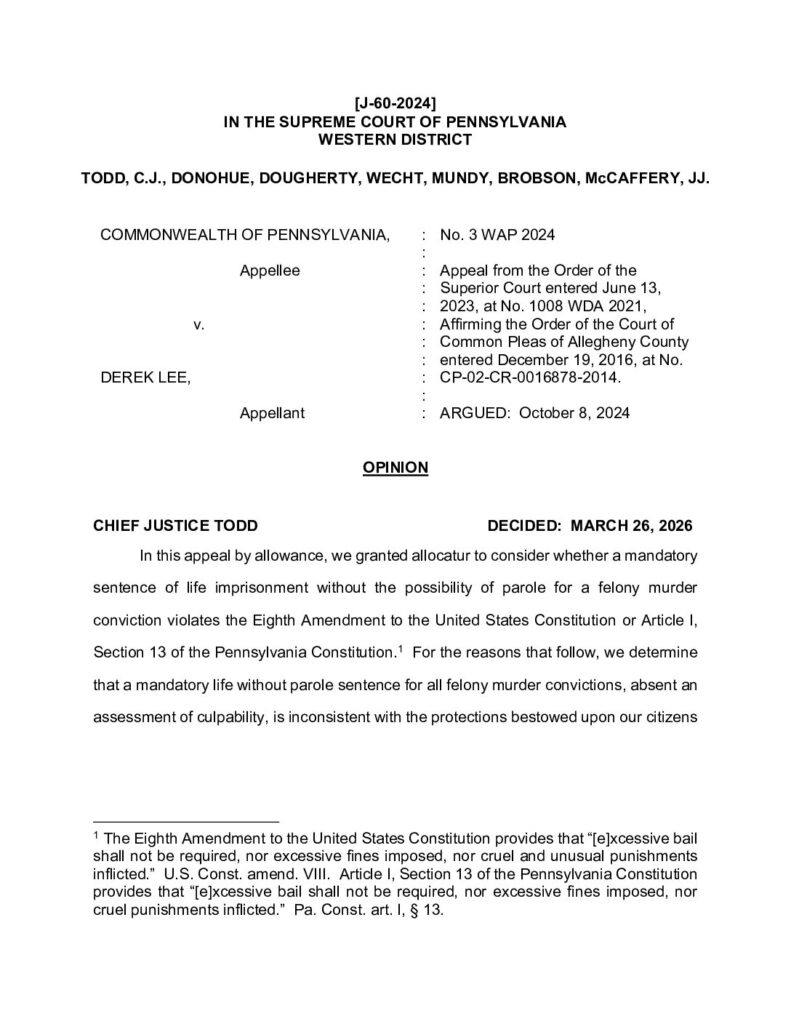
The Supreme Court of Pennsylvania ended the use of mandatory life without parole for felony murder cases based on the state constitution’s prohibition against cruel punishment. Finding that Pennsylvania’s constitutional safeguards against cruel punishment offers greater protections than the 8th Amendment of the U.S. Constitution, the Court reasoned that the blanket imposition of mandatory life…
The Oregon Court of Appeals held that a trial court must consider mental health attributes at sentencing pursuant to the Eighth Amendment and the Oregon state constitution’s prohibition against cruel and unusual punishment. The court stated in relevant part: “We agree with defendant that ORS 131.295 and ORS 131.300 provide that objective societal standard. Through…
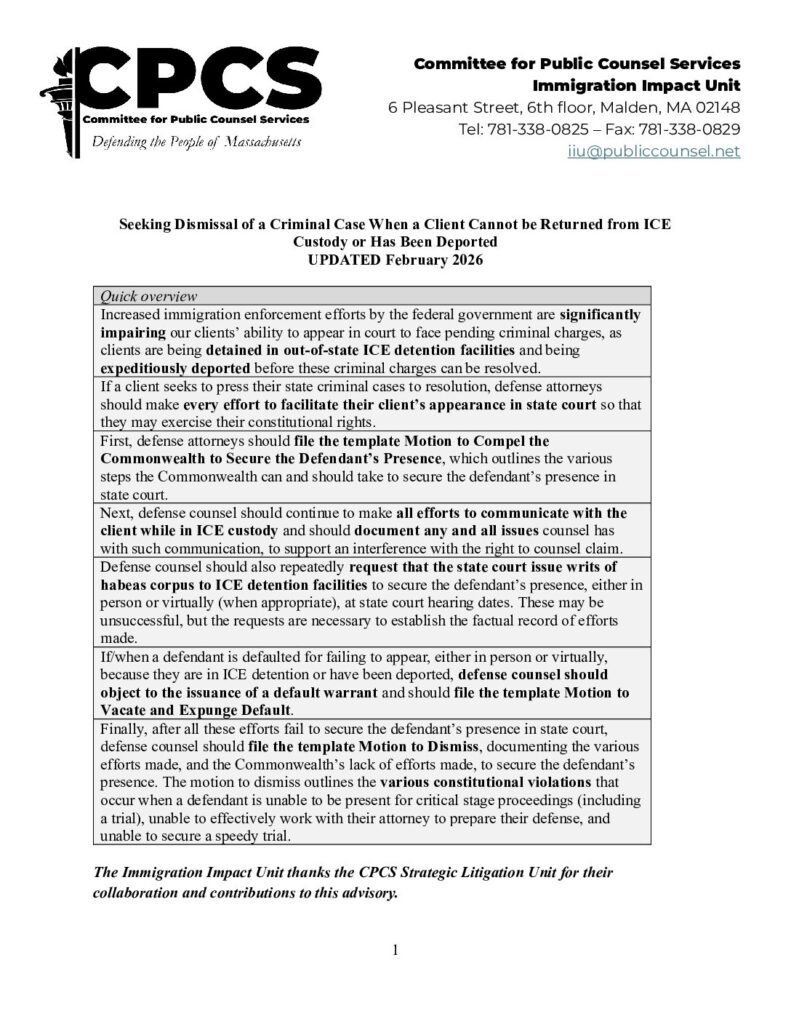
This guide from the Massachusetts Committee for Public Counsel Services, Immigration Impact Unit, offers defense attorneys a step-by-step outline for handling a client’s case when they are detained in ICE detention facilities or have been deported. From the report: “To address the concerns these open cases pose to our clients, this advisory lays out potential…
This sample motion argues for special discovery and dismissal and/or suppression based on a claim of selective prosecution in a jaywalking case. Highlighting local police data on racial disparities in jaywalking-related stops, this motion argues that police conduct had a discriminatory effect on Black youth in Cincinnati, in violation of their state and federal equal…
This supplemental memorandum is related to the sample motion to dismiss and/or suppress evidence based on selective prosecution, which argues for special discovery and dismissal and/or suppression based on a claim of selective prosecution in a jaywalking case. This supplemental memorandum outlines Ohio’s Equal Protection guarantee in the context of the impact of implicit racial…
The North Carolina Court of Appeals reversed an adjudication of disorderly conduct based on insufficient evidence. The court stated in relevant part: “Considering the evidence in the light most favorable to the State and giving the State the benefit of every reasonable inference, Rose, 339 N.C. at 192, 451 S.E.2d at 223 (citation omitted), the evidence is insufficient to…
In re J.D., the Appellate Court of Maryland vacated the circuit court’s imposition of a suspended commitment to the Department of Juvenile Services because this dispositional option is not authorized by the Maryland Rules or the Juvenile Causes Act. The court offered the following language in support: “In our review of the Juvenile Causes Act, we found the statute to be clear and unambiguous. It plainly provides for three types of disposition: probation, commitment…

The Supreme Court of Washington found a Miranda violation based on a totality of the circumstances analysis, which the Court noted must include consideration of race and age. The Court stated in relevant part: “The United States Supreme Court has established that in determining whether a suspect is in custody under Miranda, we must “‘examine…
The California Supreme Court held that the imposition of punitive fines and ancillary costs ordered as part of a criminal sentencing raises equal protection issues that require courts to consider ability to pay before imposing fines and costs. The Court stated in relevant part: “In sum, in light of the Legislature’s provision of fee waivers…

In October 2025, the Gault Center convened over three hundred youth defense lawyers and advocates at our annual Youth Defender Leadership Summit. Together, we practiced the cultivation of community in service of building a more just, more liberated, and more human humanity for all children and for us all. This resource captures the shared learnings…

An appellate court in Washington reversed a trial court’s denial of a young person’s motion to suppress a firearm as a fruit of an unlawful Terry stop. This case involved misidentification by the police officers of three youth of color and the court stated in relevant part: SH-M argues that the trial court erred when…

“Life without parole is the harshest sentence a minor can receive for a homicide offense. Florida is one of a few states that still allow this type of sentence for minors. This sentence violates the Eighth Amendment of the Constitution because it is a cruel and unusual punishment as it locks up a minor for…

The Supreme Court of Maine vacated a conviction, finding that custodial statements should have been suppressed because there was no waiver of the privilege against self-incrimination, and offered the following language in support. “McLain did not clearly waive his privilege against self-incrimination and instead answered that it “depend[ed] on the questions” when asked if he…

The Illinois appellate court reversed the trial court’s sentence of 14 years for an aggravated driving under the influence and reckless homicide conviction based on defense counsel’s failure to produce evidence related to youth-based factors in mitigation. The court offered the following language in support. “Because defendant was a minor when the crash occurred, the…


From the introduction: “In this Article, [the author] examines the question of whether state courts, under their state constitutions, may be better suited than federal courts to provide effective remedial measures designed to ensure that criminal defendants receive effective assistance of counsel in criminal prosecutions.”
This amicus brief by forty developmental science scholars and nonprofits argues transformative growth during ages 18-20 makes mandatory LWOP for individuals in that age range a disproportionate sentence in violation of Article 1, Section 16 of the Michigan constitution. From the Summary of the Argument: “People v Parks held that Article 1, Section 16…
