
Disposition

Compiles key takeaways on transforming probation orders, highlighting youth voice, narrative strategies, and best practice recommendations rooted in research.

The Oregon Court of Appeals vacated and remanded a judgment placing a youth in state custody because of the trial court’s failure to provide adequate written findings as required by state statute. The court stated in relevant part: Finally, the findings taken together are too conclusory to satisfy ORS 9C.478(1). See State v. D. J. P., 342 Ore.…
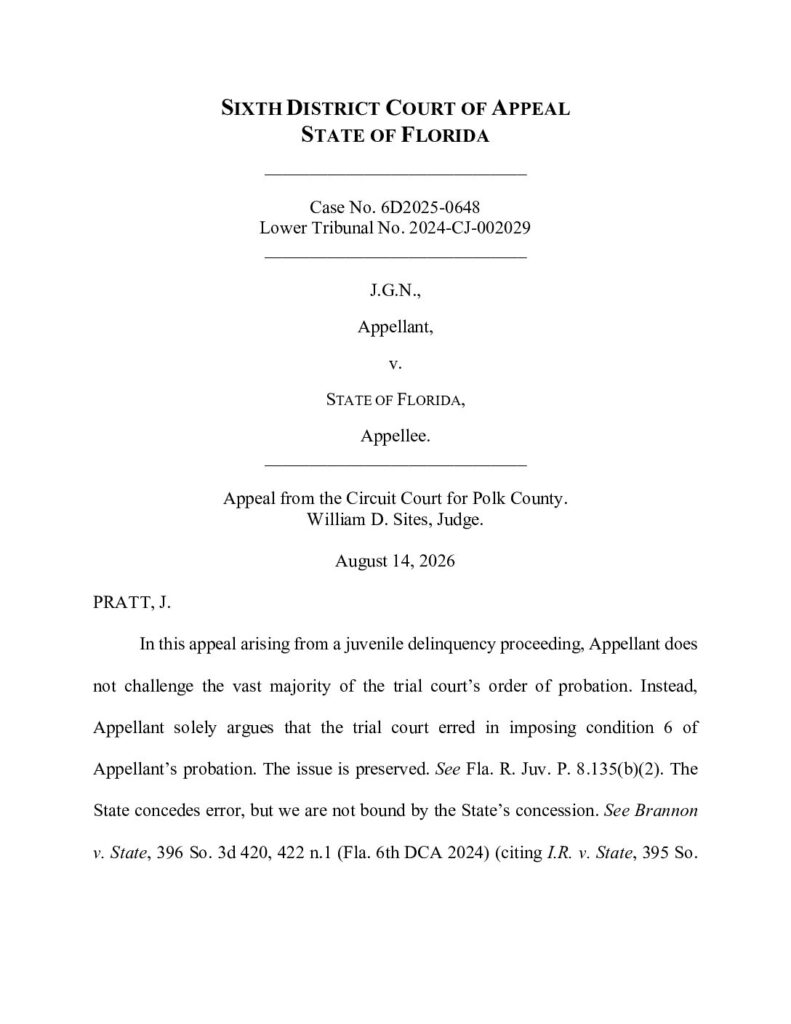
The Florida 6th District Court of Appeal held that a probation condition “prohibiting [the youth] from associating with anyone designated by the juvenile probation officer or a parent/guardian” was invalid because the condition is not reasonably related to the underlying adjudication or “future criminality” as required under state statute. The court stated in relevant part:…

The Pennsylvania Superior Court vacated dispositional and adjudicatory orders because the trial court failed to conduct an evidentiary hearing on whether the youth was in need of treatment, supervision, or rehabilitation. The court stated in relevant part: Here, the juvenile court did not conduct a hearing; rather, it proceeded directly to making a finding that I.R.M. was…
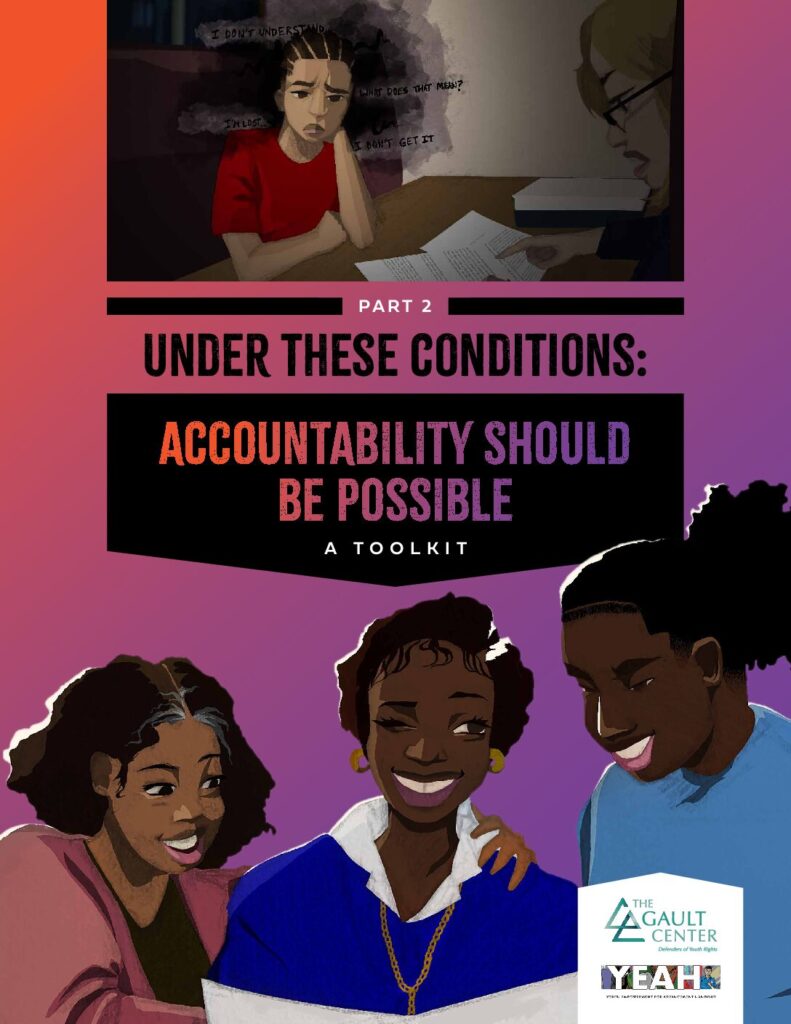
Offers concrete tools to reimagine and transform youth probation orders, including a Model Probation Order, self-assessment, and narrative guide.
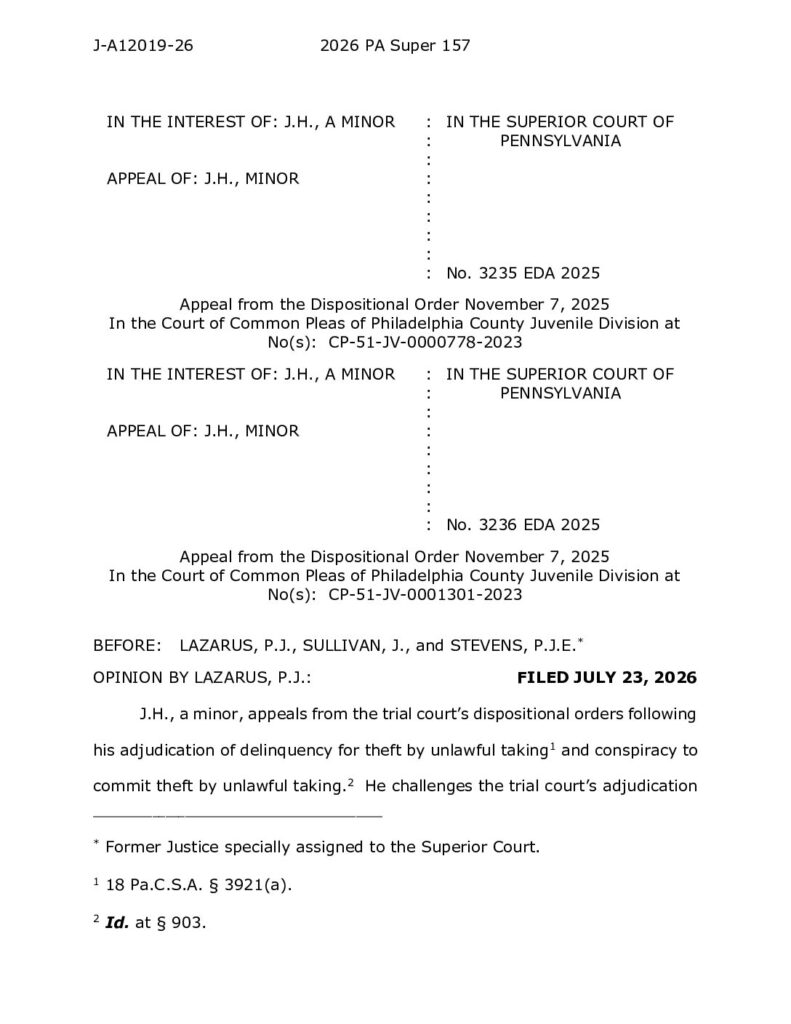
The Pennsylvania Superior Court vacated an adjudication because the trial court prevented meaningful participation by defense counsel, violating due process. The court stated in relevant part: While delinquency proceedings may be conducted more informally than adult criminal cases, juveniles are nonetheless entitled to due process during adjudicatory hearings, which includes, inter alia, the right to confront…
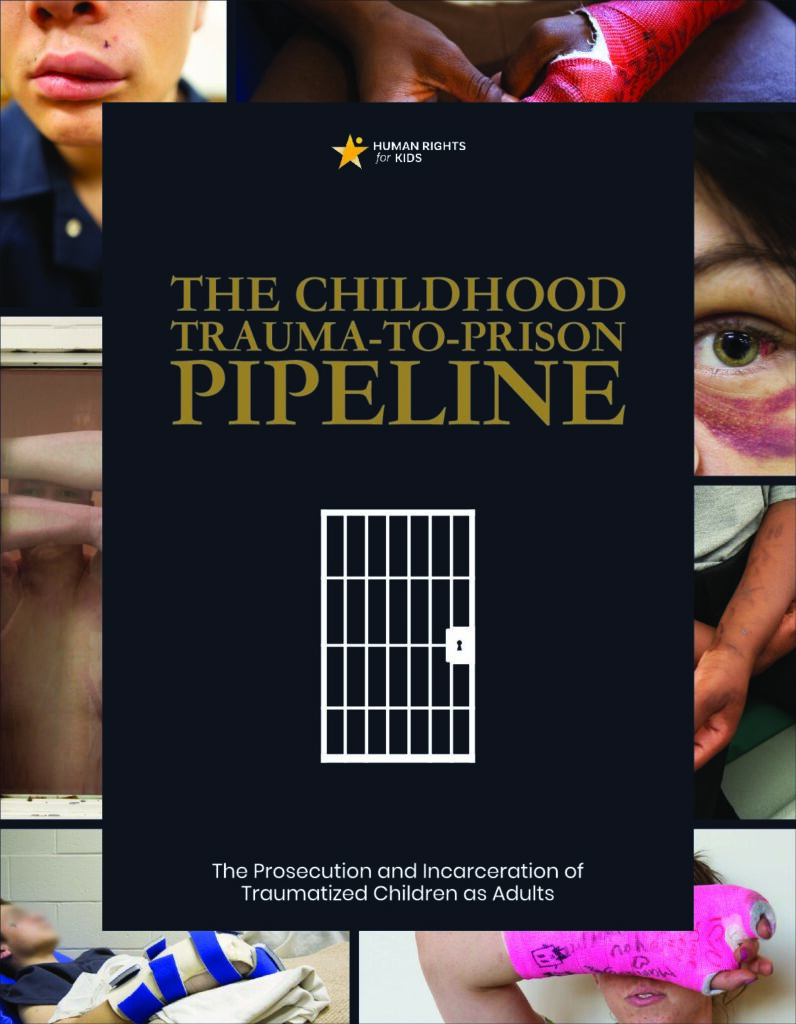
This report from Human Rights for Kids details survey results from 2,200 individuals who were incarcerated as adults for crimes they committed as children. The findings from the report demonstrate the fact that “children tried as adults are often victims long before they became [system-involved],” discusses the intersection between childhood trauma and the legal system,…
The California 2nd District Court of Appeal held that a probation condition prohibiting the association with anyone possessing weapons and controlled substances was unconstitutionally overbroad. The court stated in relevant part: “‘The juvenile court has wide discretion to select appropriate conditions,’ but ‘[a] probation condition that imposes limitations on a person’s constitutional rights must closely…
The California 4th District Court of Appeal found struck down a probation condition requiring a youth to “participate in counseling and/or an education program…as directed by your probation officer,” finding that the condition is too indefinite. The court stated in relevant part: We believe this condition leaves too much to the probation officer’s discretion because…
This article was published in the LSU Law Journal for Social Justice & Policy. From the introduction: “Despite having a right to receive an education like every child in Louisiana, incarcerated juveniles in Louisiana juvenile facilities are not receiving the adequate education they need to survive and prosper in a world outside incarceration. The Louisiana…
The North Carolina Court of Appeals vacated a disposition order, finding that the failure to specify the length of probation violated state statute. The court stated in relevant part: In juvenile-delinquency proceedings, the trial court’s dispositional order must “be in writing” and “contain appropriate findings of fact and conclusions of law.” N.C.G.S. § 7B-2512(a). Additionally, the…
From the abstract: “Among the constellation of actors who appear in courtrooms every day, probation has been largely overlooked in conversations and debates about institutional reform in the criminal legal system. Prior scholarship has focused on probation’s role in administering the sentence of probation. This Article calls for recognizing probation as a key institutional player…
From the report by UCLA Center for the Developing Adolescent: “Adolescence, the years between 10 and 25, is a period of profound psychological, social, and brain development. Physical changes during these years are happening at the same time as changes to our social world, as we take on new responsibilities, gain new agency in our…
The Oregon Court of Appeals vacated and remanded a placement order, finding that the order lacked written findings justifying placement based on the best interests of the youth, as required under state statute. The court stated in relevant part: Under ORS 419C.478(1), a juvenile court placing a youth in OYA custody must include in its order…
The Oregon Court of Appeals vacated and remanded an adjudication finding that the trial court erred in failing to provide written findings and consider the youth’s best interest. The court stated in relevant part: Assessment of a youth’s best interest is “a child-focused consideration” and “must be child-centered.” Dept. of Human Services v. T. M. D.,…
This report from the Sentencing Project provides an overview of restorative justice (‘RJ’) diversion programs including research on the results of these programs, the advantages of RJ diversion programming over court involvement, benefits to victims, and recommendations for implementing RJ programs. From the Executive Summary: “Restorative justice (RJ) diversion programs address adolescent lawbreaking outside the court system using a process designed to address victims’ needs and repair the harm caused by youth misconduct.…
Summarizes what young people are saying about juvenile probation and offers a visual timeline highlighting the historical lineage of probation as a form of racialized social control.
Examines young people’s experiences on juvenile probation and the racialized history of juvenile probation in our country.

The Florida Court of Appeals, Second District, found the trial court erred when it decided to make an upward departure from the recommendation of the Department of Juvenile Justice’s recommendation and failed to explain why the departure was most appropriate for T.S.’s individual rehabilitative needs. The court reasoned in part: “Simply listing ‘reasons’ that are…
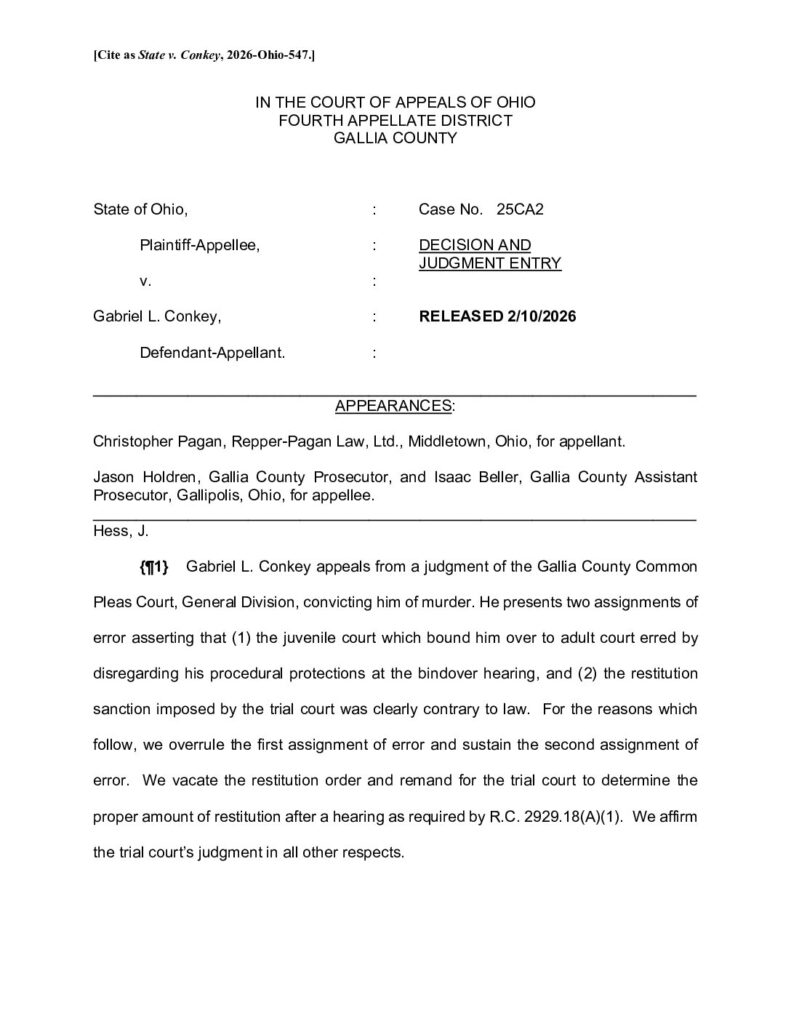
The Ohio Court of Appeals, Fourth District, vacated and remanded the trial court’s restitution order, where the trial court allowed unsworn testimony from the victim about restitution and a failed to hold a contested restitution hearing pursuant to state statute. The court reasoned in part: ““‘“[T]he amount of the restitution must be supported by competent,…
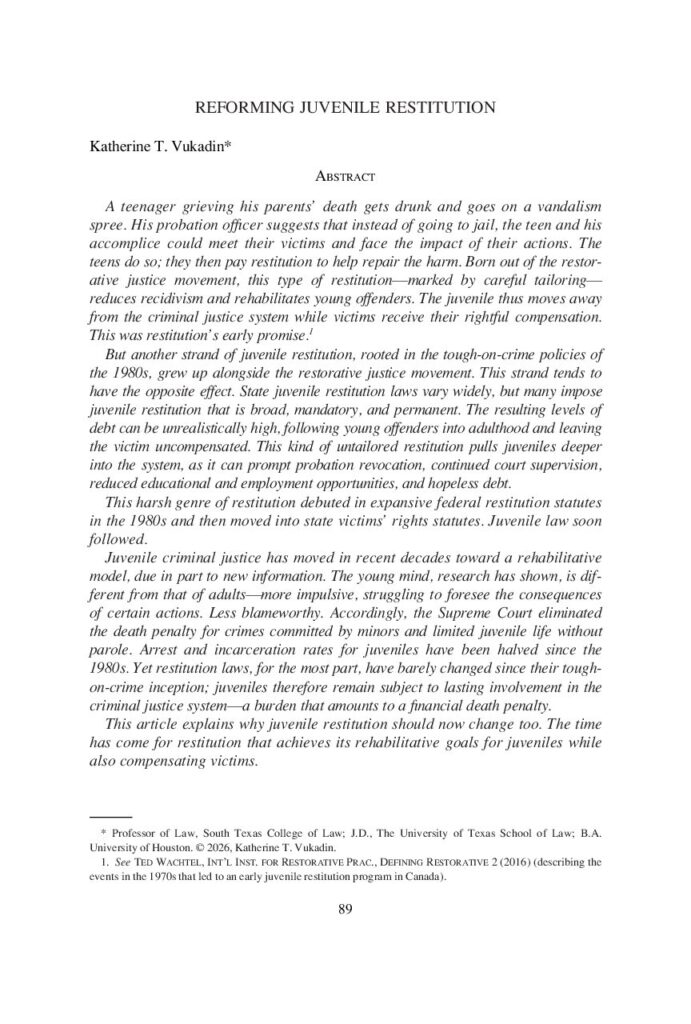
“Restitution laws, for the most part, have barely changed since their tough on-crime inception; juveniles therefore remain subject to lasting involvement in the criminal justice system—a burden that amounts to a financial death penalty. This article explains why juvenile restitution should now change too. The time has come for restitution that achieves its rehabilitative goals…
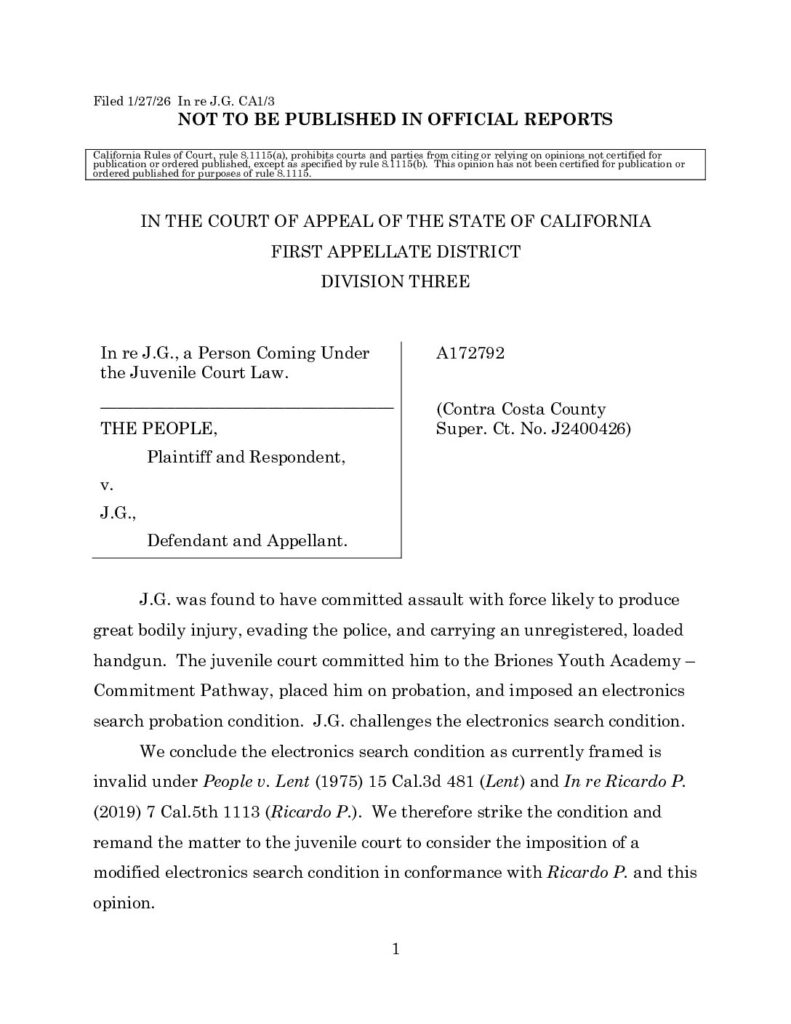
The California Court of Appeals, First District held the courts imposition of an electronics search probation condition invalid, finding under the first and third prongs of the Lent test that the condition “1)has no relationship to the crime which the offender was convicted, and 3) requires or forbids conduct which is not reasonably related to…
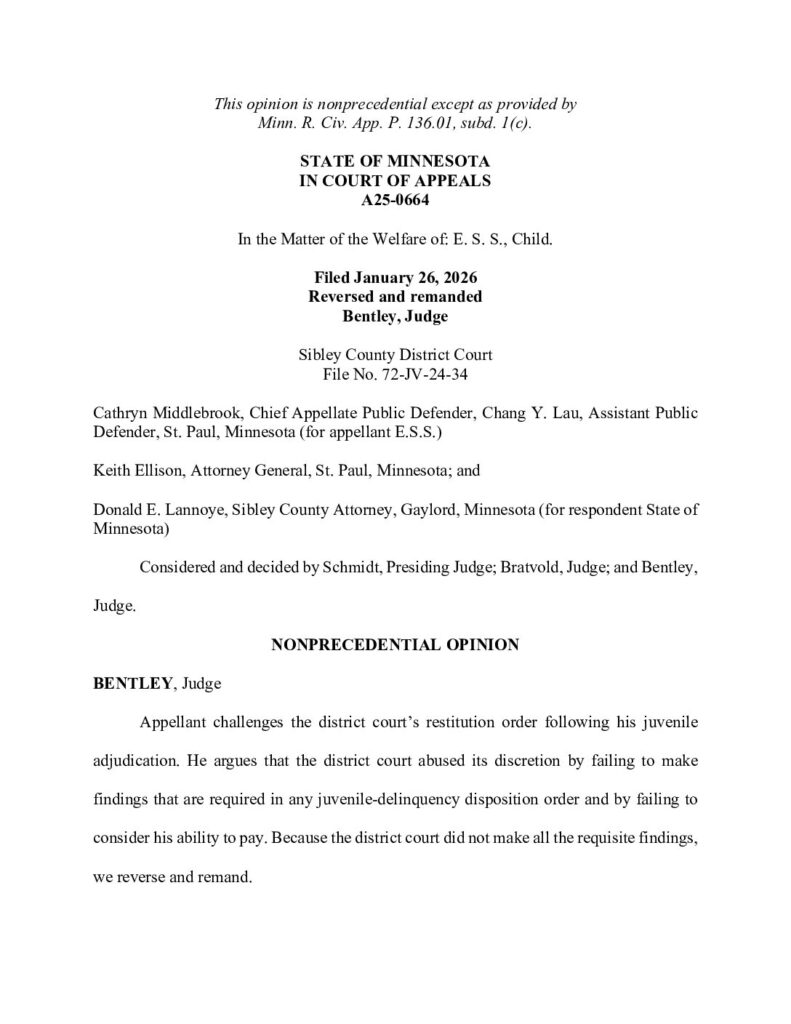
The Minnesota Court of Appeals held that the district court failed to make findings of fact required by statute when ordering restitution and remanded the case for the trial court to make the requisite findings. The court held in relevant part: “Juvenile-delinquency orders require written findings “to show that the district court considered vital standards…

The New Mexico Court of Appeals held that Malachi D. was reserved his right to appeal despite his plea, and the trial court erred in granting counsel’s request to dismiss the cause as the adjudication hearing was not heard in a timely manner. The court reasoned in part: “We believe that the judgment and disposition…
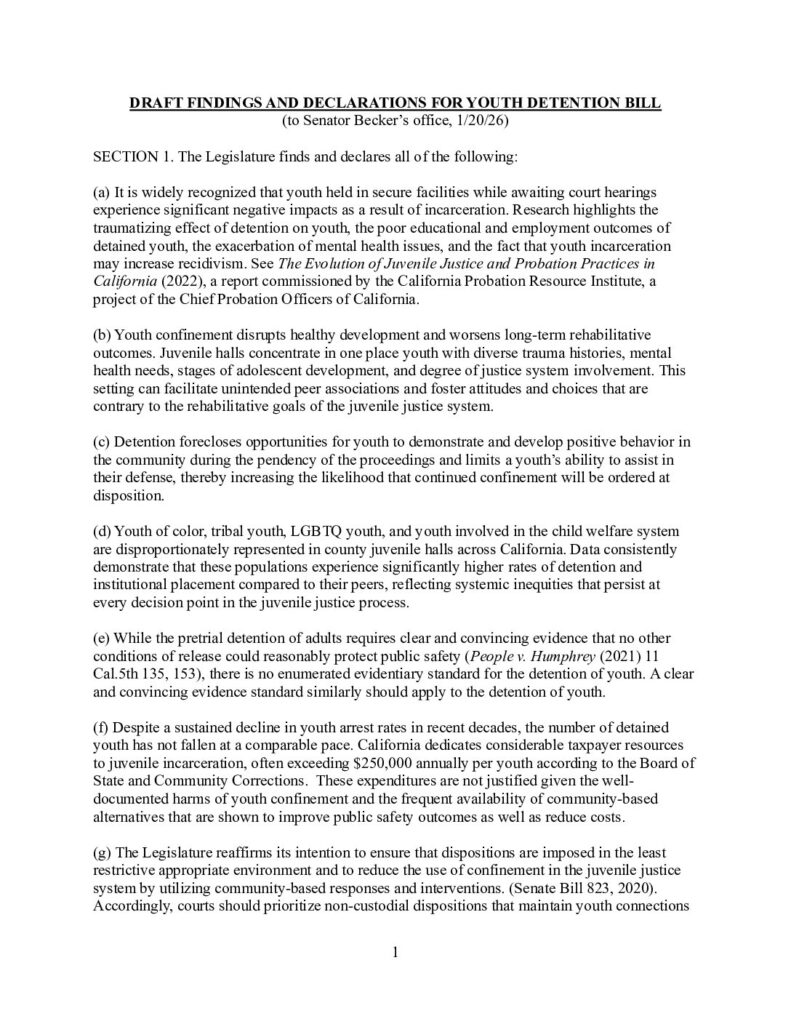
This proposed draft of a legislative “findings and declarations” document for a youth detention and disposition reform bill in California affirms the legislature’s commitment to make placement in juvenile detention “the exception, not the rule.” The draft findings rely on research regarding the impact of detention on young people, racial justice, developmental science, and California…
